
Del i serien Manufacturing
Industry 5.0
Design, standards, techniques and applications for manufacturing
Inbunden, Engelska, 2025
2 309 kr
Beställningsvara. Skickas inom 3-6 vardagar. Fri frakt för medlemmar vid köp för minst 249 kr.
We are on the brink of another industrial transformation - one that builds upon the digital foundations of Industry 4.0 and reaches new heights with the emergence of Industry 5.0. Unlike its predecessor, which focused heavily on automation, cyber-physical systems, and the Internet of Things, Industry 5.0 shifts the paradigm toward human-centered solutions, blending the power of cutting-edge technologies with human creativity, expertise, and ethical considerations. This evolution is not merely technological; it is social and economic, reshaping how we live, work, and interact with our environment.The convergence of advanced artificial intelligence, robotics, 3D printing, and the Internet of Things is now being augmented with a renewed focus on collaboration between humans and machines. This human-machine synergy unlocks new potential in industries ranging from manufacturing to healthcare, from energy to education, as intelligent systems learn to complement, rather than replace, human ingenuity. The aim of Industry 5.0 is not only to enhance productivity but to create a more sustainable, ethical, and personalized approach to industrial processes.Industry 5.0: Design, standards, techniques and applications for manufacturing provides a comprehensive exploration of the key components that define this new industrial era. It is designed to serve as a foundational guide for engineers, designers, researchers, and policymakers who seek to understand and contribute to the future of Industry 5.0. Through an examination of its applications, innovative designs, emerging standards, and the latest techniques, this work offers a critical resource for those striving to navigate the complex yet exciting landscape of this revolution.
Produktinformation
- Utgivningsdatum2025-04-01
- Mått156 x 234 x 29 mm
- Vikt894 g
- FormatInbunden
- SpråkEngelska
- SerieManufacturing
- Antal sidor512
- FörlagInstitution of Engineering and Technology
- ISBN9781837240098
Tillhör följande kategorier
Hoppa över listan
Du kanske också är intresserad av
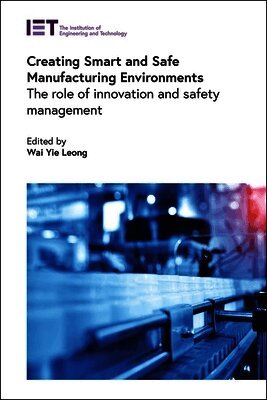
Creating Smart and Safe Manufacturing Environments
Wai Yie Leong, Wai Yie Leong
Inbunden, 2026
2 109 kr