
Del i serien Pennsylvania Studies in Human Rights
Indigenous Paradox
Rights, Sovereignty, and Culture in the Americas
Inbunden, Engelska, 2020
1 169 kr
Beställningsvara. Skickas inom 5-8 vardagar. Fri frakt för medlemmar vid köp för minst 249 kr.
An investigation into how indigenous rights are conceived in legal language and doctrineIn the twenty-first century, it is politically and legally commonplace that indigenous communities go to court to assert their rights against the postcolonial nation-state in which they reside. But upon closer examination, this constellation is far from straightforward. Indigenous communities make their claims as independent entities, governed by their own laws. And yet, they bring a case before the court of another sovereign, subjecting themselves to its foreign rule of law.According to Jonas Bens, when native communities enter into legal relationships with postcolonial nation-states, they "become indigenous." Indigenous communities define themselves as separated from the settler nation-state and insist that their rights originate from within their own system of laws. At the same time, indigenous communities must argue that they are incorporated in the settler nation-state to be able to use its judiciary to enforce these rights. As such, they are simultaneously included into and excluded from the state.Tracing how the indigenous paradox is inscribed into the law by investigating several indigenous rights cases in the Americas, from the early nineteenth century to the early twenty-first, Bens illustrates how indigenous communities have managed-and continue to manage-to navigate this paradox by developing lines of legal reasoning that mobilize the concepts of sovereignty and culture. Bens argues that understanding indigeneity as a paradoxical formation sheds light on pressing questions concerning the role of legal pluralism and shared sovereignty in contemporary multicultural societies.
Produktinformation
- Utgivningsdatum2020-07-10
- Mått152 x 229 x 25 mm
- Vikt494 g
- FormatInbunden
- SpråkEngelska
- SeriePennsylvania Studies in Human Rights
- Antal sidor280
- FörlagUniversity of Pennsylvania Press
- ISBN9780812252309
Tillhör följande kategorier
Hoppa över listan

Mer från samma författare
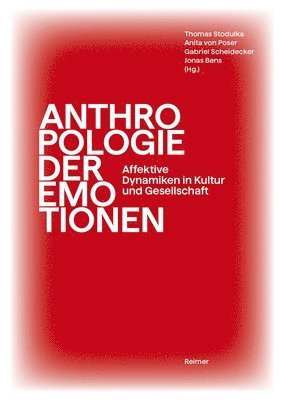
Anthropologie Der Emotionen: Affektive Dynamiken in Kultur Und Gestellschaft
Christoph Antweiler, Marium Javaid Bajwa, Thomas Stodulka, Anita Von Poser, Gabriel Scheidecker, Jonas Bens
Inbunden, 2023
1 239 kr
Hoppa över listan



Mer från samma serie
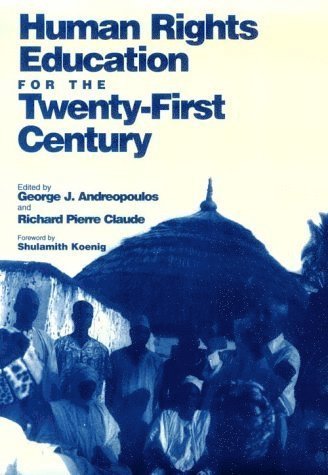
Human Rights Education for the Twenty-First Century
George J. Andreopoulos, Richard Pierre Claude
Häftad, 1997
839 kr
Hoppa över listan





Du kanske också är intresserad av
Anthropologie Der Emotionen: Affektive Dynamiken in Kultur Und Gestellschaft
Christoph Antweiler, Marium Javaid Bajwa, Thomas Stodulka, Anita Von Poser, Gabriel Scheidecker, Jonas Bens
Inbunden, 2023
1 239 kr
- Nyhet
Del 3
- Nyhet
Del 11
- Nyhet
Del 6
- Nyhet
Del 4
Del 3
Del 1
Del 2