
Del i serien America in the Nineteenth Century
In Union There Is Strength
Philadelphia in the Age of Urban Consolidation
Inbunden, Engelska, 2019
829 kr
Beställningsvara. Skickas inom 10-15 vardagar. Fri frakt för medlemmar vid köp för minst 249 kr.
In the 1840s, Philadelphia was poised to join the ranks of the world's great cities, as its population grew, its manufacturing prospered, and its railroads reached outward to the West. Yet epidemics of riot, disease, and labor conflict led some to wonder whether growth would lead to disintegration. As slavery and territorial conquest forced Americans to ponder a similar looming disunion at the national level, Philadelphians searched for ways to hold their city together across internal social and sectional divisions-a project of consolidation that reshaped their city into the boundaries we know today.A bold new interpretation of a crucial period in Philadelphia's history, In Union There Is Strength examines the social and spatial reconstruction of an American city in the decades on either side of the American Civil War. Andrew Heath follows Philadelphia's fortunes over the course of forty years as industrialization, immigration, and natural population growth turned a Jacksonian-era port with a population of two hundred thousand into a Gilded Age metropolis containing nearly a million people.Heath focuses on the utopian socialists, civic boosters, and municipal reformers who argued that the path to urban greatness lay in the harmonious consolidation of jarring interests rather than in the atomistic individualism we have often associated with the nineteenth-century metropolis. Their rival visions drew them into debates about the reach of local government, the design of urban space, the character of civic life, the power of corporations, and the relations between labor and capital-and ultimately became entangled with the question of national union itself. In tracing these links between city-making and nation-making in the mid-nineteenth century, In Union There Is Strength shows how its titular rallying cry inspired creative, contradictory, and fiercely contested ideas about how to design, build, and live in a metropolis.
Produktinformation
- Utgivningsdatum2019-02-15
- Mått152 x 229 x 28 mm
- Vikt612 g
- FormatInbunden
- SpråkEngelska
- SerieAmerica in the Nineteenth Century
- Antal sidor296
- FörlagUniversity of Pennsylvania Press
- ISBN9780812251111
Tillhör följande kategorier
Hoppa över listan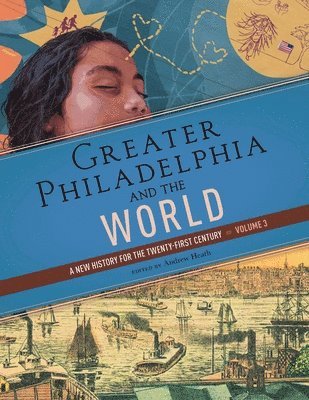
Mer från samma författare
Greater Philadelphia
Carolyn T. Adams, Howard Gillette, Andrew Heath, Charlene Mires, Jean R. Soderlund
Inbunden, 2025
1 869 kr
Hoppa över listan
Du kanske också är intresserad av
Greater Philadelphia
Carolyn T. Adams, Howard Gillette, Andrew Heath, Charlene Mires, Jean R. Soderlund
Inbunden, 2025
1 869 kr
- Nyhet
Del 3