
Immigrant Incorporation in East Asian Democracies
Inbunden, Engelska, 2020
2 029 kr
Skickas . Fri frakt för medlemmar vid köp för minst 249 kr.
Finns i fler format (1)
Despite labour shortages and rapidly shrinking working-age populations, Japan, South Korea, and Taiwan shared restrictive immigration policies and exclusionary practices toward immigrants until the early 2000s. While Taiwan maintained this trajectory, Japan took incremental steps to expand immigrant services at the grassroots level, and South Korea enacted sweeping immigration reforms. How did convergent policies generate these divergent patterns of immigrant incorporation? Departing from the dominant scholarship that focuses on culture, domestic political elites, and international norms, this book shows the important role of civil society actors - including immigrants themselves - in giving voice to immigrant interests, mobilizing immigrant actors, and shaping public debate and policy on immigration. Based on more than 150 in-depth interviews and focus groups with over twenty immigrant communities, Immigrant Incorporation in East Asian Democracies examines how the civic legacies of past struggles for democracy shape current movements for immigrant rights and recognition.
Produktinformation
- Utgivningsdatum2020-10-08
- Mått235 x 160 x 20 mm
- Vikt570 g
- FormatInbunden
- SpråkEngelska
- Antal sidor278
- FörlagCambridge University Press
- ISBN9781107042537
Tillhör följande kategorier
Hoppa över listan

Mer från samma författare
- Nyhet
Rethinking the Migration State
Fiona B Adamson, Erin Aeran Chung, James F. Hollifield
Inbunden, 2026
3 199 kr
Hoppa över listan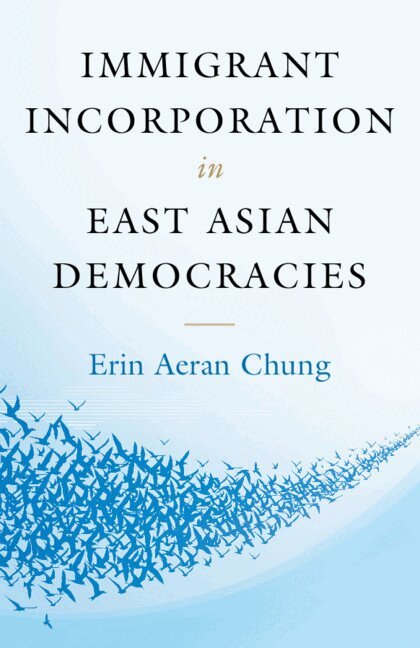






Du kanske också är intresserad av
- Nyhet
Rethinking the Migration State
Fiona B Adamson, Erin Aeran Chung, James F. Hollifield
Inbunden, 2026
3 199 kr
- Nyhet
Del 11
- Nyhet
Del 3
Del 1
- Nyhet
Del 4
- Nyhet
- Nyhet