
Del i serien New Jewish Philosophy and Thought
How to Talk to a Cat
Buber, Philosophy, and Dialogue with Unspeaking Things
Häftad, Engelska, 2026
459 kr
Skickas . Fri frakt för medlemmar vid köp för minst 249 kr.
Finns i fler format (1)
Guided by the philosophical insights of Jewish philosopher Martin Buber, How to Talk to a Cat explores the possibility of dialogue beyond the boundaries of spoken language. Original and effective in its interdisciplinary scope, this book ventures into the complexities of engaging in meaningful dialogue with creatures that do not use verbal communication, focusing on unspeaking beings we encounter in the domestic sphere: cats, babies, plants, and tools, among others.Author Dustin N. Atlas distinguishes between talking to entities in a direct, second-person dialogue, talking about them in a third-person analytical mode, and focusing on how the former is possible in the absence of speech. While many discussions of Buber's philosophy have focused on the I-You relationship, How to Talk to a Cat emphasizes the dynamic processes of dialogue that take place over time where attention, rather than presence, is central. Raising questions about the nature of understanding, cohabitation, and the possibility of connection across different beings, Atlas encourages readers to look more closely at their present life, to reconsider the scope of dialogue and extend it beyond the human to include the silent relationships we share with the world around us.Bringing Jewish thought into conversation with contemporary philosophy, ethology, animal studies, and critical theory, How to Talk to a Cat challenges prevailing assumptions about the limitations of dialogue and expands on the nature of understanding, cohabitation, and the possibility of connection across types of beings.
Produktinformation
- Utgivningsdatum2026-03-31
- Mått152 x 229 x 13 mm
- Vikt260 g
- FormatHäftad
- SpråkEngelska
- SerieNew Jewish Philosophy and Thought
- Antal sidor172
- FörlagIndiana University Press
- ISBN9780253075772
Tillhör följande kategorier
Hoppa över listan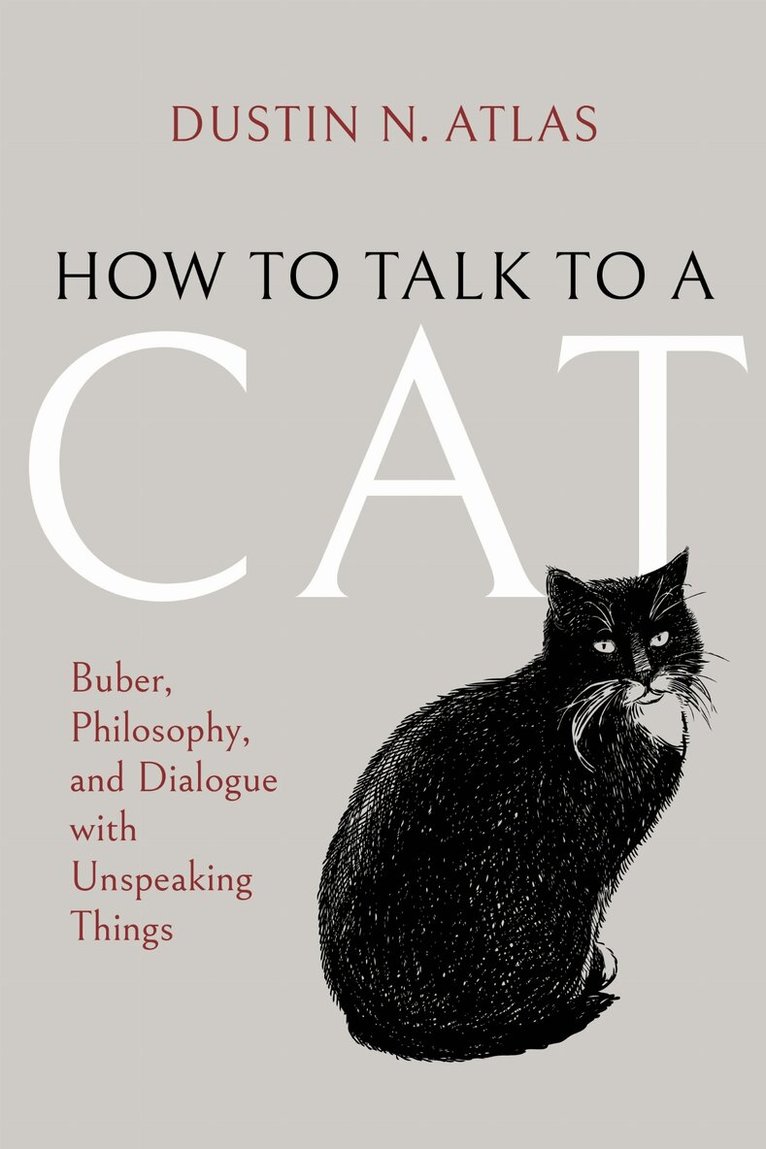




Du kanske också är intresserad av
- Nyhet
Medieval Jewish Philosophy and Its Literary Forms
Aaron W. Hughes, James T. Robinson
Häftad, 2019
639 kr