
House of Saulx-Tavanes
Versailles and Burgundy, 1700-1830
Häftad, Engelska, 2020
809 kr
Beställningsvara. Skickas inom 5-8 vardagar. Fri frakt för medlemmar vid köp för minst 249 kr.
Originally published in 1971. In The House of Saulx-Tavanes: Versailles and Burgundy, 1700–1830, Professor Robert Forster examines the noble family of Saulx-Tavanes from the reign of Louis XIV to the Restoration. He provides readers with an account of a single aristocratic family's relationship to the changing political culture of the eighteenth century. Forster explores how an old aristocratic family promoted itself in the royal court, how the Saulx-Tavanes managed their estate remotely from Paris, and how the family's relationship to its creditors changed over time. Forster examines the ambiguities of one noble family's transition from provincial independence to courtly dependence and, eventually, to revolution. This book is an account of how the Saulx-Tavanes—a family of émigré nobles—preserved their life, revenue, reputation, esteem, and place in a French society transformed by political change and revolution.
Produktinformation
- Utgivningsdatum2020-01-26
- Mått152 x 229 x 18 mm
- Vikt408 g
- FormatHäftad
- SpråkEngelska
- Antal sidor293
- FörlagJohns Hopkins University Press
- ISBN9781421430423
Tillhör följande kategorier
Hoppa över listan





Mer från samma författare
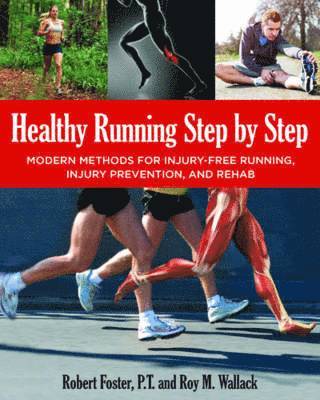
Healthy Running Step by Step: Self-Guided Methods for Injury-Free Running: Training, Technique, Nutrition, Rehab
Robert Forster, Roy Wallack
Häftad, 2014
569 kr
Hoppa över listan


Du kanske också är intresserad av
Thank You For A Lovely Day
Robert Forster, The Go-Betweens, Gunther Buskies, Jonas Engelmann
Inbunden, 2023
389 kr
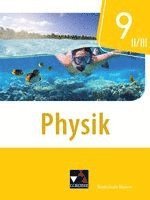
Physik 9 II/III Schülerband Realschule Bayern
Franziska Weber, Uwe Weber-Haenel, Christian Axenbeck, Sebastian Floder, Robert Forster, Christoph Fritsch, Sandra Hanke, Marco Nelkenbrecher, Markus Pollinger, Christian Axenbeck, Christoph Fritsch
Inbunden
609 kr
Healthy Running Step by Step: Self-Guided Methods for Injury-Free Running: Training, Technique, Nutrition, Rehab
Robert Forster, Roy Wallack
Häftad, 2014
569 kr
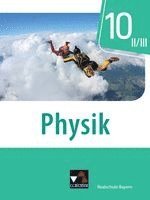
Physik Realschule Bayern 10 II/III
Thomas Stumpferl, Franziska Weber, Uwe Weber-Haenel, Christian Axenbeck, Sebastian Floder, Robert Forster, Christoph Fritsch, Sandra Hanke, Marco Nelkenbrecher, Markus Pollinger, Christian Axenbeck, Christoph Fritsch
Inbunden
579 kr