
Del i serien Global Urban Studies
Governing Urban Regions Through Collaboration
A View from North America
Häftad, Engelska, 2018
1 019 kr
Beställningsvara. Skickas inom 10-15 vardagar. Fri frakt för medlemmar vid köp för minst 249 kr.
Finns i fler format (1)
With the demise of the Old Regionalist project of achieving good regional governance through amalgamation, voluntary collaboration has become the modus operandi of a large number of North American metropolitan regions. Although many researchers have become interested in regional collaboration and its determinants, few have specifically studied its outcomes. This book contributes to filling this gap by critically re-evaluating the fundamental premise of the New Regionalism, which is that regional problems can be solved without regional/higher government. In particular, this research asks: to what extent does regional collaboration have a significant independent influence on the determinants of regional resilience? Using a comparative (Canada-U.S.) mixed-method approach, with detailed case studies of the San Francisco Bay Area, the Greater Montreal and trans-national Niagara-Buffalo regions, the book examines the direct and indirect impacts of inter-local collaboration on policy and policy outcomes at the regional and State/Provincial levels. The book research concentrates on the effects of bottom-up, state-mandated and functional collaboration and the moderating role of regional awareness, higher governmental initiative and civic capital on three outcomes: environmental preservation, socio-economic integration and economic competitiveness. In short, the book seeks to highlight those conditions that favor collaboration and might help avoid the collaborative trap of collaboration for its own sake. More specifically, this research concentrates on the effect of bottom-up, state-mandated and functional collaboration, the moderating role of regional awareness, governmental initiative and civic capital on environmental preservation, socio-economic integration and economic competitiveness. In short, the book seeks to understand whether and how urban regional collaboration contributes to regional resilience.
Produktinformation
- Utgivningsdatum2018-02-05
- Mått156 x 234 x undefined mm
- Vikt520 g
- FormatHäftad
- SpråkEngelska
- SerieGlobal Urban Studies
- Antal sidor280
- FörlagTaylor & Francis Ltd
- ISBN9781138546769
Tillhör följande kategorier
Hoppa över listan
Mer från samma serie
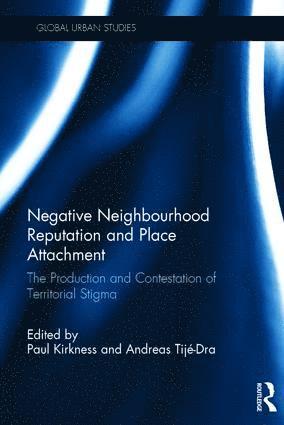
Negative Neighbourhood Reputation and Place Attachment
Paul Kirkness, Andreas Tijé-Dra
Häftad, 2021
889 kr
Hoppa över listan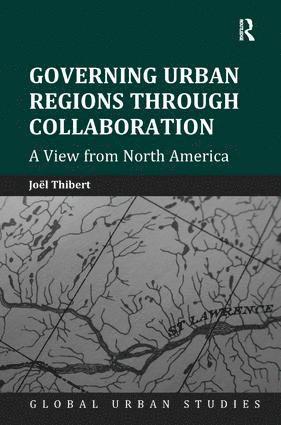
Du kanske också är intresserad av
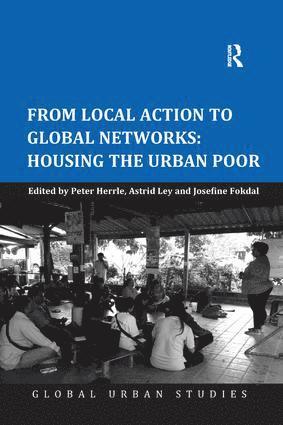
From Local Action to Global Networks: Housing the Urban Poor
Peter Herrle, Astrid Ley
Häftad, 2018
1 049 kr
Negative Neighbourhood Reputation and Place Attachment
Paul Kirkness, Andreas Tijé-Dra
Inbunden, 2017
3 219 kr