
Del i serien Bucknell University Press
George Oppen
The Words in Action
Häftad, Engelska, 2018
929 kr
Beställningsvara. Skickas inom 10-15 vardagar. Fri frakt för medlemmar vid köp för minst 249 kr.
Finns i fler format (1)
George Oppen's standing in American poetry has never been greater. Yet despite the mass of critical writing since his death in 1984, the essential basis of the verse—the words on the page and their acoustics—has rarely been the subject of discussion. In this book therefore Richard Swigg breaks away from the general trend of Oppen studies studies and offers the reader a direct way into the visual and auditory dimension of the poems. Ranging across the entire span of the work, from the 1930s to the 1970s, he traces for the first time the full extent of Oppen's engagement with the concrete world and his important poetic relationships with Charles Reznikoff, Denise Levertov, Charles Tomlinson and others.
Produktinformation
- Utgivningsdatum2018-03-23
- Mått152 x 230 x 18 mm
- Vikt354 g
- FormatHäftad
- SpråkEngelska
- SerieBucknell University Press
- Antal sidor232
- FörlagAssociated University Presses
- ISBN9781611487510
Tillhör följande kategorier
Hoppa över listan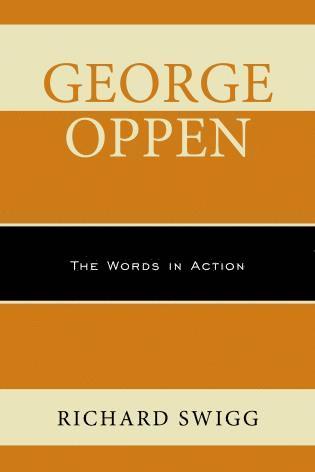


Du kanske också är intresserad av
- Nyhet
Del 3
- Nyhet
Del 11
- Nyhet
Del 4
Oliver Wendell Holmes Jr., Pragmatism, and the Jurisprudence of Agon
Allen Mendenhall
Häftad, 2018
909 kr