
Del i serien Praeger Security International
From the Terrorists' Point of View
What They Experience and Why They Come to Destroy
Inbunden, Engelska, 2006
979 kr
Beställningsvara. Skickas inom 10-15 vardagar. Fri frakt för medlemmar vid köp för minst 249 kr.
Presenting a picture of the world giving rise to Islamic terrorism, From the Terrorists' Point of View argues that terrorism arises from a deep and pervasive identity crisis in Islamic societies. The account presented in these 10 chapters is shaped by the author's first-hand experiences of life in the Islamic world, as well as his more than quarter-century of research on the psychology of conflict and radicalism. Moghaddam shows us why individuals who are recruited into terrorist organizations are convinced it is the only viable alternative. They believe there are no effective legal means of expressing their grievances and participating in decision making, so they become socialized to see terrorist organizations as legitimate. The organizations they join train them to adopt an us vs. them categorical view, seeing all members outside their group, including civilians, as among the evil enemy ranks.Looking at the perspective of the terrorist groups themselves, Moghaddam explains why current U.S. policy, focusing almost exclusively on individual terrorists and their eradication, will achieve only short-term gains. He argues that the more effective long-term policy against terrorism is prevention. That, he writes, requires cultivation and nourishment of contextualized democracy through culturally appropriate avenues. Only allowing people a greater voice and creating mobility opportunities for them will ensure that they do not feel a need to climb the staircase to terrorism.
Produktinformation
- Utgivningsdatum2006-06-30
- Mått156 x 235 x 19 mm
- Vikt454 g
- FormatInbunden
- SpråkEngelska
- SeriePraeger Security International
- Antal sidor192
- FörlagBloomsbury Publishing Plc
- ISBN9780275988258
Tillhör följande kategorier
Hoppa över listan







Mer från samma författare
The Psychology of Serious Everyday World Problems
Robert J. Sternberg, Séamus A. Power, Fathali M. Moghaddam
Häftad, 2026
729 kr
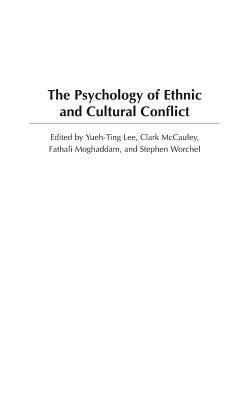
Psychology of Ethnic and Cultural Conflict
Yueh-Ting Lee, Clark McCauley, Fathali M. Moghaddam, Stephen Worchel
Inbunden, 2004
1 329 kr
Hoppa över listan







Mer från samma serie
Terrorism, Asymmetric Warfare, and Weapons of Mass Destruction
Anthony H. Cordesman
Inbunden, 2001
1 189 kr
Nuclear Winter, Deterrence, and the Prevention of Nuclear War
Peter C. Sederberg, Peter C. Sederberg
Inbunden, 1986
1 189 kr
Nuclear Weapons, Policies, and the Test Ban Issue
William R. Van Cleave, S. T. Cohen
Inbunden, 1987
1 189 kr
Hoppa över listan









Du kanske också är intresserad av
- Nyhet
Del 3
- Nyhet
Del 11
- Nyhet
Del 4
- Nyhet
Del 6
Del 1
Del 3
Del 2
Del 7
- Nyhet
Del 1
- Nyhet