
Forging Radical Alliances across Difference
Coalition Politics for the New Millennium
Inbunden, Engelska, 2001
2 419 kr
Beställningsvara. Skickas inom 10-15 vardagar. Fri frakt för medlemmar vid köp för minst 249 kr.
As we enter the twenty-first century, scholars, activists and others concerned with social change increasingly realize that in order to transform society effective coalitions among different groups working for social justice need to be created and maintained. However, most of the research and writing about coalitions provide rather limited approaches to the study and understanding of radical alliances; i.e.: coalitions whose goals are to fundamentally change interpersonal relations and social structure in order to achieve equality and true social justice. This anthology challenges dominant approaches of explaining social movements and coalition building. Based on numerous case studies of alliances created between disparate peoples and among a variety of groups, the authors show that both resource mobilization theories and identity politics frameworks for the most part are inadequate for conceptualizing how alliances have been and can be created across boundaries of gender, race/ethnicity, class, nationality, ideology, sexual orientation, and age. The theoretical approach we propose suggests that coalitions are fluid sites of collective behavior where the blending of multiple identities with political activism interact with structural conditions to influence the development of commitments, strategies and specific actions. This analogy makes a contribution to a body of knowledge that aims to understand and explain how radical coalitions work in order to enable the development of visions and plans for change that advance and sustain political and social activity.
Produktinformation
- Utgivningsdatum2001-11-12
- Mått160 x 236 x 27 mm
- Vikt558 g
- FormatInbunden
- SpråkEngelska
- Antal sidor288
- FörlagBloomsbury Publishing Plc
- ISBN9780742510579
Tillhör följande kategorier
Hoppa över listan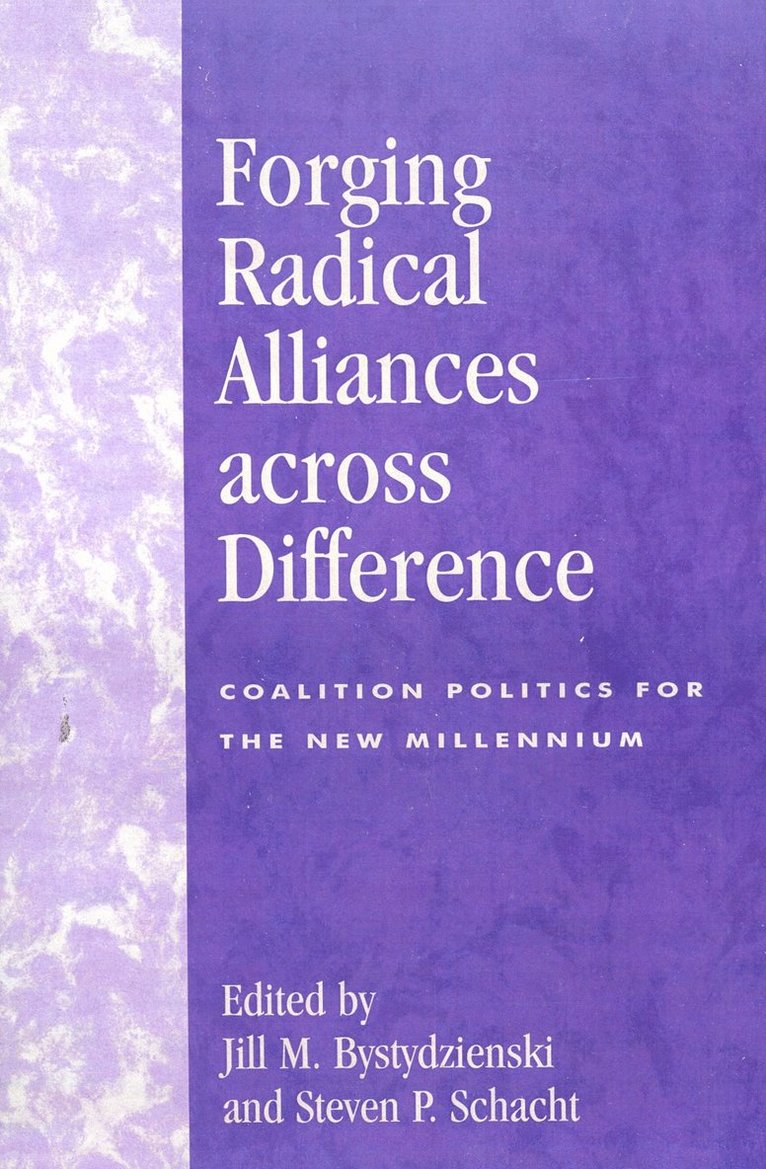





Du kanske också är intresserad av
- Nyhet
- Nyhet
Del 4
- Nyhet
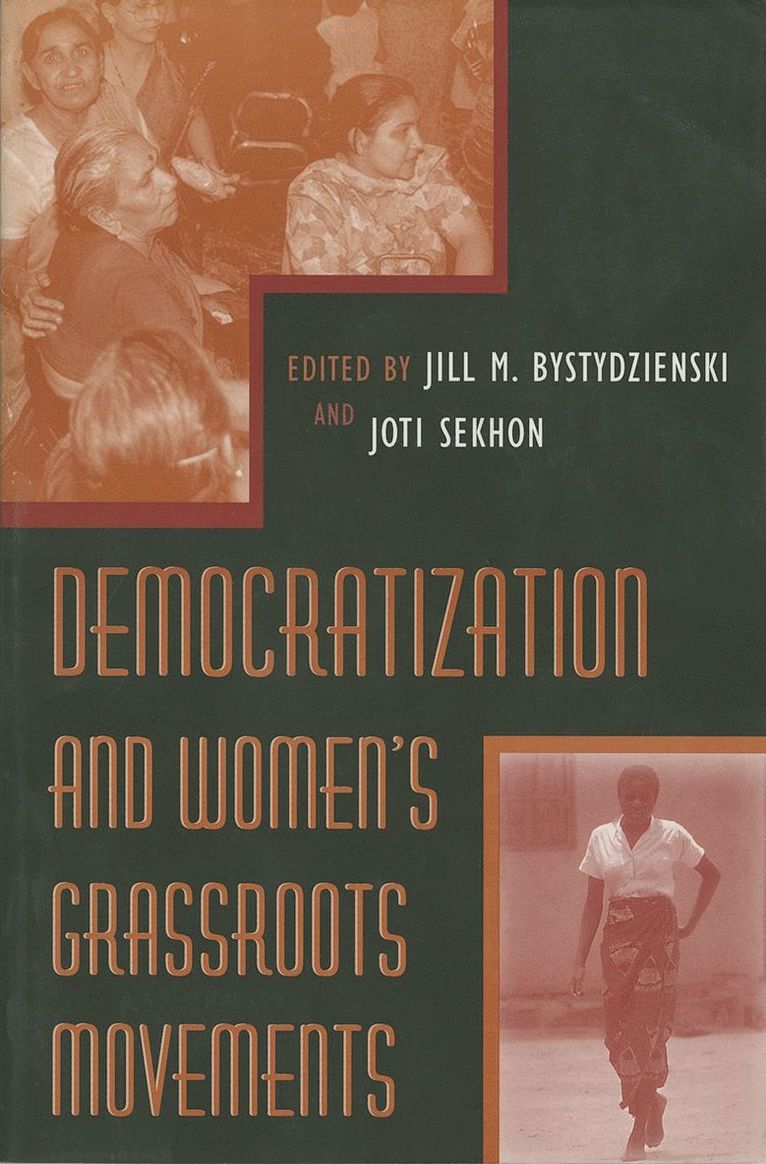
Democratization and Women's Grassroots Movements
Jill M. Bystydzienski, Joti Sekhon, Jill Bystydzienski
Häftad
319 kr
- Nyhet