
Fibonacci and Catalan Numbers
An Introduction
Inbunden, Engelska, 2012
1 799 kr
Beställningsvara. Skickas inom 5-8 vardagar. Fri frakt för medlemmar vid köp för minst 249 kr.
Discover the properties and real-world applications of the Fibonacci and the Catalan numbers With clear explanations and easy-to-follow examples, Fibonacci and Catalan Numbers: An Introduction offers a fascinating overview of these topics that is accessible to a broad range of readers.Beginning with a historical development of each topic, the book guides readers through the essential properties of the Fibonacci numbers, offering many introductory-level examples. The author explains the relationship of the Fibonacci numbers to compositions and palindromes, tilings, graph theory, and the Lucas numbers.The book proceeds to explore the Catalan numbers, with the author drawing from their history to provide a solid foundation of the underlying properties. The relationship of the Catalan numbers to various concepts is then presented in examples dealing with partial orders, total orders, topological sorting, graph theory, rooted-ordered binary trees, pattern avoidance, and the Narayana numbers.The book features various aids and insights that allow readers to develop a complete understanding of the presented topics, including: Real-world examples that demonstrate the application of the Fibonacci and the Catalan numbers to such fields as sports, botany, chemistry, physics, and computer science More than 300 exercises that enable readers to explore many of the presented examples in greater depth Illustrations that clarify and simplify the concepts Fibonacci and Catalan Numbers is an excellent book for courses on discrete mathematics, combinatorics, and number theory, especially at the undergraduate level. Undergraduates will find the book to be an excellent source for independent study, as well as a source of topics for research. Further, a great deal of the material can also be used for enrichment in high school courses.
Produktinformation
- Utgivningsdatum2012-03-23
- Mått164 x 241 x 26 mm
- Vikt676 g
- FormatInbunden
- SpråkEngelska
- Antal sidor380
- FörlagJohn Wiley & Sons Inc
- ISBN9780470631577
Tillhör följande kategorier
Hoppa över listan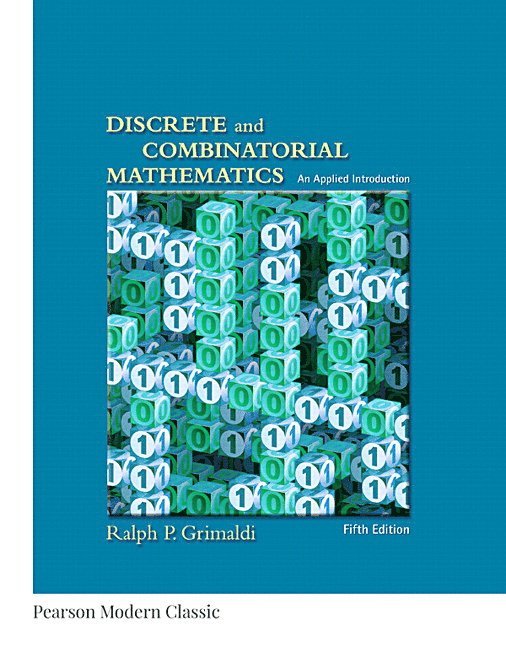
Mer från samma författare
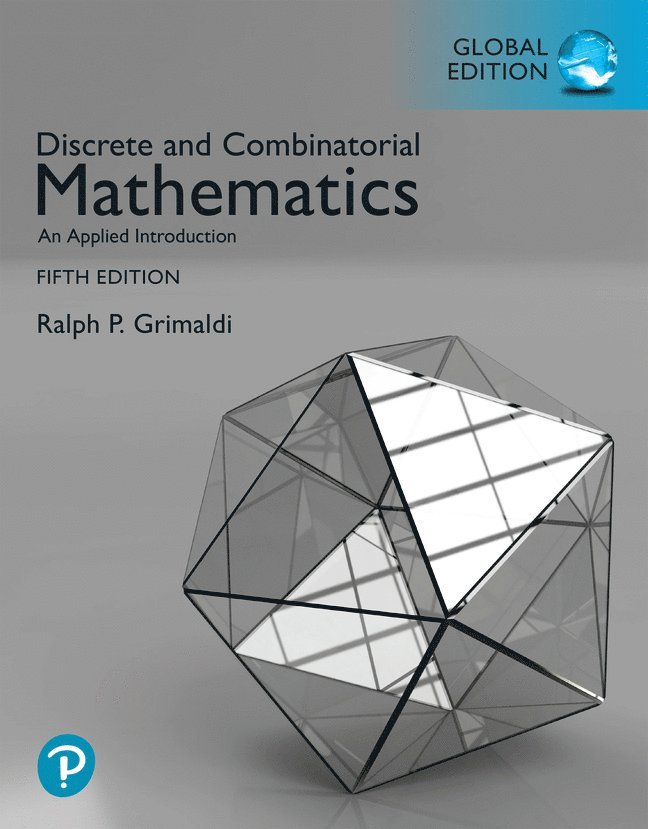
Discrete and Combinatorial Mathematics (Classic Version), Global Edition
Ralph Grimaldi
Häftad, 2026
939 kr
Hoppa över listan






Du kanske också är intresserad av
Discrete and Combinatorial Mathematics (Classic Version), Global Edition
Ralph Grimaldi
Häftad, 2026
939 kr
- Nyhet
Del 3
- Nyhet
Del 11
- Nyhet
Domino : Dåren, domaren och den välkammade mannen från pirayaministeriet
Håkan Nesser
Inbunden, 2026
289 kr329 kr
- Nyhet
Del 6
- Nyhet
Del 4
Del 3
Del 1