
Feminism and the Power of Love
Interdisciplinary Interventions
Häftad, Engelska, 2019
839 kr
Beställningsvara. Skickas inom 10-15 vardagar. Fri frakt för medlemmar vid köp för minst 249 kr.
Finns i fler format (1)
The power of love has become a renewed matter of feminist and non-feminist attention in the 21st century’s theory debates. What is this power? Is it a form of domination? Or is it a liberating force in our contemporary societies?Within Feminism and the Power of Love lies the central argument that, although love is a crucial site of gendered power asymmetries, it is also a vital source of human empowerment that we cannot live without. Instead of emphasizing "either-or", this enlightening title puts the dualities and contradictions of love center stage. Indeed, by offering various theoretical perspectives on what makes love such a central value and motivator for people, this title will increase one’s understanding as to why love can keep people in its grip - even when practiced in ways that deplete and oppress. In light of such analyses, the contributions within Feminism and the Power of Love present new perspectives on the conditions and characteristics of non-oppressive, mutually enhancing ways of loving. Bridging the gap between Feminist Affect Studies and Feminist Love Studies, this book will appeal to undergraduate and postgraduate students, including postdoctoral researchers, interested in fields such as women’s and gender studies, sociology, political science, philosophy, cultural studies and sexuality studies.
Produktinformation
- Utgivningsdatum2019-05-21
- Mått156 x 234 x 13 mm
- Vikt380 g
- FormatHäftad
- SpråkEngelska
- SerieRoutledge Advances in Feminist Studies and Intersectionality
- Antal sidor208
- FörlagTaylor & Francis Ltd
- ISBN9780367350994
Tillhör följande kategorier
Hoppa över listan








Mer från samma serie
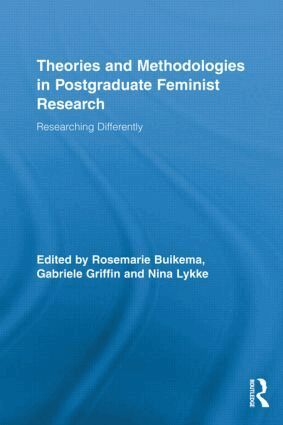
Theories and Methodologies in Postgraduate Feminist Research
Rosemarie Buikema, Gabriele Griffin, Nina Lykke
Inbunden, 2011
3 189 kr
Pluriversal Conversations on Transnational Feminisms
Nina Lykke, Redi Koobak, Petra Bakos, Swati Arora, Kharnita Mohamed
Häftad, 2025
849 kr
Intersectionality in Feminist and Queer Movements
Elizabeth Evans, Eléonore Lépinard
Inbunden, 2019
3 249 kr
Hoppa över listan









Du kanske också är intresserad av
Feminism and the Power of Love
Adriana García-Andrade, Lena Gunnarsson, Anna Jónasdóttir
Inbunden, 2018
3 249 kr
Retrieving for all occasions : foundations for exellence in gun dog training
Elsa Blomster, Lena Gunnarsson
Inbunden, 2015
299 kr
Valpträning till vardag och fest : studiehandledning
Elsa Blomster, Lena Gunnarsson
Häftad, 2022
269 kr
Gender, Feminism and Critical Realism
Lena Gunnarsson, Angela Martinez Dy, Michiel van Ingen
Inbunden, 2017
3 249 kr
Gender, Feminism and Critical Realism
Lena Gunnarsson, Angela Martinez Dy, Michiel van Ingen
Häftad, 2019
899 kr
Is There A Nordic Feminism?
ude von der Fehr, Anna Jonasdottir, Bente Rosenbeck
Inbunden, 1998
3 279 kr