
Everyday Occupation
American Soldiers and Chinese Civilians after World War II
Häftad, Engelska, 2025
569 kr
Skickas . Fri frakt för medlemmar vid köp för minst 249 kr.
Finns i fler format (1)
'In this rich history of everyday encounters between US soldiers and Chinese civilians, Chunmei Du explores their entangled relations from the end of World War II to the founding of the People's Republic of China. Drawing upon official, popular and personal accounts from both countries, Du examines the sensorial, material, and symbolic exchanges that took place between GIs and ordinary Chinese people-stall vendors, pedestrians, rickshaw pullers, 'Jeep girls,' and suspected thieves. Through the conceptual lens of the everyday, this book reveals how interactions such as traffic accidents, sexual relations, theft, and black-market dealings, impacted larger political dynamics during this pivotal era. Du shows how mundane struggles made imperialism and sovereignty tangible, fueling anti-American sentiment. Meanwhile, these encounters fostered informal diplomacy, shaping identities and forging new bonds that left a lasting imprint on both countries. This title is also available as Open Access on Cambridge Core.'
Produktinformation
- Utgivningsdatum2025-12-11
- Mått152 x 231 x 16 mm
- Vikt450 g
- FormatHäftad
- SpråkEngelska
- Antal sidor312
- FörlagCambridge University Press
- ISBN9781009600668
Tillhör följande kategorier
Hoppa över listan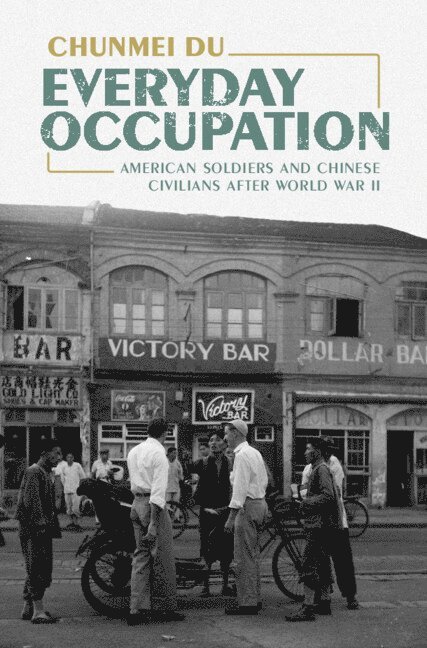






Du kanske också är intresserad av
- Nyhet
Del 3
- Nyhet
Del 11
- Nyhet
Del 4
- Nyhet
Del 6
Del 1
Del 3
Del 2
Del 7