
End of Laissez-Faire
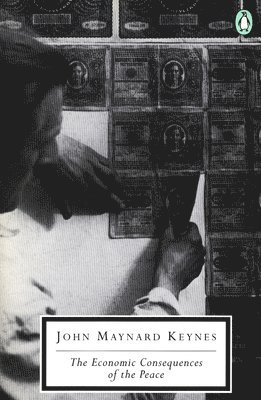
The Economic Consequences of the Peace
Häftad, Engelska, 2004
319 kr
Beställningsvara. Skickas inom 5-8 vardagar. Fri frakt för medlemmar vid köp för minst 249 kr.
Finns i fler format (2)
John Maynard Keynes (1883-1946) was the most influential economist of the first half of the twentieth century. During both world wars he was an adviser to the British treasury, and his theory of government stimulation of the economy through deficit spending influenced Franklin D. Roosevelt's "New Deal" administration. The mass unemployment caused by the Great Depression inspired his most famous work, General Theory of Employment, Interest and Money (1935-36).Keynes first gained widespread prominence immediately following World War I, when he attended the Versailles peace conference as an economic adviser to British Prime Minister David Lloyd George. Disgusted with the harshly punitive and unrealistic provisions of the Versailles Treaty, as well as the political chicanery and general incompetence of the chief participants, he published The Economic Consequences of the Peace in 1919. This book gained a good deal of notoriety because of its withering portraits of both French premier Georges Clemenceau and U.S. President Woodrow Wilson. Keynes described Clemenceau as motivated only by shortsighted nationalistic goals and vindictiveness, which aimed at crippling Germany for generations no matter what the consequences to the rest of Europe. He found fault with Wilson for his ivory tower idealism, lack of diplomatic savvy, and unfamiliarity with the political realities of Europe. This ineffectual combination ultimately dashed his best hopes for a League of Nations and a just resolution to the war in Europe. In a point-by-point analysis Keynes makes clear the ruinous consequences of the treaty to all of Europe and proposes substantial modifications. Unfortunately, few appreciated Keynes's prescience, and he saw his worst fears realized in the rise of Hitler and the devastation of World War II.In The End of Laissez-Faire (1926) he presents a brief historical review of laissez-faire economic policy. Though he agrees in principle that a marketplace of free individuals pursuing their own self-interest without government interference has a better chance of improving society's economic situation than socialist alternatives, he suggests that government can play a constructive role in protecting individuals from the worst harms of capitalism's cycles, especially as concerns unemployment. Other useful government functions are the dissemination of information relating to business conditions, encouraging savings and investment along "nationally productive channels," and forming a national policy about the size of population.Keynes's brilliant mind and lucid writing are evident on every page. Both of these works are still well worth reading for his many stimulating ideas and profound knowledge of economics.
Produktinformation
- Utgivningsdatum2004-12-01
- Mått151 x 200 x 17 mm
- Vikt331 g
- FormatHäftad
- SpråkEngelska
- Antal sidor302
- FörlagPrometheus Books
- ISBN9781591022688
Tillhör följande kategorier
Hoppa över listan
Mer från samma författare
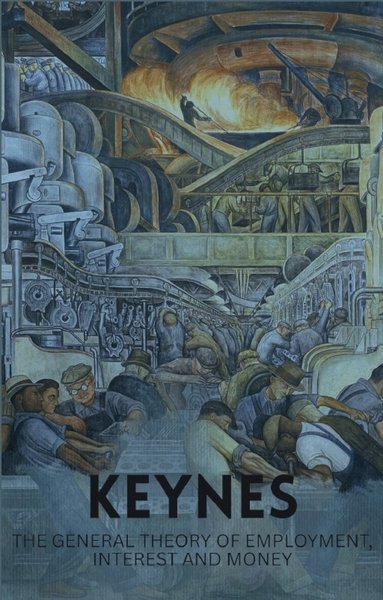
General Theory of Employment Interest and Money
Maynard John Keynes, John Maynard Keynes
Häftad, 2010
389 kr