
Del i serien Middle East Studies Beyond Dominant Paradigms
Empires in Friction
- Nyhet
Egypt in the Sixteenth Century
Häftad, Engelska, 2026
899 kr
Beställningsvara. Skickas inom 3-6 vardagar. Fri frakt för medlemmar vid köp för minst 249 kr.
Finns i fler format (1)
In 1517, the Ottoman Empire had finally defeated the Mamluk Sultanate in Egypt, completing their conquest of the Middle East and turning Egypt into a province of the Ottoman Empire. While much has been documented about the Mamluk period until 1517, publications on the historical record about the sixteenth century reveals little from distinctly Egyptian perspectives. In Empires in Friction, Nelly Hanna explores this transitional period and provides insight into the intricate dynamics of imperial control and political transition. With an original approach to understanding empire, Hanna challenges traditional narratives that emphasize the centralization of power and the dominance of the capital. Instead, she proposes a nuanced paradigm that focuses on the imperial problem of distance, the autonomy of provinces, and the continuity of local customs and economic activities across different imperial regimes. Hanna dives into the financial, economic, and commercial domains where Ottomanization happened. In each, the new ruling power faced challenges in understanding the existing processes, but ultimately the ability of Egyptian merchants to prosper under Ottoman rule shows how Egypt remained under the Ottomans for so many centuries. Hanna deftly demonstrates the strain and areas of conformity in transferring from one imperial system with specific traditions to another. Fused together through the continuation of provincial operation, the Mamluk and Ottoman rules were not observably differentiable during the sixteenth century as the periphery operated at an arm’s length from the Ottoman capital.
Produktinformation
- Utgivningsdatum2026-10-15
- FormatHäftad
- SpråkEngelska
- SerieMiddle East Studies Beyond Dominant Paradigms
- Antal sidor344
- FörlagSyracuse University Press
- ISBN9780815612292
Tillhör följande kategorier
Hoppa över listan
Mer från samma författare
Artisan Entrepreneurs in Cairo (1600-1800) and Early Modern Capitalism
Nelly Hanna
Inbunden, 2011
529 kr
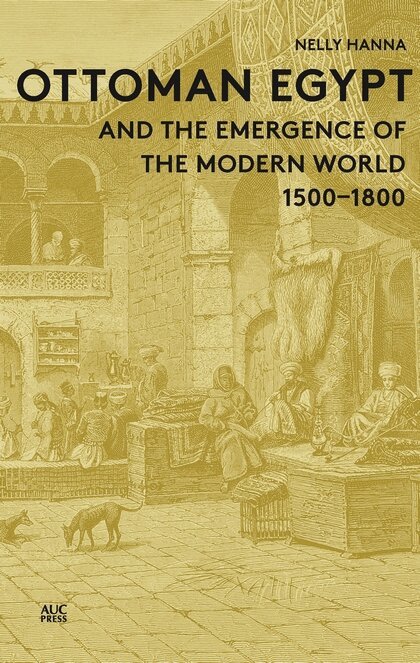
Ottoman Egypt and the Emergence of the Modern World
Distinguished Professor Nelly Hanna, Nelly Hanna
Inbunden, 2014
569 kr
Hoppa över listan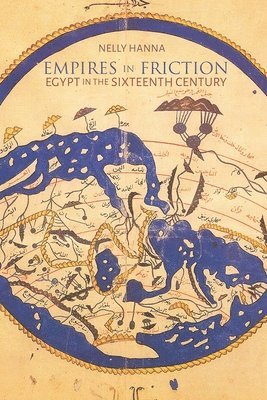

Du kanske också är intresserad av
Ottoman Egypt and the Emergence of the Modern World
Distinguished Professor Nelly Hanna, Nelly Hanna
Inbunden, 2014
569 kr
Artisan Entrepreneurs in Cairo (1600-1800) and Early Modern Capitalism
Nelly Hanna
Inbunden, 2011
529 kr
- Nyhet
Del 11