
Education in the 21st Century
STEM, Creativity and Critical Thinking
Häftad, Engelska, 2023
2 019 kr
Beställningsvara. Skickas inom 10-15 vardagar. Fri frakt för medlemmar vid köp för minst 249 kr.
Finns i fler format (1)
This book explores a range of issues central to STEM and 21st Century education. It explores research into the relationships between creativity, critical thinking and STEM Education from both a theoretical and practical perspective. It examines matters associated with three main concerns: First is the ways some research and development that is labelled “STEM” appears to be essentially one of the specific individual components, S, T, E or M, with a new label rather than something going across and/or beyond these more traditional components. The second, at times intertwining, concern is the common ways in which school curriculum continues to hold separate disciplines as its core. The third concern is that while cross-curriculum goals are increasingly common in this century - particularly for “creativity” and “critical thinking” - it is also common that the goals remain only vaguely linked with the more usual components of the whole curriculum. This book reflects on all three of theseimportant concerns and the integrated whole that can result from them. Monash University, King’s College London and Waikato University have now generated six edited books on successive related research issues of significance to contemporary science education. Each of these books has been substantially shaped by a writing workshop involving all authors in intensive discussion about drafts of their contributions (a process of great worth in its own right, as well as for enhancing the value of the final volume), and then each author reworking the contribution in the light of the discussions The seventh will extend beyond science education and explore a range of issues central to STEM and 21st Century education.
Produktinformation
- Utgivningsdatum2023-02-02
- Mått155 x 235 x 14 mm
- Vikt364 g
- FormatHäftad
- SpråkEngelska
- Antal sidor191
- FörlagSpringer Nature Switzerland AG
- ISBN9783030853020
Tillhör följande kategorier
Hoppa över listan

Mer från samma författare
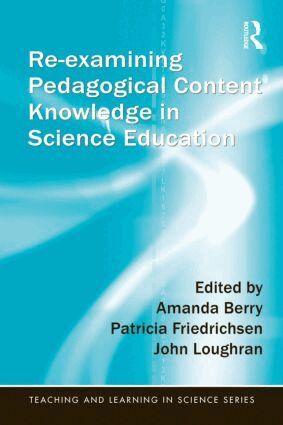
Re-examining Pedagogical Content Knowledge in Science Education
Amanda Berry, Patricia Friedrichsen, John Loughran
Häftad, 2015
1 039 kr
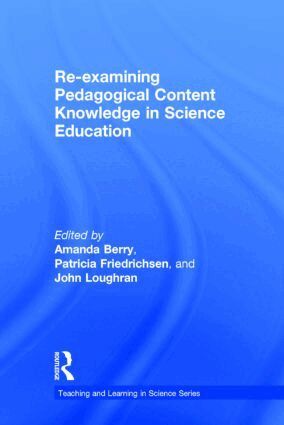
Re-examining Pedagogical Content Knowledge in Science Education
Amanda Berry, Patricia Friedrichsen, John Loughran
Inbunden, 2015
3 189 kr
Del 5
Hoppa över listan
Du kanske också är intresserad av
Education in the 21st Century
Amanda Berry, Cathy Buntting, Deborah Corrigan, Richard Gunstone, Alister Jones
Inbunden, 2022
2 019 kr
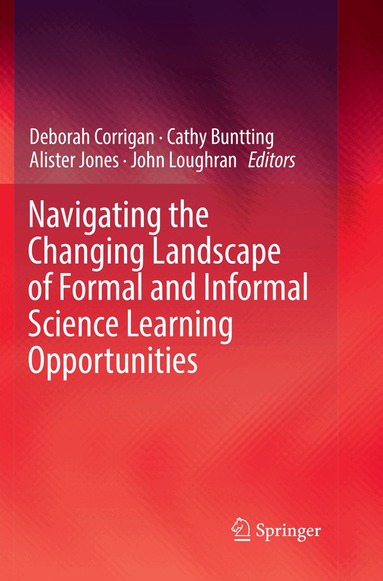
Navigating the Changing Landscape of Formal and Informal Science Learning Opportunities
Deborah Corrigan, Cathy Buntting, Alister Jones, John Loughran
Inbunden, 2018
729 kr
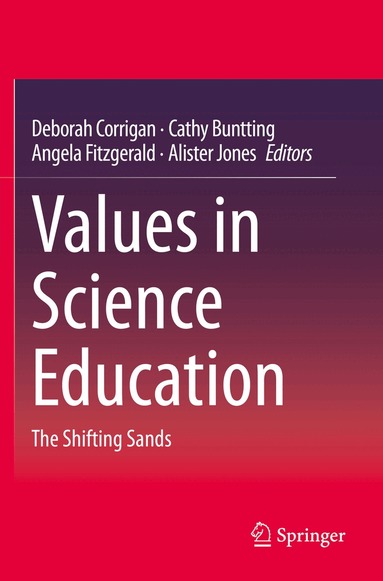
Values in Science Education
Deborah Corrigan, Cathy Buntting, Angela Fitzgerald, Alister Jones
Inbunden, 2020
1 449 kr
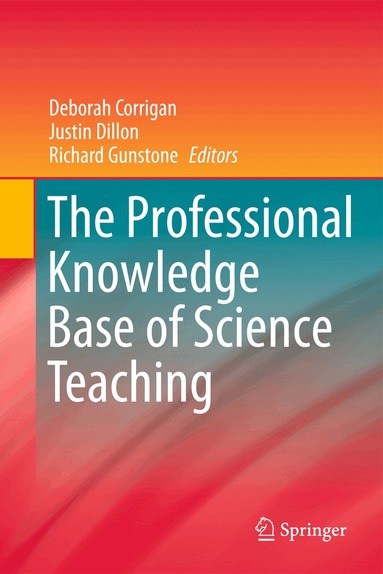
Professional Knowledge Base of Science Teaching
Deborah Corrigan, Justin Dillon, Richard Gunstone
Inbunden, 2011
1 409 kr
Values in Science Education
Deborah Corrigan, Cathy Buntting, Angela Fitzgerald, Alister Jones
Häftad, 2021
1 449 kr
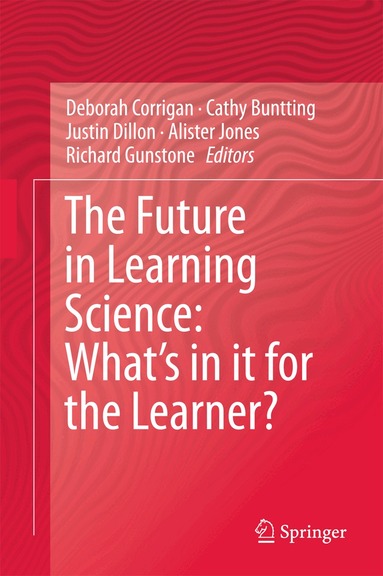
Future in Learning Science: What’s in it for the Learner?
Deborah Corrigan, Cathy Buntting, Justin Dillon, Alister Jones, Richard Gunstone
Inbunden, 2015
1 449 kr
Navigating the Changing Landscape of Formal and Informal Science Learning Opportunities
Deborah Corrigan, Cathy Buntting, Alister Jones, John Loughran
Häftad, 2018
729 kr
Valuing Assessment in Science Education: Pedagogy, Curriculum, Policy
Deborah Corrigan, Richard Gunstone, Alister Jones
Häftad, 2015
2 019 kr
Future in Learning Science: What’s in it for the Learner?
Deborah Corrigan, Cathy Buntting, Justin Dillon, Alister Jones, Richard Gunstone
Häftad, 2016
1 449 kr
Valuing Assessment in Science Education: Pedagogy, Curriculum, Policy
Deborah Corrigan, Richard Gunstone, Alister Jones
Inbunden, 2013
2 019 kr