
Economic Literacy and Money Illusion
An Experimental Perspective
Häftad, Engelska, 2020
909 kr
Beställningsvara. Skickas inom 10-15 vardagar. Fri frakt för medlemmar vid köp för minst 249 kr.
Finns i fler format (1)
The concept of money illusion, a recently resurrected phenomenon of behavioral economics, is a real fact of economic life, the potential role of which should no longer be dismissed. Despite money illusion being utterly suppressed by mainstream economists, small deviations from rationality, together with trends in behavioral economics, alleviate the denial of money illusion induced by the rational expectations revolution. This book argues that money illusion seems to be a ubiquitous phenomenon, affecting various areas such as financial markets, housing markets, labor markets, consumption-saving decisions, and even development at the aggregate level induced by coordination issues. Furthermore, in light of the educational efforts of central banks and other institutions, it is worth considering whether solid economic training would provide guidance for the public regarding their decision-making and thereby alleviate the effects of money illusion. The emerging field of experimental economics provides a unique opportunity for us to verify the presence of money illusion. Specifically, attention is devoted to the experimental investigation of reduction in the direct and indirect effects of money illusion with respect to the level of economic literacy acquired through economic education.Economic Literacy and Money Illusion will be of interest to the general audience and to those who are interested in behavioral economics, economics education, and experimental economics, as well as to policy makers and institutions. Last but not least, it will help develop students’ interest in alternative economic theories.NB. The research and writing of this book was made possible with the support of the University of Economics, Prague, Faculty of Economics, Department of Economics.
Produktinformation
- Utgivningsdatum2020-08-14
- Mått156 x 234 x 11 mm
- Vikt453 g
- FormatHäftad
- SpråkEngelska
- SerieRoutledge Advances in Experimental and Computable Economics
- Antal sidor192
- FörlagTaylor & Francis Ltd
- ISBN9780367594893
Tillhör följande kategorier
Hoppa över listan
Mer från samma serie
Classical Econophysics
Allin F. Cottrell, Paul Cockshott, Gregory John Michaelson, Ian P. Wright, Victor Yakovenko
Inbunden, 2009
3 509 kr
Computational Intelligence Techniques for Trading and Investment
Christian Dunis, Spiros Likothanassis, Andreas Karathanasopoulos, Georgios Sermpinis, Konstantinos Theofilatos
Inbunden, 2014
1 009 kr
Hoppa över listan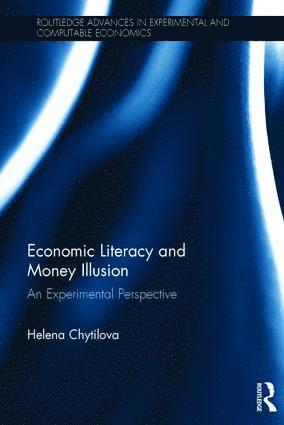
Du kanske också är intresserad av
Neuroscience and the Economics of Decision Making
Alessandro Innocenti, Alessandro Innocenti, Angela Sirigu
Häftad, 2014
1 189 kr