
Del i serien Advances in Ecological Economics series
Economic Growth, Material Flows and the Environment
New Applications of Structural Decomposition Analysis and Physical Input–Output Tables
Inbunden, Engelska, 2005
2 389 kr
Beställningsvara. Skickas inom 5-8 vardagar. Fri frakt för medlemmar vid köp för minst 249 kr.
Rutger Hoekstra examines the complex relationship between the monetary economy and the materials flows that are extracted and emitted by economic activities. These physical flows are responsible for many important environmental problems such as unsustainable resource depletion, waste production and climate change. This book discusses, applies and improves upon techniques which link the monetary and physical economies for environmental analyses. The book uses two sources of analysis: the physical input-output table (PIOT), a macro-economic account for the physical economy, recording material and product flows, including resource extraction, emissions and recycling; and structural decomposition analysis (SDA), which assesses the influence of structural changes, such as economic growth, consumption shifts, export growth and technological change, on environmental indicators. Methodological improvements in the PIOT and SDA systems are then presented by the author, and applied to empirical data. Ecological and industrial economists, along with those with an interest in environmental problems associated with the economy will find this book, with its extensive historical analysis and novel fore- and back-casting models, to be a fascinating read.
Produktinformation
- Utgivningsdatum2005-07-27
- Mått156 x 234 x undefined mm
- FormatInbunden
- SpråkEngelska
- SerieAdvances in Ecological Economics series
- FörlagEdward Elgar Publishing Ltd
- ISBN9781845421892
Tillhör följande kategorier
Hoppa över listan
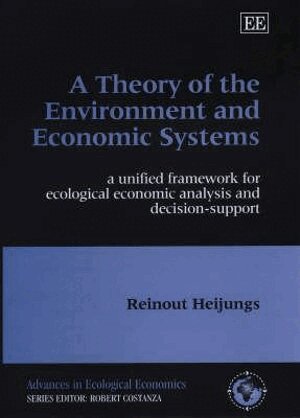
Mer från samma serie
Innovations in Sustainable Consumption
Maurie J. Cohen, Halina Szejnwald Brown, Philip J. Vergragt
Inbunden, 2013
2 779 kr
Innovations in Sustainable Consumption
Maurie J. Cohen, Halina Szejnwald Brown, Philip J. Vergragt
Häftad, 2014
699 kr
Sustainability in Question
Jörg Köhn, John M. Gowdy, Friedrich Hinterberger, Jan van der Straaten
Inbunden, 1999
3 049 kr
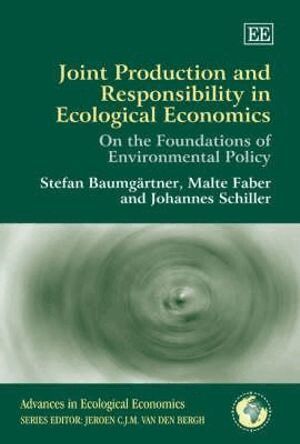
Joint Production and Responsibility in Ecological Economics
Stefan Baumgärtner, Malte Faber, Johannes Schiller
Inbunden, 2006
3 159 kr
Hoppa över listan
Du kanske också är intresserad av
Joint Production and Responsibility in Ecological Economics
Stefan Baumgärtner, Malte Faber, Johannes Schiller
Inbunden, 2006
3 159 kr
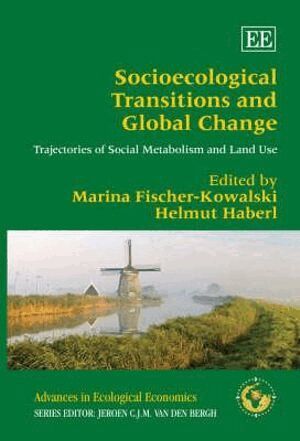
Socioecological Transitions and Global Change
Marina Fischer-Kowalski, Helmut Haberl
Inbunden, 2007
2 619 kr
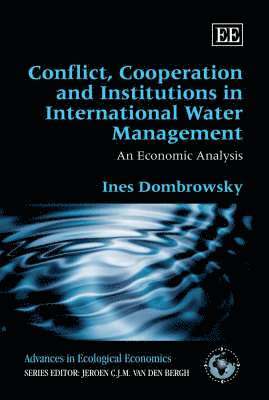
Conflict, Cooperation and Institutions in International Water Management
Ines Dombrowsky
Inbunden, 2007
3 159 kr
Innovations in Sustainable Consumption
Maurie J. Cohen, Halina Szejnwald Brown, Philip J. Vergragt
Inbunden, 2013
2 779 kr