
- Nyhet
Driving the Change
Towards Sustainable Development Goal of Education
Inbunden, Engelska, 2025
3 119 kr
Beställningsvara. Skickas inom 10-15 vardagar. Fri frakt för medlemmar vid köp för minst 249 kr.
A Royal Rescript issued in 1817 by Rani Gouri Parvati Bayi, queen of Travancore (Kerala), proclaimed that the state would defray the entire cost of education. She envisioned that only free and universal education would enable her state to overcome backwardness and empower its people to contribute to the state’s advancement. To uphold the continued relevance of that spirit, the Institute of Social Sciences in New Delhi, India commemorated the bicentenary of the Royal Rescript in 2017. This volume consolidates a selection of contributions from educational experts, academics and scholars, which were presented at the commemoration.The papers in this volume attempt to deconstruct conventional approaches to understanding education. They discuss the underlying forces that have continued to perpetuate inter-generational inequalities in the provision and attainment of education, especially amongst the low income and marginalized populations. The chapters also present an analysis of the aspects of equity and quality in primary, secondary, and tertiary education, accountability in public policy, the power of building progressive partnerships and alliances, and most importantly, the cumulative benefits of forging multi-sectoral linkages.Print edition not for sale in South Asia (India, Sri Lanka, Nepal, Bangladesh, Pakistan or Bhutan)
Produktinformation
- Utgivningsdatum2025-05-01
- Mått138 x 216 x 19 mm
- Vikt700 g
- FormatInbunden
- SpråkEngelska
- Antal sidor272
- FörlagTaylor & Francis Ltd
- ISBN9781041016007
Tillhör följande kategorier
Hoppa över listan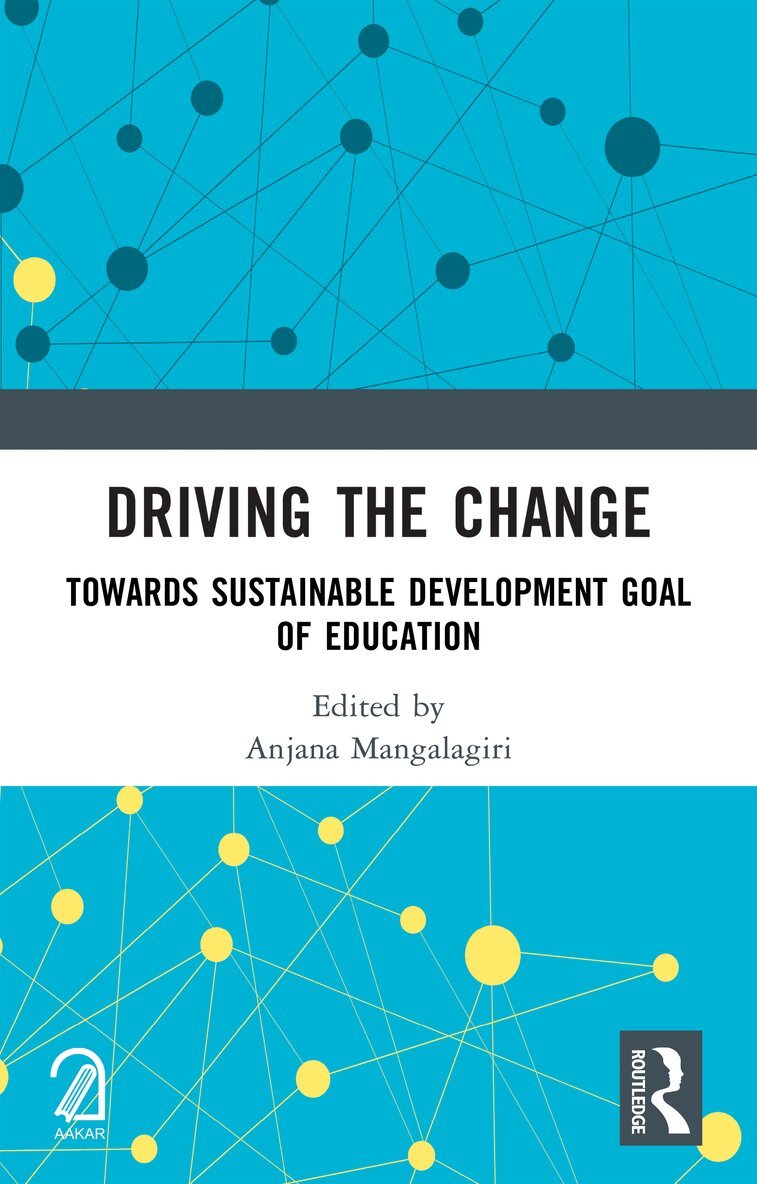







Du kanske också är intresserad av
Quality and Inclusion in Education
N.V. Varghese, Anjana Mangalagiri, A. Mathew
Inbunden, 2023
3 119 kr
- Nyhet
Del 3
- Nyhet
Del 11
- Nyhet
- Nyhet
- Nyhet
Del 4
Del 1