
Dramatic Reinvention
German Television and Moral Renewal after National Socialism, 1956–1970
Häftad, Engelska, 2025
519 kr
Skickas . Fri frakt för medlemmar vid köp för minst 249 kr.
Finns i fler format (1)
Following World War II, Germany was faced not only with the practical tasks of reconstruction and denazification, but also with the longer-term mission of morally “re-civilizing” its citizens—a goal that persisted through the nation’s 1949 split. One of the most important mediums for effecting reeducation was television, whose strengths were particularly evident in the thousands of television plays that were broadcast in both Germanys in the 1950s and 1960s. This book shows how TV dramas transcended state boundaries and—notwithstanding the ideological differences between East and West—addressed shared issues and themes, helping to ease viewers into confronting uncomfortable moral topics.
Produktinformation
- Utgivningsdatum2025-12-01
- Mått152 x 229 x 14 mm
- Vikt336 g
- FormatHäftad
- SpråkEngelska
- Antal sidor224
- FörlagBerghahn Books
- ISBN9781836953807
Tillhör följande kategorier
Hoppa över listan







Mer från samma författare
Modernization, Nation-Building, and Television History
Stewart Anderson, Melissa Chakars
Häftad, 2018
1 009 kr
Modernization, Nation-Building, and Television History
Stewart Anderson, Melissa Chakars
Inbunden, 2014
3 209 kr
Hoppa över listan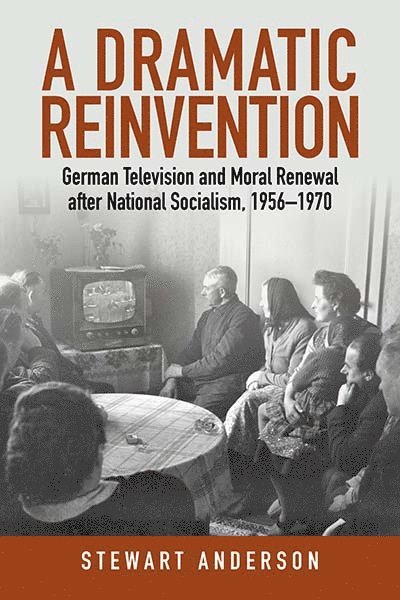
Du kanske också är intresserad av
Modernization, Nation-Building, and Television History
Stewart Anderson, Melissa Chakars
Häftad, 2018
1 009 kr
Modernization, Nation-Building, and Television History
Stewart Anderson, Melissa Chakars
Inbunden, 2014
3 209 kr