
Dirty Energy Dilemma
What's Blocking Clean Power in the United States
Inbunden, Engelska, 2008
829 kr
Beställningsvara. Skickas inom 10-15 vardagar. Fri frakt för medlemmar vid köp för minst 249 kr.
The American electric utility system is quietly falling apart. Once taken for granted, the industry has become increasingly unstable, fragmented, unreliable, insecure, inefficient, expensive, and harmful to our environment and public health. According to Sovacool, the fix for this ugly array of problems lies not in nuclear power or clean coal, but in renewable energy systems that produce few harmful byproducts, relieve congestion on the transmission grid, require less maintenance, are not subject to price volatility, and enhance the security of the national energy system from natural catastrophe, terrorist attack, and dependence on supply from hostile and unstable regions of the world. Here arises The Dirty Energy Dilemma: If renewable energy systems deliver such impressive benefits, why are they languishing at the margins of the American energy portfolio? And why does the United States lag so far behind Europe, where conversion to renewable energy systems has already taken off in a big way?Corporate media parrot industry PR that renewable technologies just aren't ready for prime time. But Sovacool marshals extensive field research to show that the only barrier blocking the conversion of a significant proportion of the U.S. energy portfolio to renewables is not technological—the technology is there—but institutional. Public utility commissioners, utility managers, system operators, business owners, and ordinary consumers are hobbled by organizational conservatism, technical incompatibility, legal inertia, weak and inconsistent political incentives, ill-founded prejudices, and apathy. The author argues that significant conversion to technologically proven clean energy systems can happen only if we adopt and implement a whole new set of policies that will target and dismantle the insidious social barriers that are presently blocking decisions that would so obviously benefit society.
Produktinformation
- Utgivningsdatum2008-10-30
- Mått156 x 235 x 22 mm
- Vikt652 g
- FormatInbunden
- SpråkEngelska
- Antal sidor320
- FörlagBloomsbury Publishing Plc
- ISBN9780313355400
- UtmärkelserWinner of 2009 Nautilus Silver Award-Ecology/Environment/Sustainability 2009
Tillhör följande kategorier
Hoppa över listan
Mer från samma författare
National Politics of Nuclear Power
Benjamin K. Sovacool, Scott Victor Valentine
Inbunden, 2012
3 219 kr
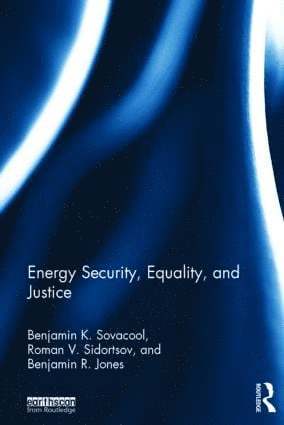
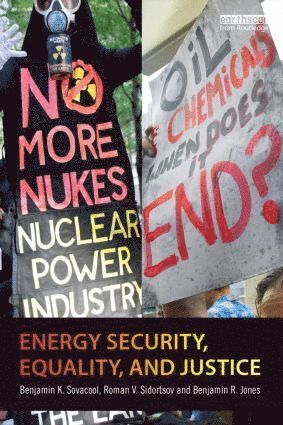
Energy Security, Equality and Justice
Benjamin K. Sovacool, Roman V. Sidortsov, Benjamin R. Jones
Inbunden, 2013
3 239 kr
Energy Security, Equality and Justice
Benjamin K. Sovacool, Roman V. Sidortsov, Benjamin R. Jones
Häftad, 2013
1 009 kr
Hoppa över listan

Du kanske också är intresserad av
Energy Security, Equality and Justice
Benjamin K. Sovacool, Roman V. Sidortsov, Benjamin R. Jones
Häftad, 2013
1 009 kr
Fact and Fiction in Global Energy Policy
Benjamin K. Sovacool, Marilyn A. Brown, Scott V. Valentine
Häftad, 2016
619 kr
Energy and American Society – Thirteen Myths
Benjamin K. Sovacool, Marilyn A. Brown
Häftad, 2010
1 439 kr
Vehicle-to-Grid
Lance Noel, Gerardo Zarazua de Rubens, Johannes Kester, Benjamin K. Sovacool
Inbunden, 2019
2 149 kr
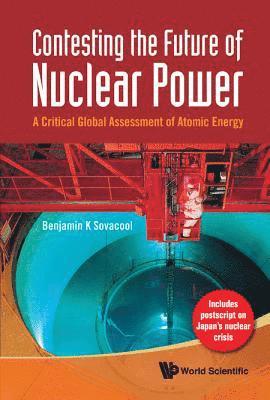
CONTESTING THE FUTURE OF NUCLEAR POWER: A CRITICAL GLOBAL ASSESSMENT OF ATOMIC ENERGY
Benjamin K Sovacool
Inbunden, 2011
1 969 kr