
Depression and the Erosion of the Self in Late Modernity
The Lesson of Icarus
Häftad, Engelska, 2017
729 kr
Beställningsvara. Skickas inom 10-15 vardagar. Fri frakt för medlemmar vid köp för minst 249 kr.
Depression is not a disease of the brain, a genetic disability or even a mood disorder. Rather, shutdown, numbness or sadness are non-pathological adaptations to adverse childhood and adult environments. This challenging book thus understands depression as a wise response to an unliveable situation. It can teach us what is wrong with our lives and what we must learn in order to go beyond symptom relief and reconnect to our most fundamental needs, relational, existential and spiritual. Because moods shape how we engage with our outer and inner worlds, they underlie all human behaviour. If the sociocultural world is toxic or frustrates our core needs, we will withdraw to protect ourselves. Those who have encountered a non-facilitating environment in childhood will be even more sensitive to adult stresses, since their self-organisation is fragile and non-resilient. As depression is so complex, understanding it demands an integrative approach. Adopting a biopsychosocial perspective with an environmentalist emphasis, this study articulates a variety of levels: experiential, psychodynamic, developmental, evolutionary, neuroscientific, genetic and societal. In particular the impacts of the social changes in the late twentieth and early twenty-first centuries are invoked in an attempt to explain the ongoing escalation of depression worldwide.
Produktinformation
- Utgivningsdatum2017-10-31
- Mått147 x 230 x 19 mm
- Vikt478 g
- FormatHäftad
- SpråkEngelska
- Antal sidor336
- FörlagTaylor & Francis Ltd
- ISBN9781782205906
Tillhör följande kategorier
Hoppa över listan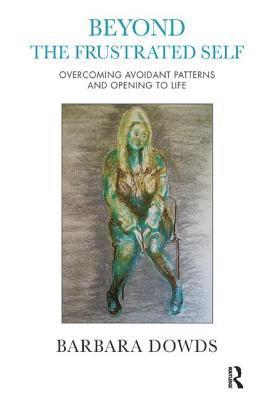







Du kanske också är intresserad av
- Nyhet
Del 3
- Nyhet
Del 11
- Nyhet
Del 6
- Nyhet
Del 4
Del 3
Del 1
Del 2