Long considered one of the great successes of the developing world, India has more recently experienced growing challenges to political order and stability. Institutional mechanisms for the resolution of conflict have broken down, the civil and police services have become highly politicized, and the state bureaucracy appears incapable of implementing an effective plan for economic development. In this book, Atul Kohli analyzes political change in India from the late 1960s to the late 1980s. Based on research conducted at the local, state and national level, the author analyzes the changing patterns of authority in and between the centre and periphery. He combines rich empirical investigation, extensive interviews and theoretical perspectives in developing a detailed explanation of the growing crisis of governance his research reveals. The book will be of interest to both specialists in Indian politics and to students of comparative politics more generally.
Atul Kohli is an Associate Professor at the Woodrow Wilson School of International Affairs, Princeton University. He is the author of The State and Poverty in India: The Politics of Reform (CUP, 1987).
List of tables and figures; Preface and acknowledgements; Part I. Introduction: 1. An overview of the study; 2. Some conceptual and theoretical considerations; Part II. The Growing Problems of Governing the Periphery: Politics in the Districts: Introduction: the districts; 3. Kheda, Gujarat; 4. Guntur, Andhra Pradesh; 5. Belgaun, Karnataka; 6. Calcutta, West Bengal; 7. Madurai, Tamil Nadu; Conclusion: the districts; Part III. Order and Breakdown in the States: Introduction: the states; 8. Breakdown in a 'backward' state: Bihar; 9. Growing turmoil in an 'advanced' state: Gujarat; 10. From breakdown to order: West Bengal; Conclusion: the states; Part IV. Centralization and Powerlessness at the Center: Introduction: the center; 11. Managing the economy: halfhearted liberalization; 12. Managing the troubled political institutions: the Congress party and relations with Punjab; Conclusion: the center; Part V. Final Inferences: 13. Political change in a democratic developing country; Bibliography; Index.
'The implications of Kohli's insightful analysis of the political dilemmas of development in the world's largest democracy extend well beyond the borders of India. This book is essential reading for anyone trying to understand state-society relations in the Third World.' Peter Evans, University of California, Berkeley
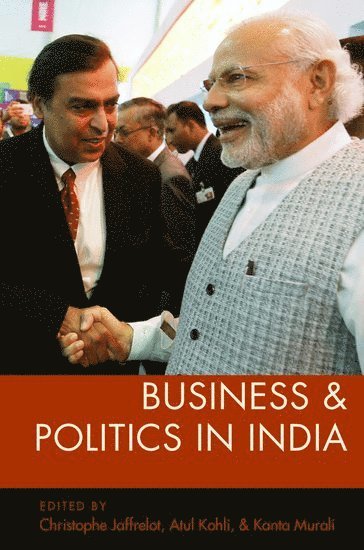
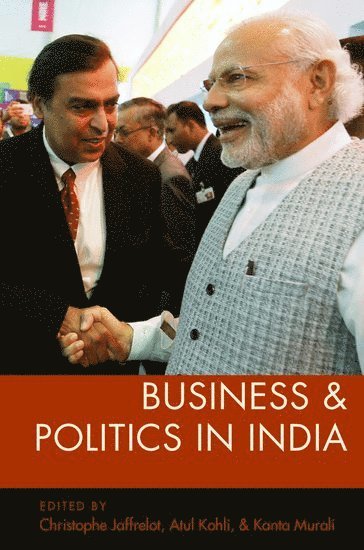
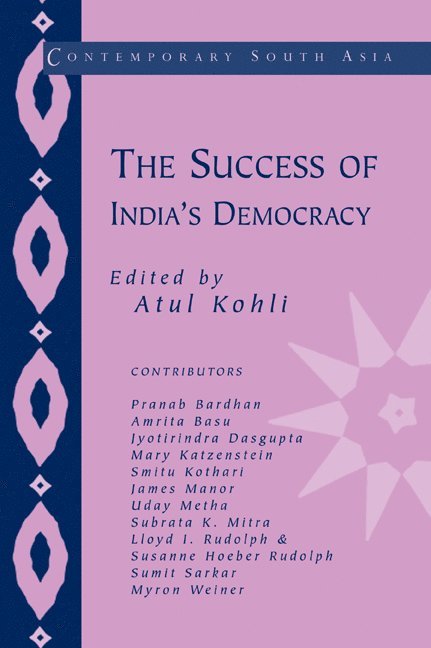
JAFFRELOT, Jaffrelot, Christophe Jaffrelot, Atul Kohli, Kanta Murali, Science Po-Paris) Jaffrelot, Christophe (director of the Centre d'etudes et de recherches, director of the Centre d'etudes et de recherches, Princeton University) Kohli, Atul (Professor of Politics, Professor of Politics, University of Toronto) Murali, Kanta (Assistant Professor of Political Science, Assistant Professor of Political Science
Joel Samuel Migdal, Atul Kohli, Vivienne Shue, Joel Samuel (University of Washington) Migdal, New Jersey) Kohli, Atul (Princeton University, New York) Shue, Vivienne (Cornell University, Joel S. Migdal
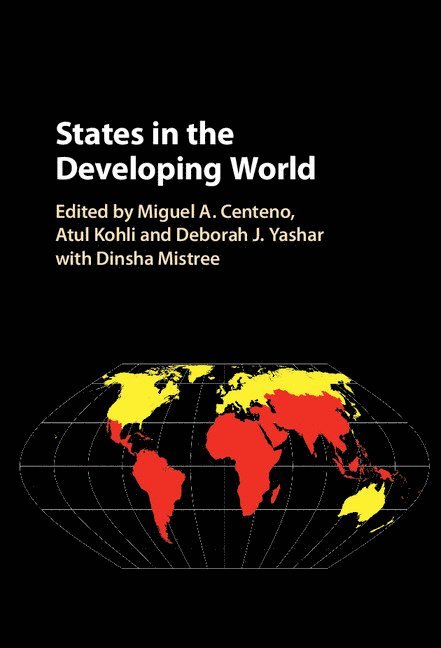
Miguel A. Centeno, Atul Kohli, Deborah J. Yashar, New Jersey) Centeno, Miguel A. (Princeton University, New Jersey) Kohli, Atul (Princeton University, New Jersey) Yashar, Deborah J. (Princeton University
Joel Samuel Migdal, Atul Kohli, Vivienne Shue, Joel Samuel (University of Washington) Migdal, New Jersey) Kohli, Atul (Princeton University, New York) Shue, Vivienne (Cornell University, Joel S. Migdal