
Del i serien Progress in Inflammation Research
Cytokines in Severe Sepsis and Septic Shock
Inbunden, Engelska, 1998
2 949 kr
Beställningsvara. Skickas inom 10-15 vardagar. Fri frakt för medlemmar vid köp för minst 249 kr.
t Heinz Red! and Gunther Sch!ag Ludwig Boltzmann Institute for Experimental and Clinical Traumatology, Vienna, Austria The word "sepsis" derives from the Greek meaning decay or rottenness. Tradition ally this term has been used to describe the process of infection accompanied by the host's systemic inflammatory response. Based on that understanding, previous clin ical studies have been designed to include only patients with positive blood cultures [1, 2]. However, the frequent occurrence of a septic response without the demon stration of microorganisms in the circulation has led to a new definition and under standing of sepsis, mainly as the systemic response of the host to an often unde tectable microbiological or non-microbiological process [3]. The general consensus is that cytokines are central to the inflammatory response, particularly in sepsis. It is now known that not only Gram-negative but also Gram positive, viral, and fungal infections initiate the complex cascades of cytokine release. Probably the most important aspect of bacterial action is the release of toxic bacterial products. In particular endotoxin from Gram-negative bacteria (see chap ter by Schade) and super antigens (see chapter by Neumann and Holzmann), as well as pore-forming toxins [4] from Gram-positive bacteria, induce cytokine formation. The importance of this cytokine release is evident from both diagnostic and thera peutic (mostly experimental) studies, and the action of cytokines may be the key to our understanding of the pathophysiology of the sepsis syndrome.
Produktinformation
- Utgivningsdatum1998-11-01
- Mått170 x 244 x undefined mm
- FormatInbunden
- SpråkEngelska
- SerieProgress in Inflammation Research
- Antal sidor372
- FörlagBirkhauser Verlag AG
- ISBN9783764358778
Tillhör följande kategorier
Hoppa över listan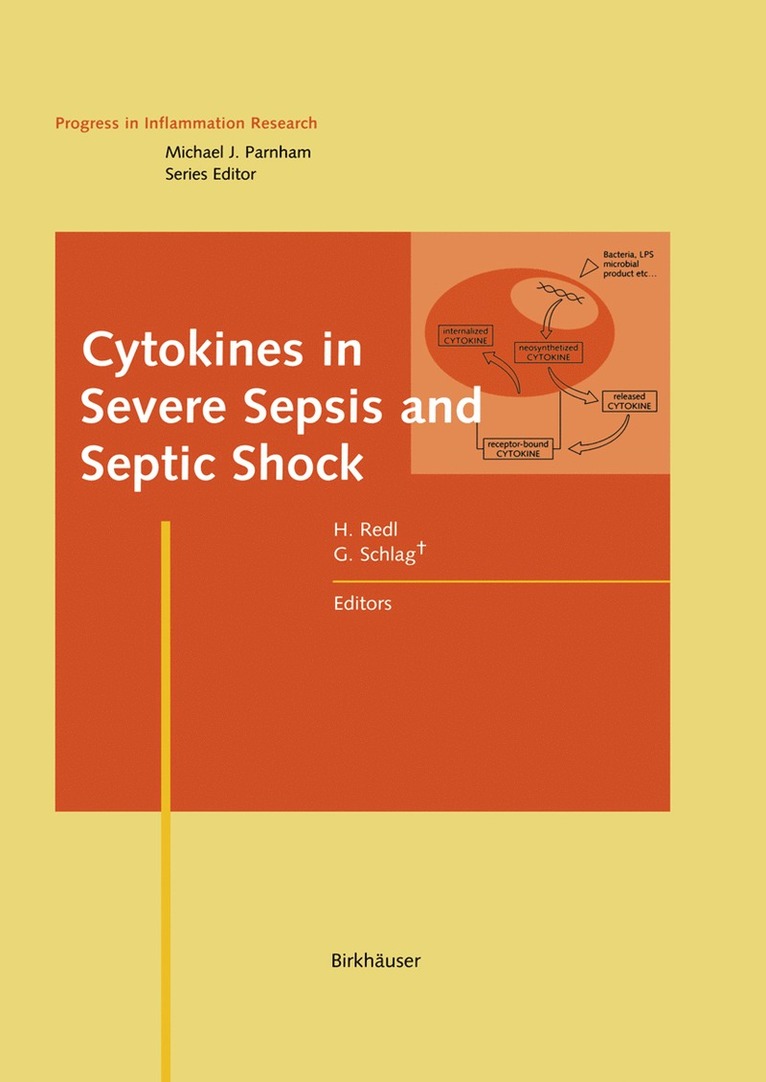









Du kanske också är intresserad av
- Nyhet
Del 11
- Nyhet
Del 3
- Nyhet
Del 1
- Nyhet
Del 3
- Nyhet
Del 4
Del 1
Del 3
- Nyhet
Del 6