
Del i serien Contemporary Worlds
Cuba in Revolution
A History since the Fifties
Häftad, Engelska, 2008
459 kr
Beställningsvara. Skickas inom 5-8 vardagar. Fri frakt för medlemmar vid köp för minst 249 kr.
The recent retirement of Fidel Castro turned the world’s attention towards the island nation of Cuba and the question of what its future holds. Amid the talk and hypothesizing, it is worth taking a moment to consider how Cuba reached this point. Antoni Kapcia provides this with his incisive history of Cuba since 1959.Kapcia’s history takes the Cuban Revolution as its starting point, analysing the process of social revolution, its benefits and disadvantages, popular participation in the revolution and the development of its ideology. Kapcia probes Castro’s rapid rise to national leader, exploring his politics of defence and dissent as well as his contentious relationship with the USA from the beginning of his reign. The book also considers the evolution of the revolution’s international profile and Cuba’s foreign relations over the years, investigating issues and events such as the Bay of Pigs crisis, Cuban relations with Communist nations like Russia and China, and the flight of asylum-seeking Cubans to Florida over the decades. The collapse of the Soviet Union between 1989 and 1991 catalysed a severe economic and political crisis in Cuba, but Cuba was surprisingly resilient in the face of the catastrophe, Kapcia notes, and he examines the strategies adopted by Cuba over the last two decades in order to survive America’s longstanding trade embargo.A fascinating and much-needed examination of a country that has served as an important political symbol and diplomatic enigma for the twentieth century, Cuba in Revolution is a critical primer for all those interested in Cuba’s past - or concerned with its future.
Produktinformation
- Utgivningsdatum2008-09-01
- Mått216 x 138 x 16 mm
- Vikt268 g
- FormatHäftad
- SpråkEngelska
- SerieContemporary Worlds
- Antal sidor208
- FörlagReaktion Books
- ISBN9781861894021
Tillhör följande kategorier
Hoppa över listan


Mer från samma författare
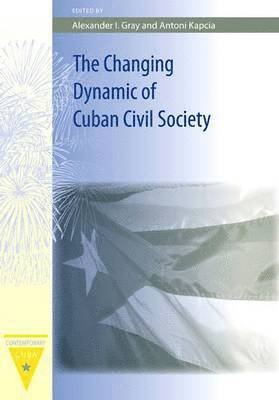
Changing Dynamic of Cuban Civil Society
University Press of Florida, Antoni Kapcia, Alexander I. Gray, Alexander I Gray
Inbunden, 2008
899 kr
Hoppa över listan

Du kanske också är intresserad av
Changing Dynamic of Cuban Civil Society
University Press of Florida, Antoni Kapcia, Alexander I. Gray, Alexander I Gray
Inbunden, 2008
899 kr
Cuban Landscapes
Joseph L. Scarpaci, Armando H. Portela, Antoni Kapcia, Victor Marin, Ted Henken
Häftad, 2009
419 kr