
Del i serien Latinx: the Future Is Now
Crossing Waters
Undocumented Migration in Hispanophone Caribbean and Latinx Literature & Art
Häftad, Engelska, 2022
489 kr
Beställningsvara. Skickas inom 5-8 vardagar. Fri frakt för medlemmar vid köp för minst 249 kr.
Finns i fler format (1)
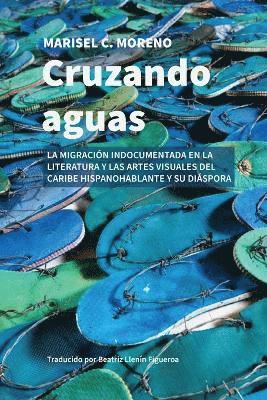
2023 Honorable Mention, Isis Duarte Book Prize, Haiti/ Dominican Republic section (LASA)2023 Winner, Gordon K. and Sybil Lewis Book Award, Caribbean Studies AssociationAn innovative study of the artistic representations of undocumented migration within the Hispanophone CaribbeanDebates over the undocumented migration of Latin Americans invariably focus on the southern US border, but most migrants never cross that arbitrary line. Instead, many travel, via water, among the Caribbean islands. The first study to examine literary and artistic representations of undocumented migration within the Hispanophone Caribbean, Crossing Waters relates a journey that remains silenced and largely unknown. Analyzing works by novelists, short-story writers, poets, and visual artists replete with references to drowning and echoes of the Middle Passage, Marisel Moreno shines a spotlight on the plight that these migrants face. In some cases, Puerto Rico takes on a new role as a stepping-stone to the continental United States and the society migrants will join there. Meanwhile the land border between Haiti and the Dominican Republic, the only terrestrial border in the Hispanophone Caribbean, emerges as a complex space within this cartography of borders. And while the Border Patrol occupies US headlines, the Coast Guard occupies the nightmares of refugees. An untold story filled with beauty, possibility, and sorrow, Crossing Waters encourages us to rethink the geography and experience of undocumented migration and the role that the Caribbean archipelago plays as a border zone.
Produktinformation
- Utgivningsdatum2022-07-26
- Mått152 x 229 x 23 mm
- Vikt399 g
- FormatHäftad
- SpråkEngelska
- SerieLatinx: the Future Is Now
- Antal sidor304
- FörlagUniversity of Texas Press
- ISBN9781477325605
Tillhör följande kategorier
Hoppa över listan






Du kanske också är intresserad av
- Nyhet
Problematic Paradigms and the Contours of US Latinidad
Silvio Torres-Saillant, Nancy Kang, Michael Nieto Garcia
Inbunden, 2026
1 749 kr
Del 1
- Nyhet
Del 11