
Del i serien NATO Science Series D:
Cross-Language Studies of Learning to Read and Spell:
Phonologic and Orthographic Processing
Inbunden, Engelska, 1997
4 169 kr
Beställningsvara. Skickas inom 10-15 vardagar. Fri frakt för medlemmar vid köp för minst 249 kr.
Finns i fler format (1)
The present volume is based on the proceedings of the Advanced Study Institute (AS I) sponsored by the North Atlantic Treaty Organization (NATO) held in Alvor, Algarve, Portugal. A number of scholars from different countries participated in the two-week institute on Cognitive and linguistic aspects of reading, writing, and spelling. The present papers are further versions with modifications and refinements from those presented at the Advanced Study Institute. Several people and organizations have helped us in this endeavor and their assistance is gratefully acknowledged. Our special thanks are to: the Scientific Affairs division of NATO for providing the major portions of the financial support, Dr. L.V. da Cunha of NATO and Dr. THo Kester and Mrs. Barbara Kester of the International Transfer of Science and Technology of the various aspects of the institute; and (ITST) for their help and support the staff of Hotel Alvor Praia for making our stay a pleasant one by helping us to run the institute smoothly.
Produktinformation
- Utgivningsdatum1997-01-31
- Mått156 x 234 x 29 mm
- Vikt828 g
- FormatInbunden
- SpråkEngelska
- SerieNATO Science Series D:
- Antal sidor428
- Upplaga1997
- FörlagKluwer Academic Publishers
- ISBN9780792344575
Tillhör följande kategorier
Hoppa över listan
Mer från samma författare
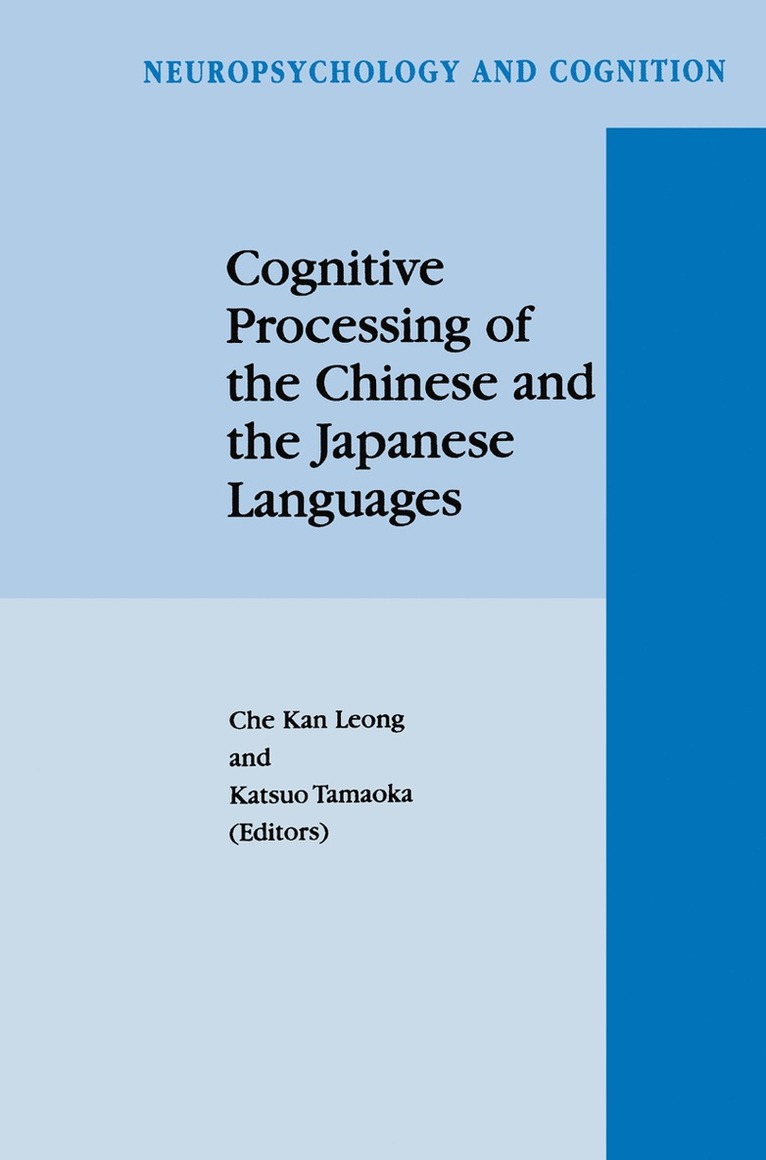
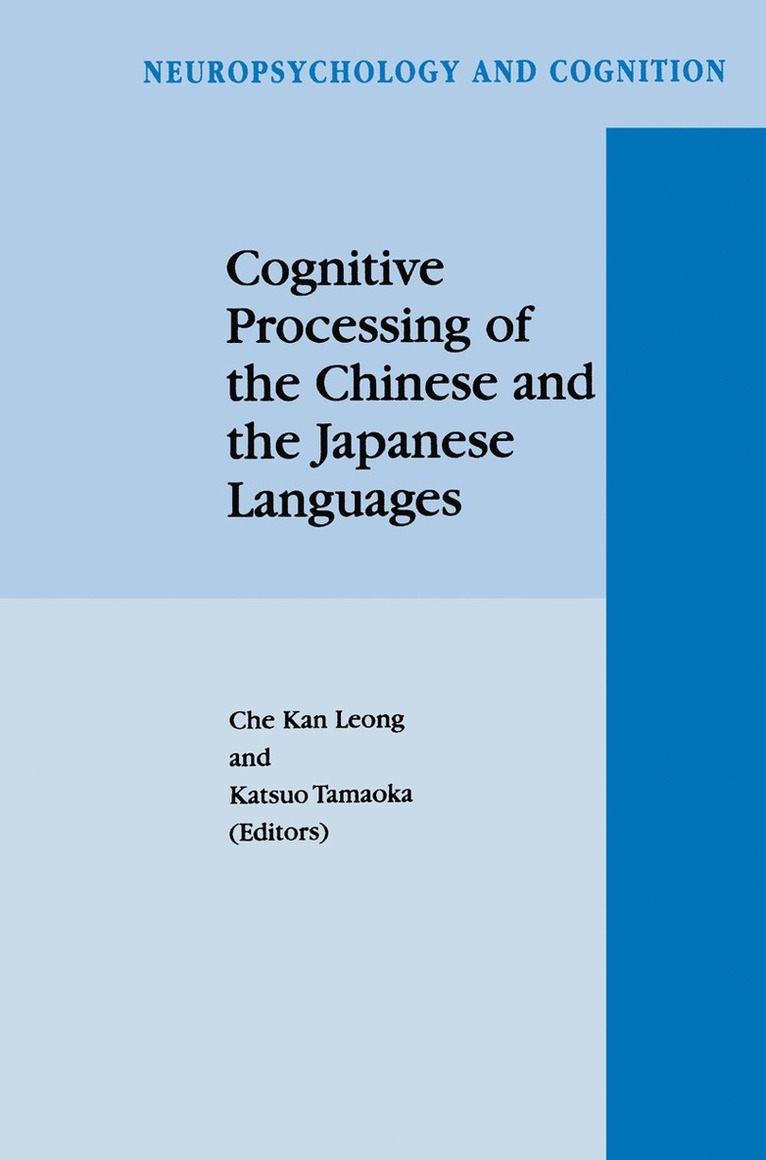
Cognitive Processing of the Chinese and the Japanese Languages
C.K. Leong, Katsuo Tamaoka
Inbunden, 1998
2 089 kr
Del 14
Cognitive Processing of the Chinese and the Japanese Languages
C.K. Leong, Katsuo Tamaoka
Häftad, 2010
2 089 kr
Del 74
Hoppa över listan
Mer från samma serie
Ethoexperimental Approaches to the Study of Behavior
NATO Advanced Study Institute on the Eth, North Atlantic Treaty Organization, Robert J. Blanchard, P.F. Brain, D. Caroline Blanchard, Stefano Parmigiani
Inbunden, 1989
6 939 kr
Social Competence in Developmental Perspective
B.H. Schneider, Grazia Attili, Jacqueline Nadel, Roger P. Weissberg
Inbunden, 1989
4 169 kr
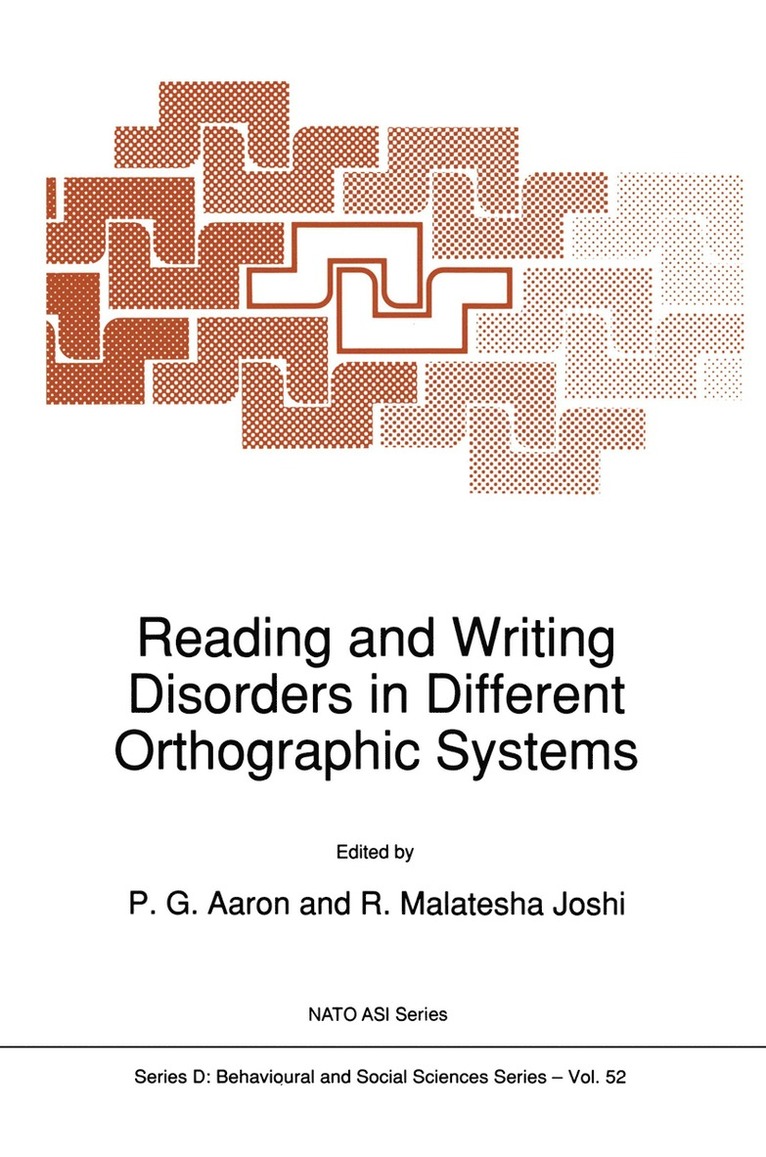
Reading and Writing Disorders in Different Orthographic Systems
P. G. Aaron, R.M. Joshi
Inbunden, 1989
2 779 kr
Psychobiology of Stress
NATO Advanced Research Workshop on Psych, North Atlantic Treaty Organization, Stefano Puglisi-Allegra, A. Oliverio
Inbunden, 1990
2 949 kr
Sensory-Motor Organizations and Development in Infancy and Early Childhood
H. Bloch, B.I. Bertenthal
Inbunden, 1990
4 289 kr
Research System in Transition
Susan E. Cozzens, Peter Healey, Arie Rip, John Ziman
Inbunden, 1990
2 859 kr
Hoppa över listan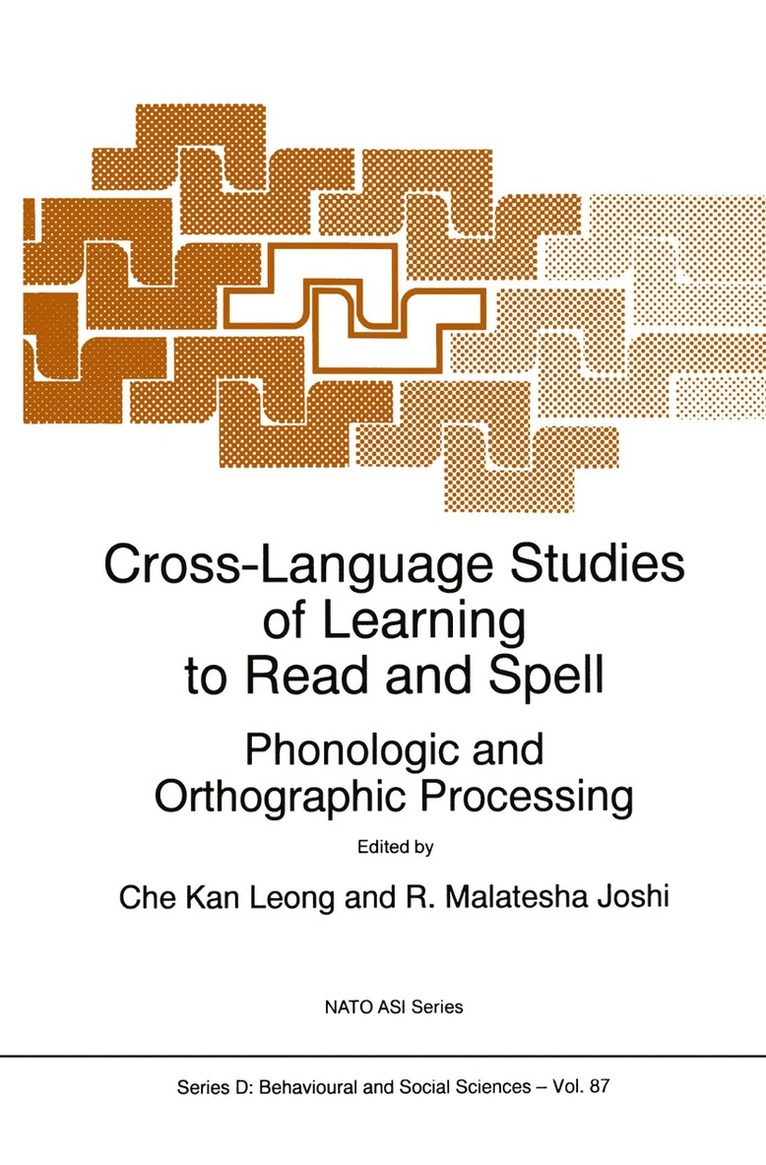
Du kanske också är intresserad av
Del 74
Cognitive Processing of the Chinese and the Japanese Languages
C.K. Leong, Katsuo Tamaoka
Inbunden, 1998
2 089 kr
Del 14
Cognitive Processing of the Chinese and the Japanese Languages
C.K. Leong, Katsuo Tamaoka
Häftad, 2010
2 089 kr
Reading and Writing Disorders in Different Orthographic Systems
P. G. Aaron, R.M. Joshi
Häftad, 2011
2 789 kr