
Del i serien Medicine in the Medieval Mediterranean
Cretan Healer's Handbook in the Byzantine Tradition
Text, Translation and Commentary
Inbunden, Engelska, 2011
3 309 kr
Beställningsvara. Skickas inom 10-15 vardagar. Fri frakt för medlemmar vid köp för minst 249 kr.
In 1930 the Cretan healer Nikolaos Konstantinos Theodorakis of Meronas re-copied a notebook containing medical lore passed down through his family over generations. The present volume offers an edition of this notebook together with an English translation, the first of its kind. It belongs to the genre of iatrosophia, practical handbooks dating mainly to the 17th to 19th centuries which compiled healing wisdom, along with snippets of agricultural, meteorological and veterinary advice, and admixtures of religion, astrology and magic. Both fascinating and of critical importance, iatrosophia allow glimpses of classical and Byzantine medical sources and illustrate the vitality and resilience of Greek traditional medical and botanical knowledge. From years spent exploring local healing customs in Crete's Amari region, Patricia Clark is able to present Theodorakis' iatrosophion against a rich historical, geographical and social background. Introductory essays and explanatory notes to the translation give context to the iatrosophion and provide the specialized information necessary for a good understanding of the text. The abundant materia medica of the notebook is treated in a substantial appendix. Each animal, mineral, plant or product is provided with an overview of its various names through the millennia. Such entries are not only a key to understanding the Greek medical legacy, but also a vivid illustration of its usage from antiquity to the present day.
Produktinformation
- Utgivningsdatum2011-11-28
- Mått156 x 234 x 22 mm
- Vikt703 g
- FormatInbunden
- SpråkEngelska
- SerieMedicine in the Medieval Mediterranean
- Antal sidor320
- FörlagTaylor & Francis Ltd
- ISBN9780754661016
Tillhör följande kategorier
Hoppa över listan
Mer från samma serie
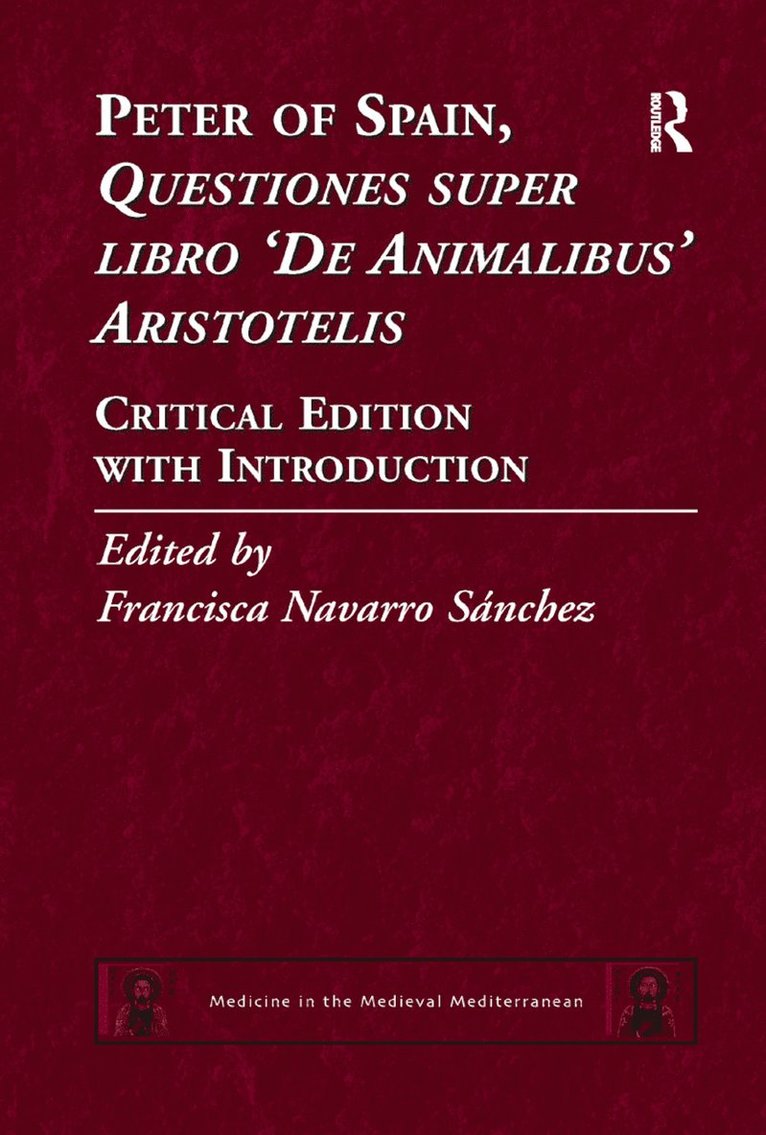
Peter of Spain, Questiones super libro De Animalibus Aristotelis
Francisca Navarro Sánchez
Häftad, 2019
1 039 kr
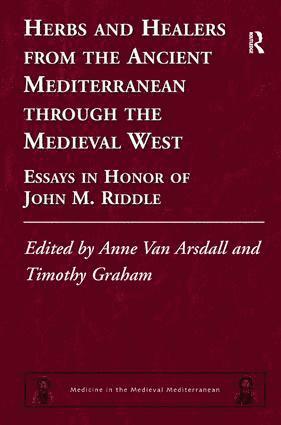
Herbs and Healers from the Ancient Mediterranean through the Medieval West
Anne Van Arsdall, Timothy Graham
Häftad, 2017
1 179 kr
Herbs and Healers from the Ancient Mediterranean through the Medieval West
Anne Van Arsdall, Timothy Graham
Inbunden, 2012
3 309 kr
Hoppa över listan


Du kanske också är intresserad av
Del 12
Herbs and Healers from the Ancient Mediterranean through the Medieval West
Anne Van Arsdall, Timothy Graham
Häftad, 2017
1 179 kr
- Nyhet
Del 3
Peter of Spain, Questiones super libro De Animalibus Aristotelis
Francisca Navarro Sánchez
Inbunden, 2015
3 509 kr