
Church, The Far Right, and The Claim to Christianity
Häftad, Engelska, 2024
439 kr
Skickas . Fri frakt för medlemmar vid köp för minst 249 kr.
In recent years, far-right organisations have invaded mosques across the UK with army-issued Bibles, declaring their actions a 'Christian crusade’. Others have paraded large crosses through Muslim-majority areas, and invaded 'migrant hotels,' harassing residents in their so-called crusade. Far-right appeals to ‘clean up society’, and ‘restore Christian Britain’ can be quite attractive to some Christians. However, what they may fail to appreciate is that this rhetoric may be cynically employed by those whose allegiance and values are quite contrary to Christian ones. Despite all this, the response from official church sources in the UK has been notably subdued, and resources to help churches address hate crimes or racial tensions are scarce. This book aims to fill that void. Bringing together insights from theologians, church practitioners, and leading experts, this volume examines the church's response to the rise of far-right thinking in UK society and explores how it can respond more effectively. With a foreword by David Gushee, this book offers critical and constructive perspectives for the church to confront these challenges.Blogpost: Helen Paynter on Why the church should take the rise in far right rhetoric seriously
Produktinformation
- Utgivningsdatum2024-08-30
- Mått156 x 234 x 13 mm
- Vikt354 g
- FormatHäftad
- SpråkEngelska
- Antal sidor192
- FörlagSCM Press
- ISBN9780334065494
Tillhör följande kategorier
Hoppa över listan


Du kanske också är intresserad av
Del 3
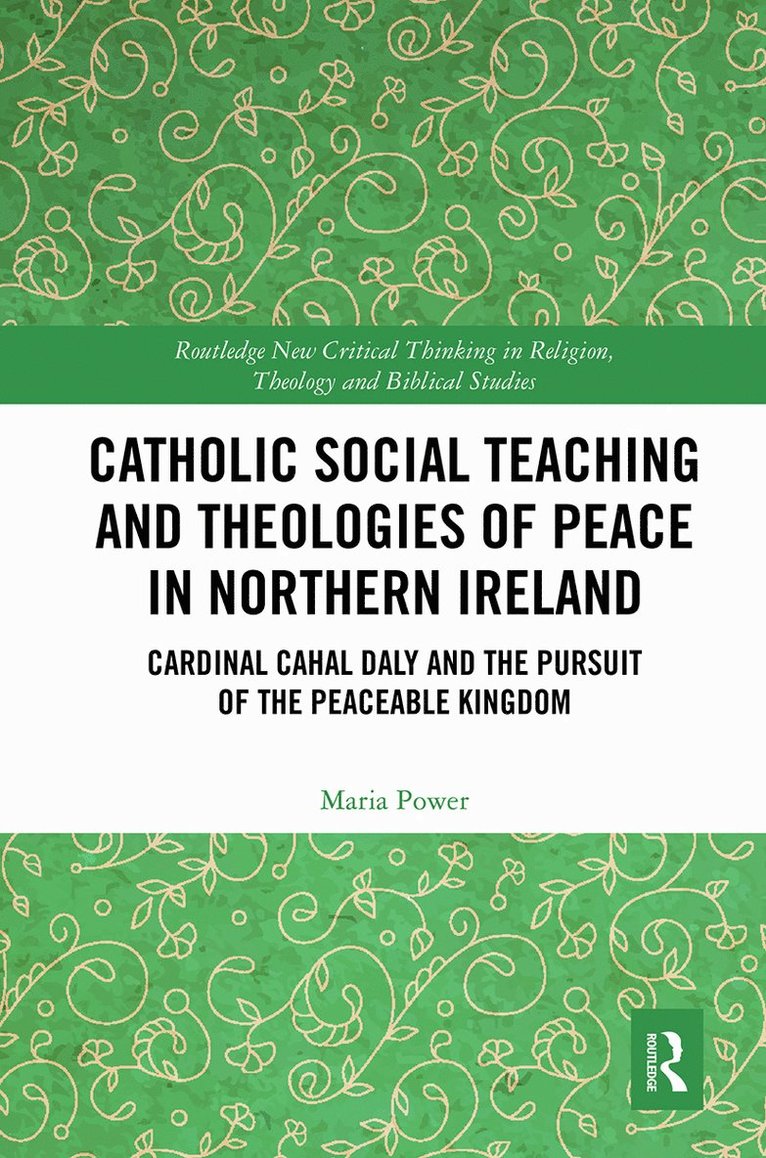
Catholic Social Teaching and Theologies of Peace in Northern Ireland
Maria Power
Inbunden, 2020
2 729 kr