
Del i serien Routledge Studies on Think Asia
China's Vertical Multilateralism and the Global South
Narratives, Networks, and Money
Inbunden, Engelska, 2025
3 209 kr
Beställningsvara. Skickas inom 10-15 vardagar. Fri frakt för medlemmar vid köp för minst 249 kr.
This book provides an in-depth analysis of China-led multilateralism and decodes China’s narratives, and political and business practices, both from theoretical and practical dimensions.Introducing the mechanisms that govern China-led multilateral formats in what China sees as the Global South, the study offers a comparative analysis and checks whether China uses a one-size-fits-all strategy towards the selected case study formats and adopts a more differentiated regional approach. The case studies cover the following China-led multilateral formats: China-ASEAN, Forum on China-Africa Cooperation (FOCAC), China-Central and Eastern Europe, and China-CELAC. The authors introduce four primary practices of China’s management of relations within these platforms: executing discursive power, cultivating elite diplomacy, influencing public opinion, and navigating economic interactions to illustrate the bilateral and informal nature of China-led multilateralism practices. They argue that the bilateral approach is driven by China’s will to keep its paramount position within the formats and its pursuit to exploit the divisions among countries in these formats. Moreover, China’s relations with the Global South community are governed by informal networks that give the impression of non-interference and position China as the principal power due to these relationships’ inherent asymmetry. Cognizant of bilateral and informal drivers of China’s multilateral practices, the book compares China’s relations with selected case studies of countries under the multilateral umbrella: Brazil, Cambodia, Chile, Kenya, Poland, Serbia, South Africa and Thailand. It considers the growing tensions between China and the West surrounding the crisis of the COVID-19 pandemic, the centralisation of power in China and the Russian war in Ukraine.Shedding light on China's policies and practices on bilateral and multilateral levels, this book will be of interest to researchers studying International Relations, Asian Politics, the politics of the Global South and Chinese Studies.
Produktinformation
- Utgivningsdatum2025-10-21
- Mått156 x 234 x 22 mm
- Vikt630 g
- FormatInbunden
- SpråkEngelska
- SerieRoutledge Studies on Think Asia
- Antal sidor242
- FörlagTaylor & Francis Ltd
- ISBN9781041082804
Tillhör följande kategorier
Hoppa över listan
Mer från samma serie
Chinese Politics and Foreign Policy under Xi Jinping
Arthur S. Ding, Jagannath P. Panda
Inbunden, 2020
3 509 kr
Hoppa över listan



Du kanske också är intresserad av
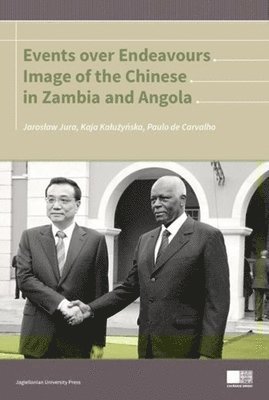
Events Over Endeavours – Image of the Chinese in Zambia and Angola
Jaroslaw Jura, Kaja Kaluzynska, Paulo De Carvalho
Häftad, 2015
499 kr
- Nyhet
China’s Relational Power in Central and Eastern Europe
Bartosz Kowalski, Filip Šebok
Inbunden, 2026
3 209 kr
- Nyhet
Del 3
- Nyhet
Del 11