
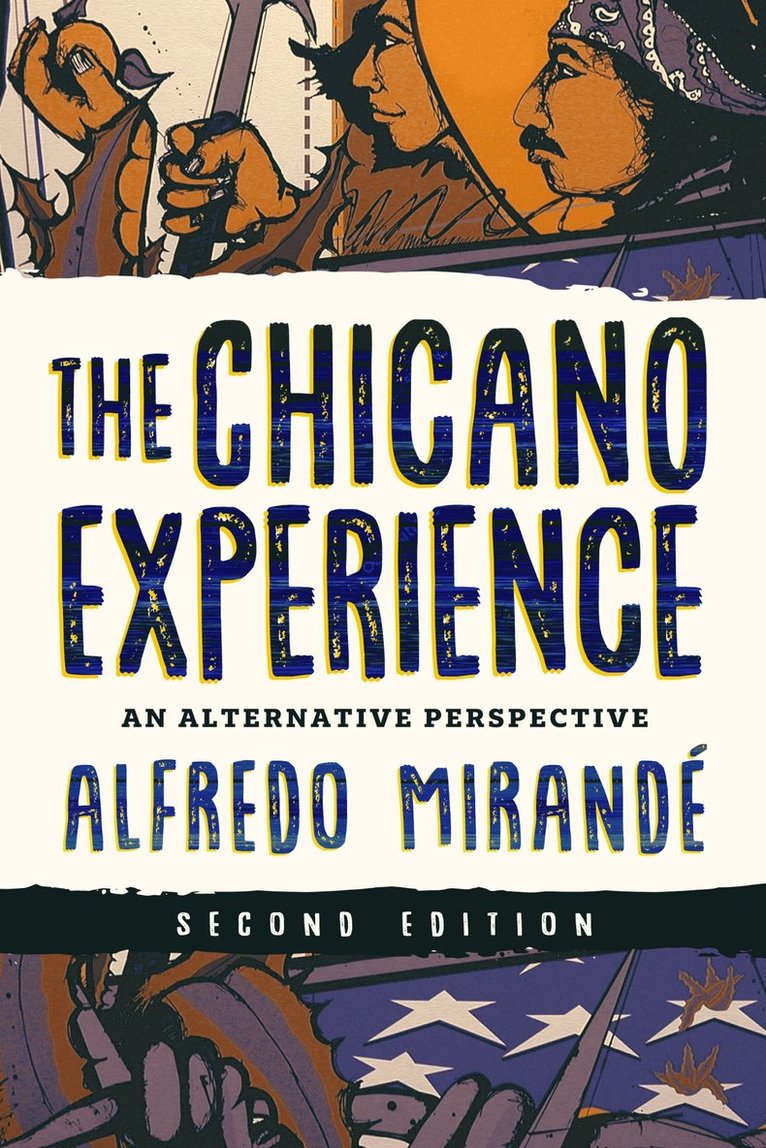
Chicano Experience
An Alternative Perspective
Häftad, Engelska, 1985
409 kr
Beställningsvara. Skickas inom 5-8 vardagar. Fri frakt för medlemmar vid köp för minst 249 kr.
Finns i fler format (2)
Mirandé offers a detailed examination of Chicano social history and culture that includes studies of: Chicano labor and the economy; the Mexican immigrant and the U.S.-Mexico border conflict; the evolution of Chicano criminality; the American educational system and its impact on Chicano culture; the tensions between the institutional Church and Chicanos; and the myths and misconceptions of "machismo."
Produktinformation
- Utgivningsdatum1985-02-18
- Mått152 x 229 x 15 mm
- Vikt381 g
- FormatHäftad
- SpråkEngelska
- Antal sidor282
- Upplaga1
- FörlagUniversity of Notre Dame Press
- ISBN9780268007492
Tillhör följande kategorier
Hoppa över listan
Du kanske också är intresserad av
Pure Mathematics: A Second Course 3rd Edition
John Backhouse, Peter Houldsworth, Bay Cooper, Peter Horril
Häftad, 1985
889 kr
Pure Mathematics: A First Course 4th. Edition
John Backhouse, Peter Houldsworth, Peter Horril
Häftad, 1985
889 kr