
Del i serien Studies in International Law
Chapter VII Powers of the United Nations Security Council
Inbunden, Engelska, 2004
2 339 kr
Beställningsvara. Skickas inom 10-15 vardagar. Fri frakt för medlemmar vid köp för minst 249 kr.
This study provides a comprehensive analysis of the questions pertaining to the powers of the Security Council under Chapter VII of the Charter of the United Nations. In doing so it departs from the premise that an analysis of the limitations to the powers of the Security Council and an analysis of judicial review of such limitations by the ICJ, respectively, are inter-dependent. On the one hand, judicial review would only become relevant if and to the extent that the powers granted to the Security Council under Chapter VII of the Charter are subject to justiciable limitations. On the other hand, the relevance of any limitation to the powers of the Security Council would remain limited if it could not be enforced by judicial review. This inter-dependence is reflected by the fact that Chapters 2 and 3 focus on judicial review in advisory and contentious proceedings, respectively, whereas Chapters 4 to 9 examine the limits to the powers of the Security Council. The concluding chapter subsequently illuminates how the respective limits to the Security Council's enforcement powers could be enforced by judicial review.It also explores an alternative mode of review of binding Security Council decisions that could complement judicial review by the ICJ, notably the right of states to reject illegal Security Council decisions as a 'right of last resort'. The space and attention devoted to the limits to the Security Council's enforcement powers reflects the second aim of this study, namely to provide new direction to this aspect of the debate on the Security Council's powers under Chapter VII of the Charter. It does so by paying particular attention to the role of human rights norms in limiting the type of enforcement measures that the Security Council can resort to in order to maintain or restore international peace and security.
Produktinformation
- Utgivningsdatum2004-01-23
- Mått156 x 234 x 34 mm
- Vikt826 g
- FormatInbunden
- SpråkEngelska
- SerieStudies in International Law
- Antal sidor432
- FörlagBloomsbury Publishing PLC
- ISBN9781841134222
Tillhör följande kategorier
Hoppa över listan

Mer från samma författare
Del 28
Max Planck Yearbook of United Nations Law, Volume 28 (2024)
Erika De Wet, Kathrin Maria Scherr
Inbunden, 2026
6 269 kr
Europeanisation of International Law
Jan Wouters, André Nollkaemper, Erika de Wet
Inbunden, 2008
669 kr
Hoppa över listan
Mer från samma serie
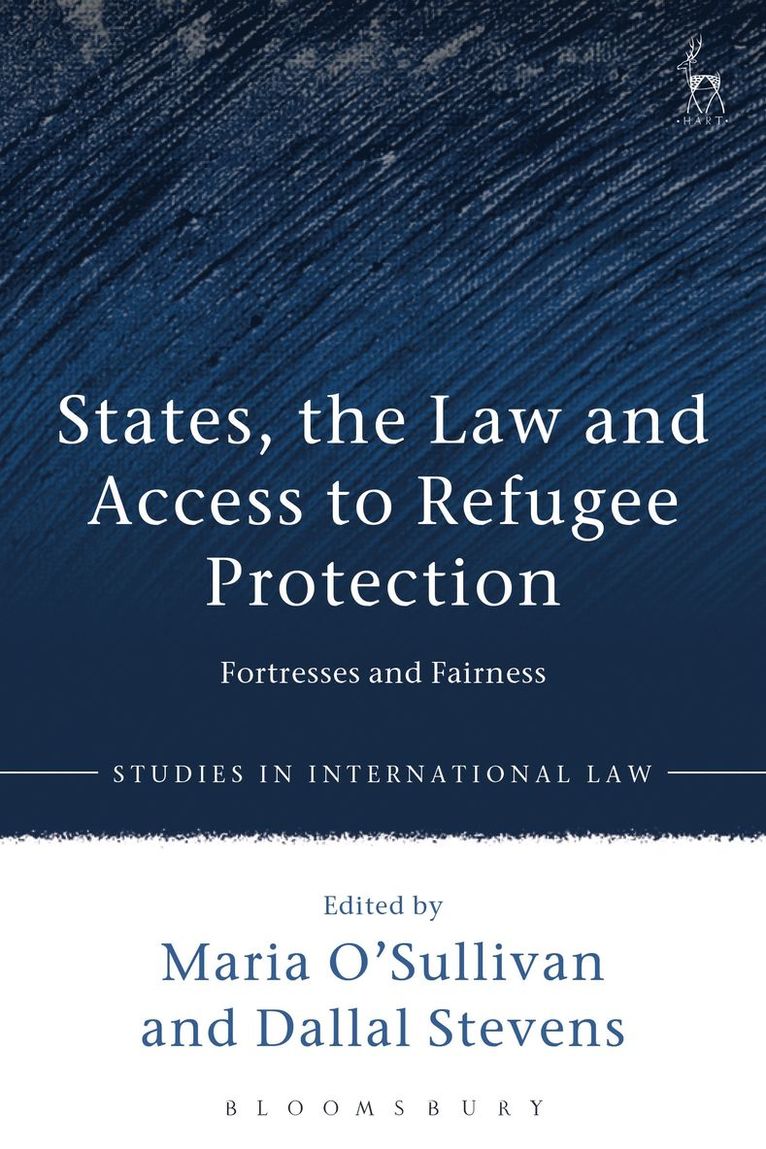
States, the Law and Access to Refugee Protection
Maria O'Sullivan, Dallal Stevens
Inbunden, 2017
1 669 kr
International Committee of the Red Cross and its Mandate to Protect and Assist
Christy Shucksmith
Inbunden, 2017
1 589 kr
Predictability and Flexibility in the Law of Maritime Delimitation
Yoshifumi Tanaka
Inbunden, 2019
1 839 kr
Hoppa över listan





Du kanske också är intresserad av
Europeanisation of International Law
Jan Wouters, André Nollkaemper, Erika de Wet
Inbunden, 2008
669 kr
Del 28
Max Planck Yearbook of United Nations Law, Volume 28 (2024)
Erika De Wet, Kathrin Maria Scherr
Inbunden, 2026
6 269 kr
- Nyhet
Del 3
- Nyhet
Del 11
- Nyhet
Del 4
- Nyhet
Del 1
- Nyhet
Del 4