
Del i serien New Historicism: Studies in Cultural Poetics
Carnal Israel
Reading Sex in Talmudic Culture
Häftad, Engelska, 1995
339 kr
Beställningsvara. Skickas inom 5-8 vardagar. Fri frakt för medlemmar vid köp för minst 249 kr.
Beginning with a startling endorsement of the patristic view of Judaism - that it was a 'carnal' religion, in contrast to the spiritual vision of the Church - Daniel Boyarin argues that rabbinic Judaism was based on a set of assumptions about the human body that were profoundly different from those of Christianity. The body - specifically, the sexualized body - could not be renounced, for the Rabbis believed as a religious principle in the generation of offspring and hence in intercourse sanctioned by marriage. This belief bound men and women together and made impossible the various modes of gender separation practiced by early Christians. The commitment to coupling did not imply a resolution of the unequal distribution of power that characterized relations between the sexes in all late-antique societies. But Boyarin argues strenuously that the male construction and treatment of women in rabbinic Judaism did not rest on a loathing of the female body.Thus, without ignoring the currents of sexual domination that course through the Talmudic texts, Boyarin insists that the rabbinic account of human sexuality, different from that of the Hellenistic Judaisms and Pauline Christianity, has something important and empowering to teach us today.
Produktinformation
- Utgivningsdatum1995-08-30
- Mått152 x 229 x 18 mm
- Vikt408 g
- FormatHäftad
- SpråkEngelska
- SerieNew Historicism: Studies in Cultural Poetics
- Antal sidor272
- FörlagUniversity of California Press
- ISBN9780520203365
Tillhör följande kategorier
Hoppa över listan






Mer från samma författare
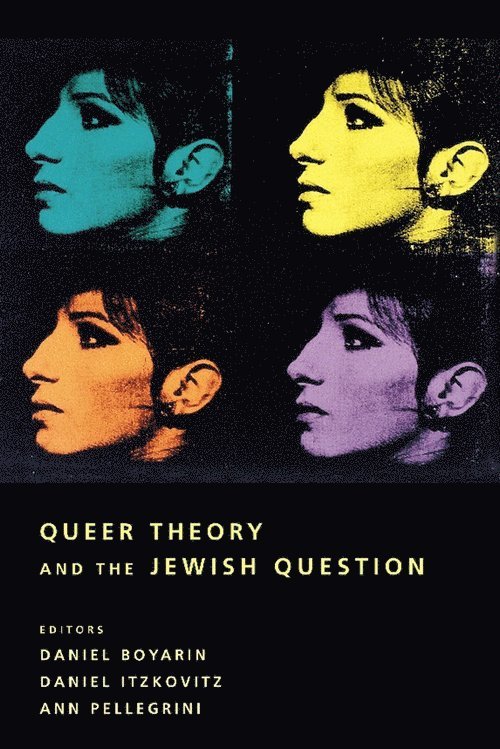
Queer Theory and the Jewish Question
Daniel Boyarin, Daniel Itzkovitz, Ann Pellegrini
Inbunden, 2003
1 759 kr
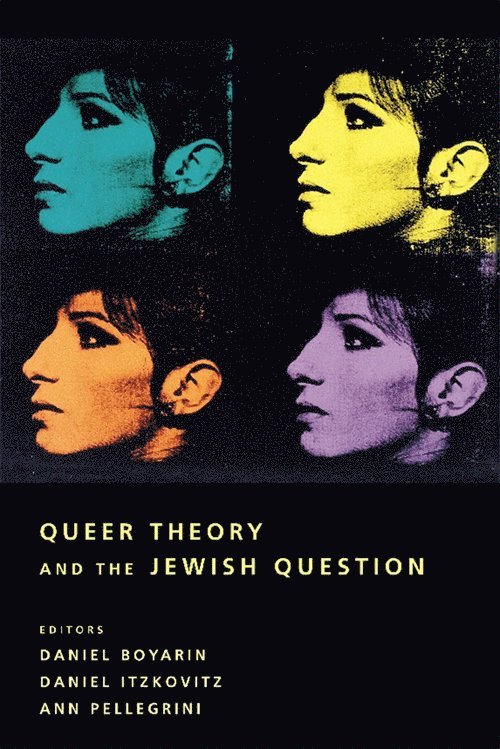
Queer Theory and the Jewish Question
Daniel Boyarin, Daniel Itzkovitz, Ann Pellegrini
Häftad, 2003
449 kr
Hoppa över listan


Du kanske också är intresserad av
Queer Theory and the Jewish Question
Daniel Boyarin, Daniel Itzkovitz, Ann Pellegrini
Inbunden, 2003
1 759 kr