
Del i serien Hagley Perspectives on Business and Culture
Capital Gains
Business and Politics in Twentieth-Century America
Häftad, Engelska, 2019
509 kr
Beställningsvara. Skickas inom 10-15 vardagar. Fri frakt för medlemmar vid köp för minst 249 kr.
Recent events-the Citizens United Supreme Court decision, the Occupy Wall Street movement, and efforts to increase the minimum wage, among others-have driven a tremendous surge of interest in the political power of business. Capital Gains collects some of the most innovative new work in the field. The chapters explore the influence of business on American politics in the twentieth century at the federal, state, and municipal levels. From corporate spending on city governments in the 1920s to business support for public universities in the postwar period, and from business opposition to the Vietnam War to the corporate embrace of civil rights, the contributors reveal an often surprising portrait of the nation's economic elite.Contrary to popular mythology, business leaders have not always been libertarian or rigidly devoted to market fundamentalism. Before, during, and after the New Deal, important parts of the business world sought instead to try to shape what the state could accomplish and to make sure that government grew in ways that were favorable to them. Appealing to historians working in the fields of business history, political history, and the history of capitalism, these essays highlight the causes, character, and consequences of business activism and underscore the centrality of business to any full understanding of the politics of the twentieth century-and today.Contributors: Daniel Amsterdam, Brent Cebul, Jennifer Delton, Tami Friedman, Eric Hintz, Richard R. John, Pamela Walker Laird, Kim Phillips-Fein, Laura Phillips Sawyer, Elizabeth Tandy Shermer, Eric Smith, Jason Scott Smith, Mark R. Wilson.
Produktinformation
- Utgivningsdatum2019-03-15
- Mått152 x 229 x 18 mm
- Vikt578 g
- FormatHäftad
- SpråkEngelska
- SerieHagley Perspectives on Business and Culture
- Antal sidor312
- FörlagUniversity of Pennsylvania Press
- ISBN9780812224481
Tillhör följande kategorier
Hoppa över listan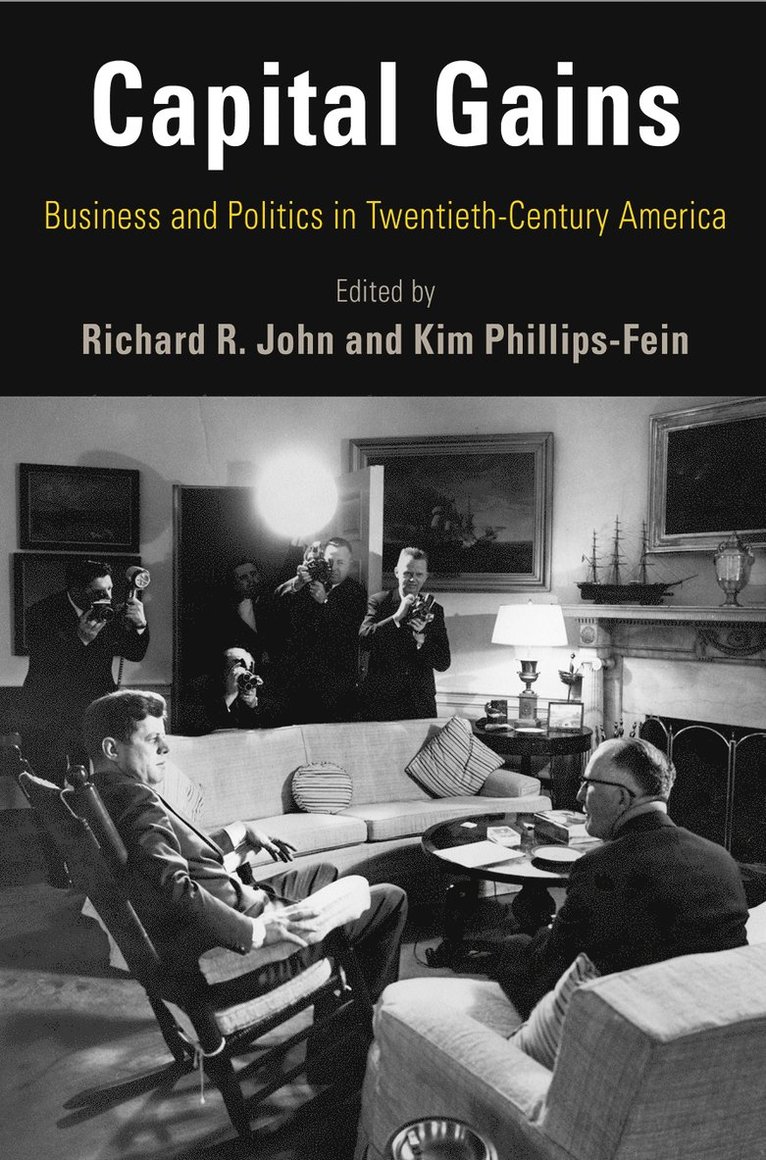









Du kanske också är intresserad av
Del 13
What's Good for Business
PHILLIPS-FEIN, Phillips-Fein, Kim Phillips-Fein, Julian E. Zelizer
Inbunden, 2012
1 749 kr