
Del i serien Living Existentialism
Black Existential Freedom
Inbunden, Engelska, 2022
1 549 kr
Beställningsvara. Skickas inom 10-15 vardagar. Fri frakt för medlemmar vid köp för minst 249 kr.
Finns i fler format (1)
The history of slavery, colonization, subjugation, gratuitous violence, and the denial of basic human rights to people of African descent has led Afro-Pessimists to look at black existence through the lens of white supremacy and anti-blackness. Against this trend, Black Existential Freedom argues that Blackness is not inherently synonymous with victimhood. Rather, it is inextricable from existential freedom and the struggle for political liberation.This book presents an existential analysis of continental and diasporic African experiences through critical interpretations of music, film, and fiction that portray what it means to be human— to persevere in the tension between life and physical, psychological, and social death—for the sake of freedom. With its transdisciplinary perspective and convergence of Africana existential philosophy, African-American Studies, Afro-French Studies, Diaspora Studies, and African studies, this book is not concerned with disciplinary boundaries or certain appropriations of European metaphysics that are committed to a reading of black “non-being.” Black Existential Freedom explores the continuities and discontinuities of black existence and the manifestations and the meanings of blackness within different countries, time periods, and social and political contexts. Etoke's book empowers the reader to understand and process the complexities of racialized identity in a globalized contemporary society. Ultimately, it is an ode to human survival and freedom.
Produktinformation
- Utgivningsdatum2022-11-17
- Mått156 x 239 x 19 mm
- Vikt445 g
- FormatInbunden
- SpråkEngelska
- SerieLiving Existentialism
- Antal sidor170
- FörlagBloomsbury Publishing Plc
- ISBN9781538157060
Tillhör följande kategorier
Hoppa över listan

Mer från samma författare
Ecriture du corps feminin dans la litterature de l'Afrique francopho
Nathalie Etoke
Häftad, 2010
319 kr
Hoppa över listan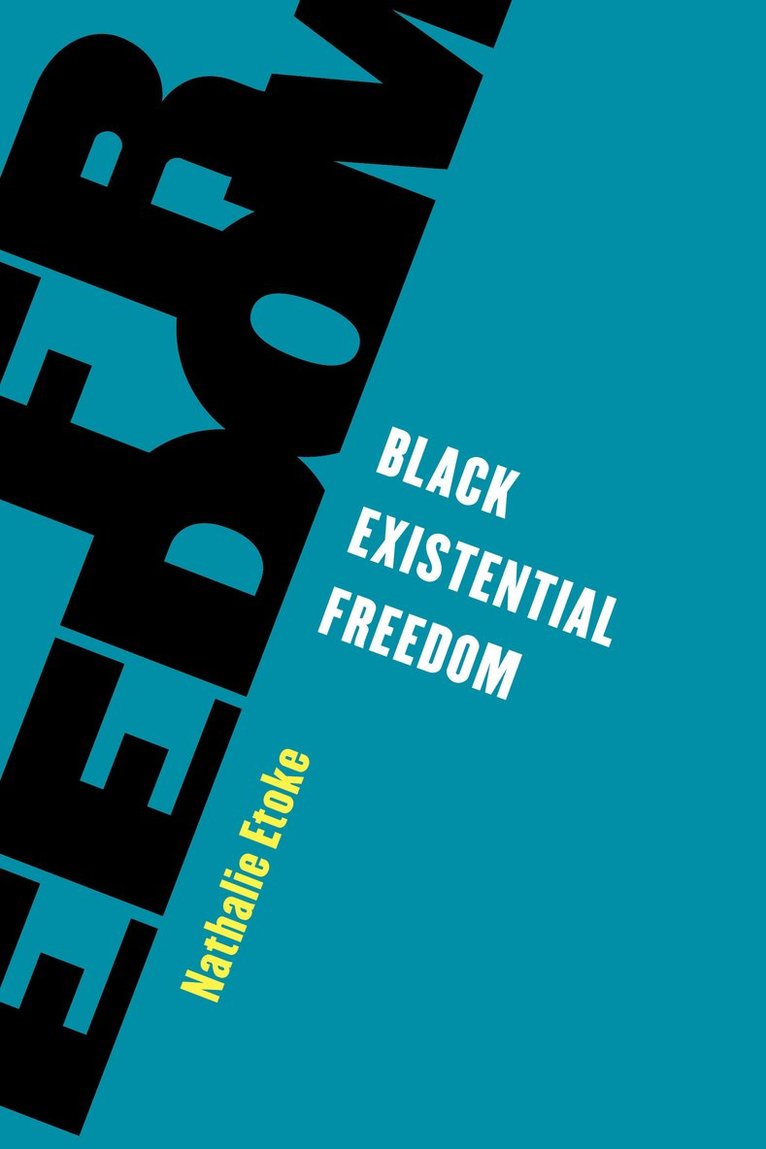
Du kanske också är intresserad av
Ecriture du corps feminin dans la litterature de l'Afrique francopho
Nathalie Etoke
Häftad, 2010
319 kr