
Assessment of Psychosis
A Reference Book and Rating Scales for Research and Practice
Häftad, Engelska, 2014
1 559 kr
Beställningsvara. Skickas inom 10-15 vardagar. Fri frakt för medlemmar vid köp för minst 249 kr.
This book reviews the descriptive features of psychotic symptoms in various medical conditions (psychiatric, early psychosis, general medical, neurological and dementia), non-medical settings (individuals without the need for care or at high risk for psychosis) and age groups (children and adolescents, adults, older adults). Similarly, the perspectives of many disciplines are provided (history, psychiatry, psychology, psychopathology, neurology, phenomenological philosophy) so that readers may become familiar with different approaches that are used to define, evaluate and categorize psychosis, at times independently of clinical diagnosis. This book is a resource book for those requiring an understanding of clinical and conceptual issues associated with psychosis, with chapters written by academics and clinicians who are leaders in their respective fields. The book also provides a guide regarding the methods of assessment for psychosis and its symptoms, with 120 rating scales, which are described and evaluated. The Assessment of Psychosis will be particularly useful to the clinical and research community, but also to readers interested in individual differences and human psychopathology.
Produktinformation
- Utgivningsdatum2014-12-12
- Mått152 x 229 x 20 mm
- Vikt552 g
- FormatHäftad
- SpråkEngelska
- Antal sidor370
- FörlagTaylor & Francis Ltd
- ISBN9780415709330
Tillhör följande kategorier
Hoppa över listan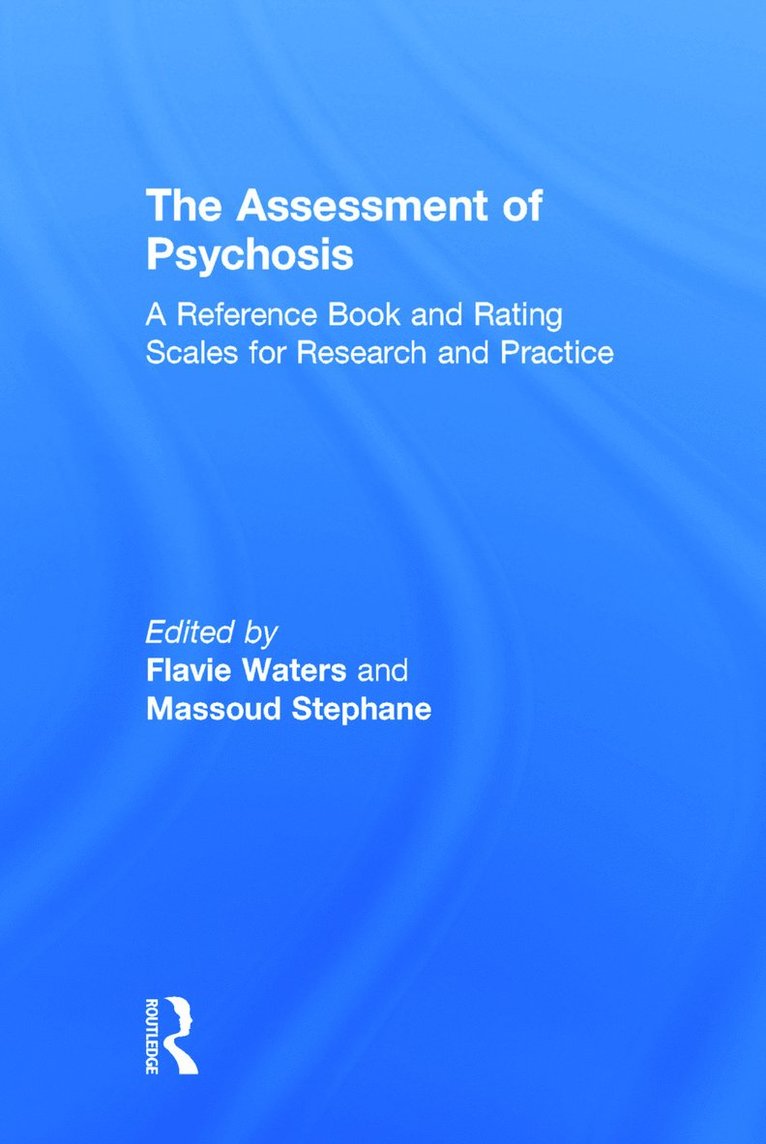







Du kanske också är intresserad av
Delivering CBT for Insomnia in Psychosis
Flavie Waters, Melissa J. Ree, Vivian Chiu
Inbunden, 2017
2 809 kr
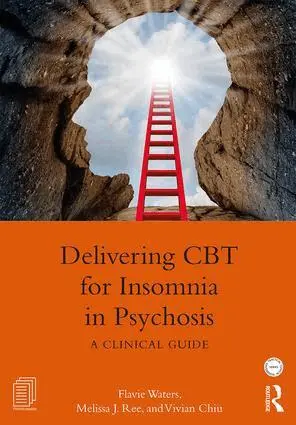
Delivering CBT for Insomnia in Psychosis
Flavie Waters, Melissa J. Ree, Vivian Chiu
Häftad, 2017
779 kr
- Nyhet
Del 11
- Nyhet
Del 3
- Nyhet
Del 6
- Nyhet
- Nyhet
Del 4
Del 1
Del 3