
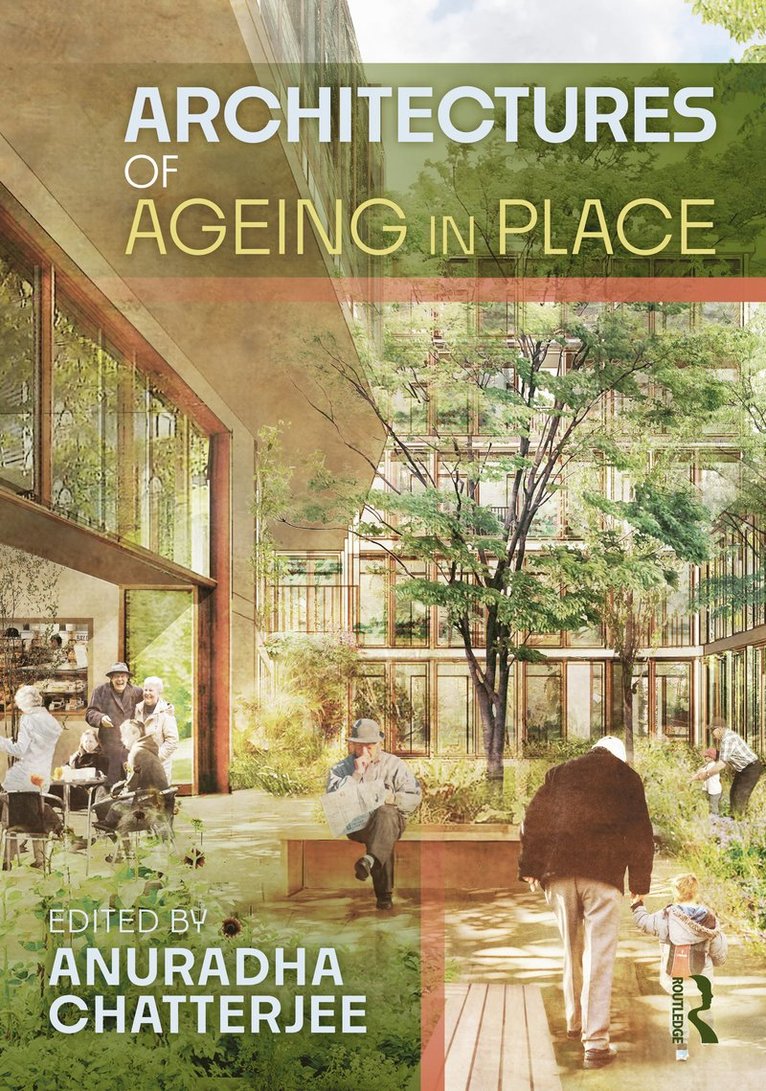
Architectures of Ageing in Place
Inbunden, Engelska, 2025
3 309 kr
Beställningsvara. Skickas inom 10-15 vardagar. Fri frakt för medlemmar vid köp för minst 249 kr.
Architectures of Ageing in Place provides curated critical perspectives, from a practice-based research point of view, of buildings that are purpose built and/or refurbished to accommodate housing and care needs of older people ageing in place in high rise/medium rise integrated communities.This book identifies design innovations, in line with policy innovations, that have been made across private and public sectors to accommodate wellbeing and quality of life of older people living in integrated communities, which continue to foster intergenerational dialogue and exchange, and advance social citizenship. Case studies from a diverse range of geographies are examined including Portugal, Singapore, India, New Zealand, UK, Sweden, Belgium and the US. Chapters are grounded in evidence-based research including substantial primary data and post-occupancy evaluation, specifically the evaluation of architecture’s ‘social performance’. Projects highlight high-rise / medium-rise as an emerging and successful typology in accommodating residential and care needs of older people.Taking a broad, interdisciplinary approach, this book will be a helpful reference not only for architects, designers and urban planners but also for students and practitioners in health and social care, gerontology/ageing, and medical sociology.
Produktinformation
- Utgivningsdatum2025-11-14
- Mått240 x 10 x 170 mm
- Vikt620 g
- FormatInbunden
- SpråkEngelska
- Antal sidor204
- FörlagTaylor & Francis Ltd
- ISBN9781032571232
Tillhör följande kategorier
Hoppa över listan






Du kanske också är intresserad av
Built, Unbuilt and Imagined Sydney: A Collection of Essays on the Public Life of Architecture
Anuradha Chatterjee
Häftad
839 kr
- Nyhet
Del 3
- Nyhet
Del 11
- Nyhet
Del 1