
Anthropomorphism in Islam
The Challenge of Traditionalism (700-1350)
Inbunden, Engelska, 2018
1 949 kr
Beställningsvara. Skickas inom 7-10 vardagar. Fri frakt för medlemmar vid köp för minst 249 kr.
Finns i fler format (1)
Explores the problem of anthropomorphism: a major bone of contention in 8th to 14th-century Islamic theologyMore than any other issue in Islamic theology, anthropomorphism (tashbih) stood at the heart of many theological debates, and was mostly discussed within the circles of traditionalist Islam. The way a scholar interpreted the anthropomorphic descriptions of God in the Qur'an or the Hadith (for instance, God's hand, God's laughter or God's sitting on the heavenly throne) often reflected his political and social stature, as well as his theological affinity. This book presents an in-depth literary analysis of the textual and non-textual elements of a?adith al-?ifat the traditions that depict God and His attributes in an anthropomorphic language. It goes on to discuss the inner controversies in the prominent traditionalistic learning centres of the Islamic world regarding the way to understand and interpret these anthropomorphic traditions. Through a close, contextualized, and interdisciplinary reading in Hadith compilations, theological treatises, and historical sources, this book offers an evaluation and understanding of the traditionalistic endeavours to define anthropomorphism in the most crucial and indeed most formative period of Islamic thought.Key FeaturesIncludes case studies of anthropomorphic traditions, tribal heritage and lore, the Hashwiyya and the traditionalistsExplores non-textual elements in the anthropomorphic traditions (including body-gestures and mimicry)Studies rhetorical devices and rationalized argumentations in the writings of traditionalist theologiansProvides the first in-depth literary and linguistic analysis of the anthropomorphic material in the Hadith
Produktinformation
- Utgivningsdatum2018-03-16
- Mått156 x 234 x 31 mm
- Vikt790 g
- FormatInbunden
- SpråkEngelska
- SerieEdinburgh Studies in Classical Islamic History and Culture
- Antal sidor448
- FörlagEdinburgh University Press
- ISBN9780748689569
Tillhör följande kategorier
Hoppa över listan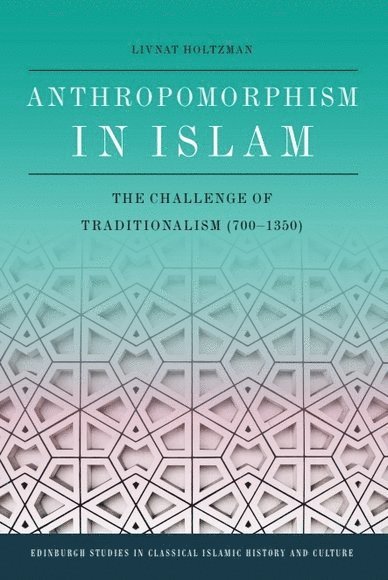






Du kanske också är intresserad av
- Nyhet
Del 3
- Nyhet
Del 11
Del 1
- Nyhet
Del 4
Del 3
- Nyhet
Del 6
Del 2