
Andrey Platonov
The Forgotten Dream of the Revolution
Inbunden, Engelska, 2018
1 879 kr
Beställningsvara. Skickas inom 10-15 vardagar. Fri frakt för medlemmar vid köp för minst 249 kr.
Finns i fler format (1)
This book traces the originality of Andrey Platonov’s vision of the Revolution in readings of his works. It has been common in Platonov scholarship to measure him within the parameters of a political pro et contra the October Revolution and Soviet society, but the proposal of this book is to look for the way in which the writer continuously asked into the disastrous aspects of the implementation of a new proletarian community for what they could tell us about the promise of the Revolution to open up the experience of the world as common. In readings of selected works by Andrei Platonov I follow the development of his chronicle of revolutionary society, and from within it the outline of the forgotten utopian dream of a common world. I bring Platonov into a dialogue with certain questions that arise from the philosophy of Martin Heidegger and that were later re-addressed in the works of Maurice Blanchot, Georges Bataille and Jean-Luc Nancy, related to the experience of the modern world in terms of communality, groundlessness, memory, interiority. I show that Platonov writes the Revolution as an implementation of common being in society that needs to retrieve the forgotten memory of what being in common means.
Produktinformation
- Utgivningsdatum2018-05-31
- Mått157 x 231 x 18 mm
- Vikt454 g
- FormatInbunden
- SpråkEngelska
- Antal sidor160
- FörlagBloomsbury Publishing Plc
- ISBN9781498547758
Tillhör följande kategorier
Hoppa över listan

Mer från samma författare
Rendering the sublime : a reading of Marina Tsvetaeva's fairy-tale poem The swain
Tora Lane
Häftad, 2015
139 kr
Del 23
Words, Bodies, Memory : A Festschrift in honor of Irina Sandomirskaja
Lars Kleberg, Tora Lane
Häftad, 2019
559 kr
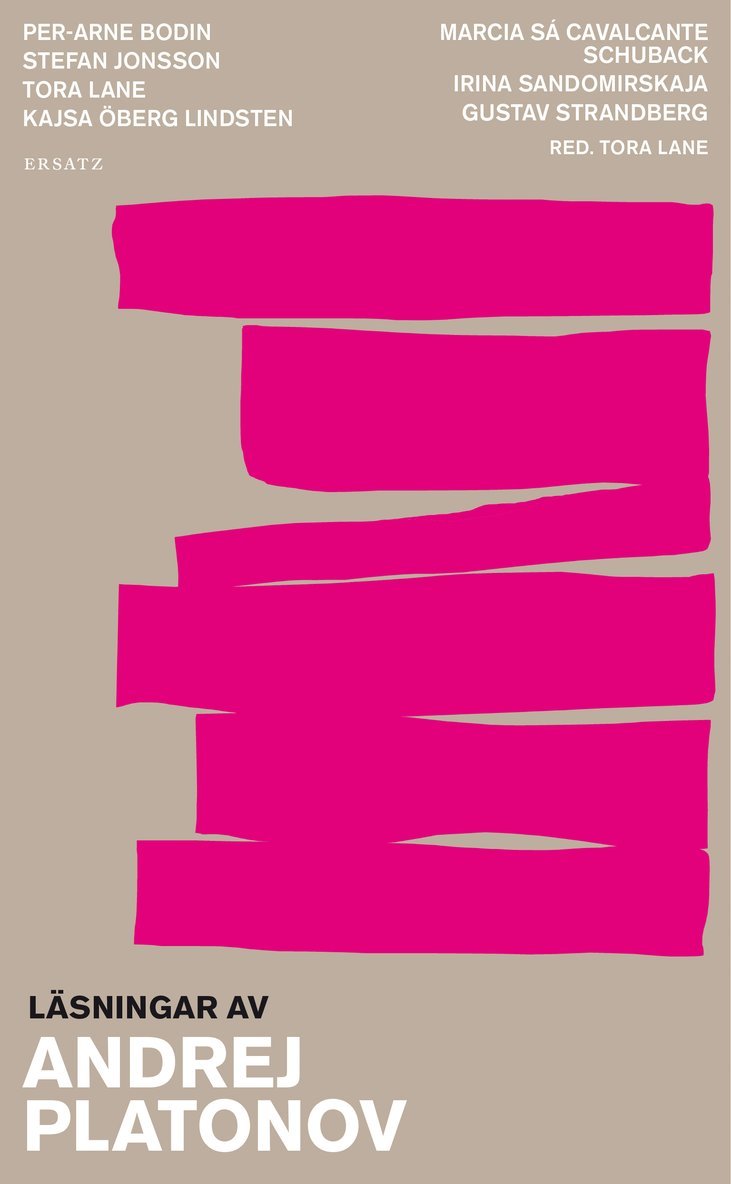
Revolution och existens : läsningar av Andrej Platonov
Stefan Jonson, Tora Lane, Kajsa Öberg Lindsten, Irina Sandomirskaja, Per-Arne Bodin, Marcia Sá Cavalcante Schuback, Gustav Strandberg
Inbunden, 2017
249 kr
Hoppa över listan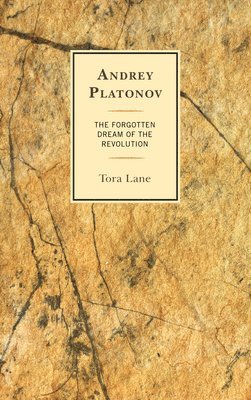



Du kanske också är intresserad av
Revolution och existens : läsningar av Andrej Platonov
Stefan Jonson, Tora Lane, Kajsa Öberg Lindsten, Irina Sandomirskaja, Per-Arne Bodin, Marcia Sá Cavalcante Schuback, Gustav Strandberg
Inbunden, 2017
249 kr
Del 23
Words, Bodies, Memory : A Festschrift in honor of Irina Sandomirskaja
Lars Kleberg, Tora Lane
Häftad, 2019
559 kr
Rendering the sublime : a reading of Marina Tsvetaeva's fairy-tale poem The swain
Tora Lane
Häftad, 2015
139 kr
- Nyhet
Del 3
- Nyhet
Del 11
- Nyhet