
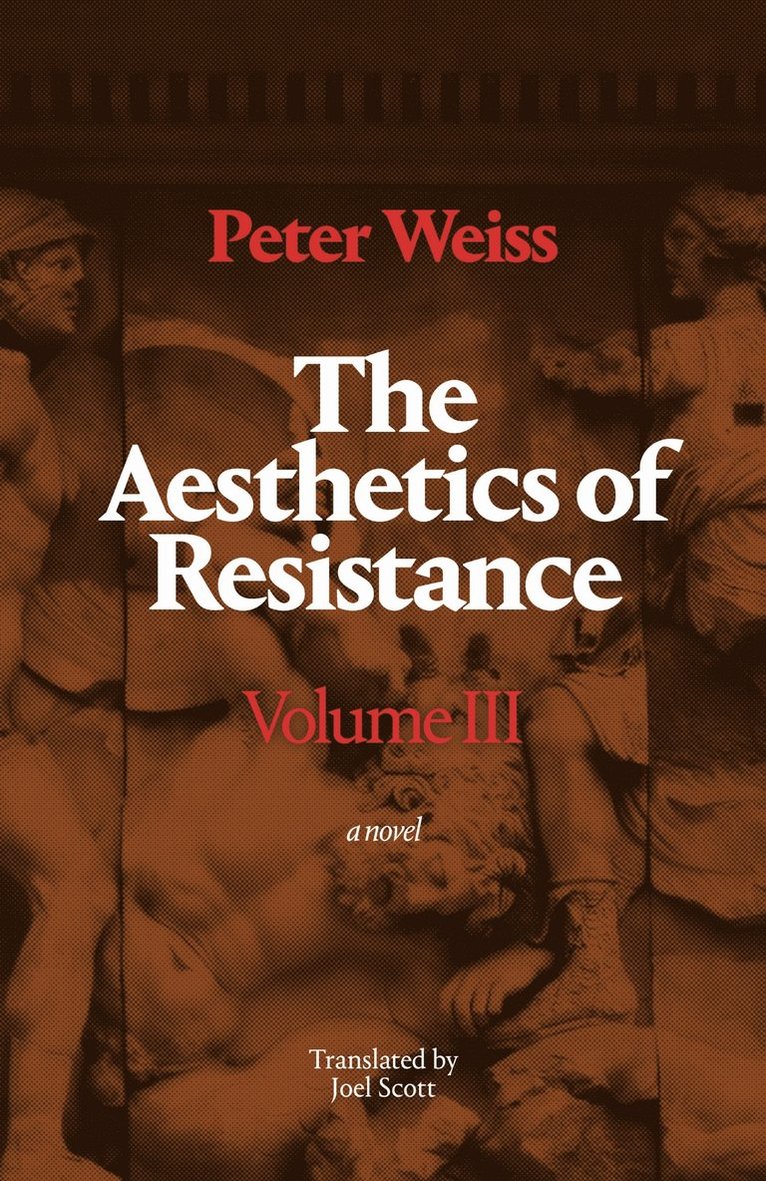
Aesthetics of Resistance
Complete Three Volume Set
Häftad, Engelska, 2025
1 079 kr
Kommande
A major literary event, the publication of Peter Weiss’s monumental three-volume novel The Aesthetics of Resistance makes one of the towering works of twentieth-century German literature available to English-speaking readers for the first time. The crowning achievement of Peter Weiss-the internationally renowned writer best known for his play Marat/Sade-The Aesthetics of Resistance spans the period from the late 1930s to the end of World War II, dramatizing antifascist resistance and the rise and fall of proletarian political parties in Europe.Published between 1975 and 1981, the trilogy follows an unnamed narrator and his peers-sixteen- and seventeen-year-old working-class students-as they explore the affinity between political resistance and art while fighting fascist regimes in Germany and Spain. In 1937 they begin meeting in Berlin’s museums and galleries, where they engage in extended meditations on the political meanings of paintings, sculpture, and literature. Moving from the Berlin underground to the Spanish Civil War to Paris, the narrator later finds himself in Stockholm, gets a job in a factory, joins the Communist Party, and meets Bertolt Brecht. The novel teems with characters, almost all of whom are based on historical figures. By August 1942, many of the narrator’s friends, acquaintances, and fellow members of the anti-Nazi resistance in Berlin are arrested by the Gestapo and executed.Throughout this epic work, Weiss suggests that meaning lies in embracing resistance, no matter how intense the oppression, and that we must look to art for new models of political action and social understanding. The Aesthetics of Resistance is one of the truly great examples of postwar German literature and an essential resource for understanding twentieth-century German history.
Produktinformation
- Utgivningsdatum2025-03-31
- Vikt445 g
- FormatHäftad
- SpråkEngelska
- Antal sidor277
- FörlagDuke University Press
- ISBN9781478029915
Tillhör följande kategorier
Hoppa över listan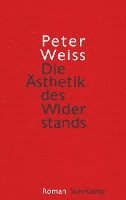

Mer från samma författare
- Nyhet
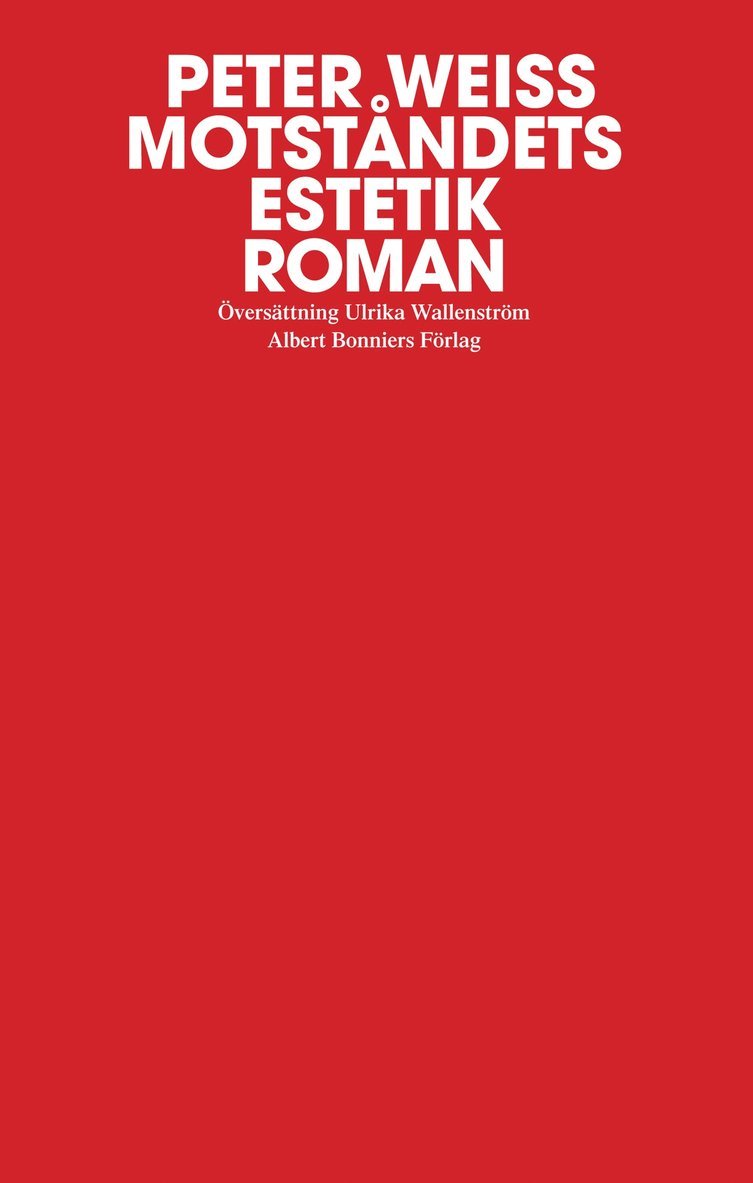
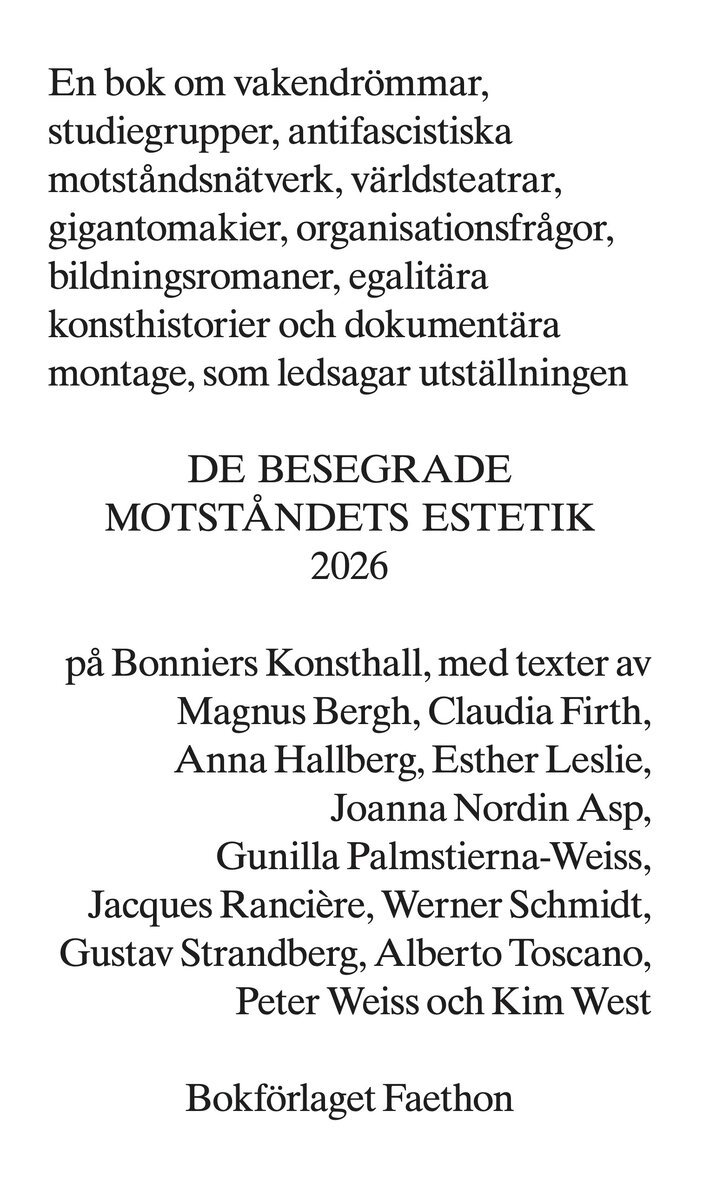
De besegrade : motståndets estetik 2026
Peter Weiss, Magnus Bergh, Werner Schmidt, Gunilla Palmstierna-Weiss, Joanna Nordin, Jacques Rancière, Alberto Toscano, Claudia Firth, Esther Leslie, Sven Lütticken, Anna Hallberg, Kim West, Gustav Strandberg
Häftad, 2026
189 kr
- Nyhet
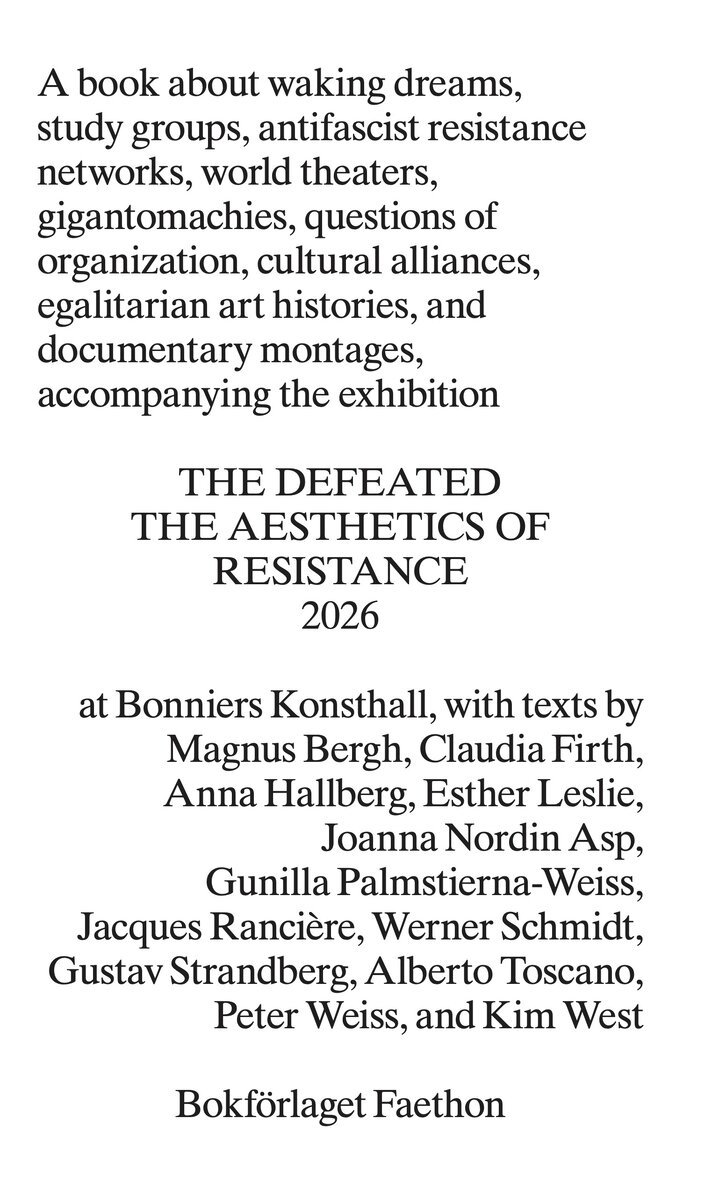
The Defeated. The Aesthetics of Resistance 2026
Peter Weiss, Gunilla Palmstierna-Weiss, Alberto Toscano, Jacques Rancière, Anna Hallberg, Joanna Nordin, Magnus Bergh, Werner Schmidt, Esther Leslie, Claudia Firth, Kim West, Gustav Strandberg
Häftad, 2026
189 kr
Hoppa över listan

Du kanske också är intresserad av
Del 77
Del 25
Slowakei Und Die Europaeische Integration
Miroslav Londák, Slavomír Michálek, Peter Weiss, Veda
Inbunden, 2019
1 139 kr
Del 276