
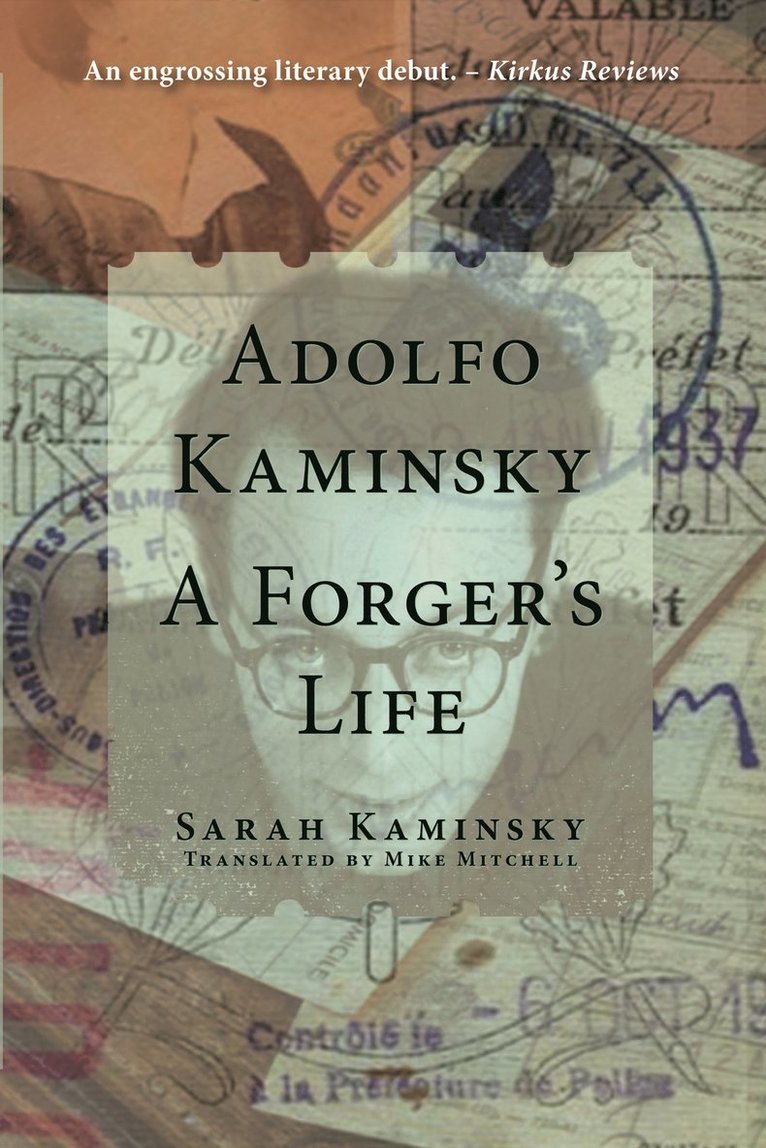
Adolfo Kaminsky The Forger of Paris
Authorized Biography. New and Expanded Edition
Häftad, Engelska, 2025
399 kr
Beställningsvara. Skickas inom 5-8 vardagar. Fri frakt för medlemmar vid köp för minst 249 kr.
Finns i fler format (1)
As seen on 60 Minutes with Anderson Cooper and in the Emmy-award-winning New York Times documentary, the gripping true story of a Jewish teenager who became "The Forger of Paris" for the French Resistance. The Forger of Paris presents Adolfo Kaminsky’s biography in its only authorized edition, expanded with photographs from Kaminsky's 2019 exhibition at the Museum of Jewish Art and History in Paris and accompanied by essays from MAHJ director Paul Salmona and National Jewish Book Award winner Deborah Dash Moore."This necessary book provides unforgettable insights into hidden worlds of the Jews, intellectuals, and partisans who fought back.... has a thriller dimension that outshines even the best undercover fiction." —Jewish Book CouncilAt seventeen, Adolfo Kaminsky had narrowly escaped deportation to Auschwitz and was recruited to join the Jewish underground. Due to his expert knowledge of dyes and an artistic, technical ability to reproduce official documents, he soon became the primary forger for the Resistance in Paris, creating papers that would save an estimated 14,000 Jewish men, women, and children from certain death. Upon the Liberation and for the next twenty-five years, Kaminsky worked as a professional photographer. But, recognizing the fight for freedom had not ended with the defeat of the Nazis, and driven by his own harrowing experiences, he continued to forge documents in secret for activists, refugees, human rights causes, and pacifists throughout the world."At a moment when someone’s passport, or religion, can still mean the difference between life and death, Mr. Kaminsky’s story remains painfully relevant, but inspiring." —Filmmakers Samantha Stark, Alexandra Garcia and Pamela Druckerman for The New York Times"A triumphant wartime biography, full of heroism and near-alchemistic craftiness." —Foreword Reviews
Produktinformation
- Utgivningsdatum2025-06-05
- Mått139 x 215 x 25 mm
- Vikt390 g
- FormatHäftad
- SpråkEngelska
- Antal sidor288
- FörlagDoppelHouse Press
- MedarbetareAdolfo Kaminsky
- ISBN9781954600997
- ÖversättareMike Mitchell
Tillhör följande kategorier
Hoppa över listan



Du kanske också är intresserad av
- Nyhet
Del 3
- Nyhet
Del 11
- Nyhet
Del 6
- Nyhet
Del 4
Del 3
Del 1
Del 2