
A-Z of Error-Free Research
Inbunden, Engelska, 2018
3 319 kr
Beställningsvara. Skickas inom 10-15 vardagar. Fri frakt för medlemmar vid köp för minst 249 kr.
Finns i fler format (1)
A Practical Guide with Step-by-Step Explanations, Numerous Worked Examples, and R CodeThe A–Z of Error-Free Research describes the design, analysis, modeling, and reporting of experiments, clinical trials, and surveys. The book shows you when to use statistics, the best ways to cope with variation, and how to design an experiment, determine optimal sample size, and collect useable data. It also helps you choose the best statistical procedures for your application and takes you step by step through model development and reporting results for publication.Transition from Student to ResearcherHelping you become a confident researcher, the book begins with an overview of when—and when not—to use statistics. It guides you through the planning and data collection phases and presents various data analysis techniques, including methods for sample size determination. The author then covers techniques for developing models that provide a basis for future research. He also discusses reporting techniques to ensure your research efforts get the proper credit. The book concludes with case-control and cohort studies.
Produktinformation
- Utgivningsdatum2018-09-18
- Mått138 x 216 x 18 mm
- Vikt660 g
- FormatInbunden
- SpråkEngelska
- Antal sidor270
- FörlagTaylor & Francis Ltd
- ISBN9781138381742
Tillhör följande kategorier
Hoppa över listan
Mer från samma författare
Analyzing the Large Number of Variables in Biomedical and Satellite Imagery
Phillip I. Good
Häftad, 2011
1 309 kr
Introduction to Statistics Through Resampling Methods and Microsoft Office Excel
Phillip I. Good
Häftad, 2005
1 799 kr
Common Errors in Statistics (and How to Avoid Them)
Phillip I. Good, James W. Hardin
Häftad, 2012
989 kr
Hoppa över listan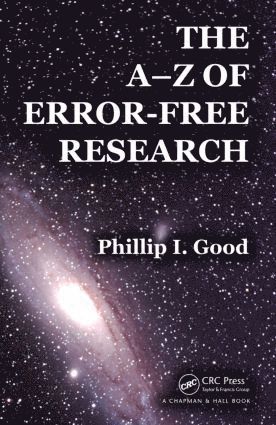

Du kanske också är intresserad av
Common Errors in Statistics (and How to Avoid Them)
Phillip I. Good, James W. Hardin
Häftad, 2012
989 kr
Analyzing the Large Number of Variables in Biomedical and Satellite Imagery
Phillip I. Good
Häftad, 2011
1 309 kr
Introduction to Statistics Through Resampling Methods and Microsoft Office Excel
Phillip I. Good
Häftad, 2005
1 799 kr
- Nyhet
Del 3