
Del i serien Studies in Medieval History and Culture
Women in the Medieval Common Law c.1200–1500
Inbunden, Engelska, 2021
2 809 kr
Beställningsvara. Skickas inom 10-15 vardagar. Fri frakt för medlemmar vid köp för minst 249 kr.
Finns i fler format (1)
This book examines the view of women held by medieval common lawyers and legislators, and considers medieval women’s treatment by and participation in the processes of the common law. Surveying a wide range of points of contact between women and the common law, from their appearance (or not) in statutes, through their participation (or not) as witnesses, to their treatment as complainants or defendants, it argues for closer consideration of women within the standard narratives of classical legal history, and for re-examination of some previous conclusions on the relationship between women and the common law. It will appeal to scholars and students of medieval history, as well as those interested in legal history, gender studies and the history of women.
Produktinformation
- Utgivningsdatum2021-04-06
- Mått156 x 234 x 17 mm
- Vikt640 g
- FormatInbunden
- SpråkEngelska
- SerieStudies in Medieval History and Culture
- Antal sidor176
- FörlagTaylor & Francis Ltd
- ISBN9781472439802
Tillhör följande kategorier
Hoppa över listan






Mer från samma serie
Peacemaking and the Restraint of Violence in High Medieval Europe
Simon Lebouteiller, Louisa Taylor
Inbunden, 2023
3 309 kr
Travel, Pilgrimage and Social Interaction from Antiquity to the Middle Ages
Jenni Kuuliala, Jussi Rantala
Inbunden, 2019
3 309 kr
Hoppa över listan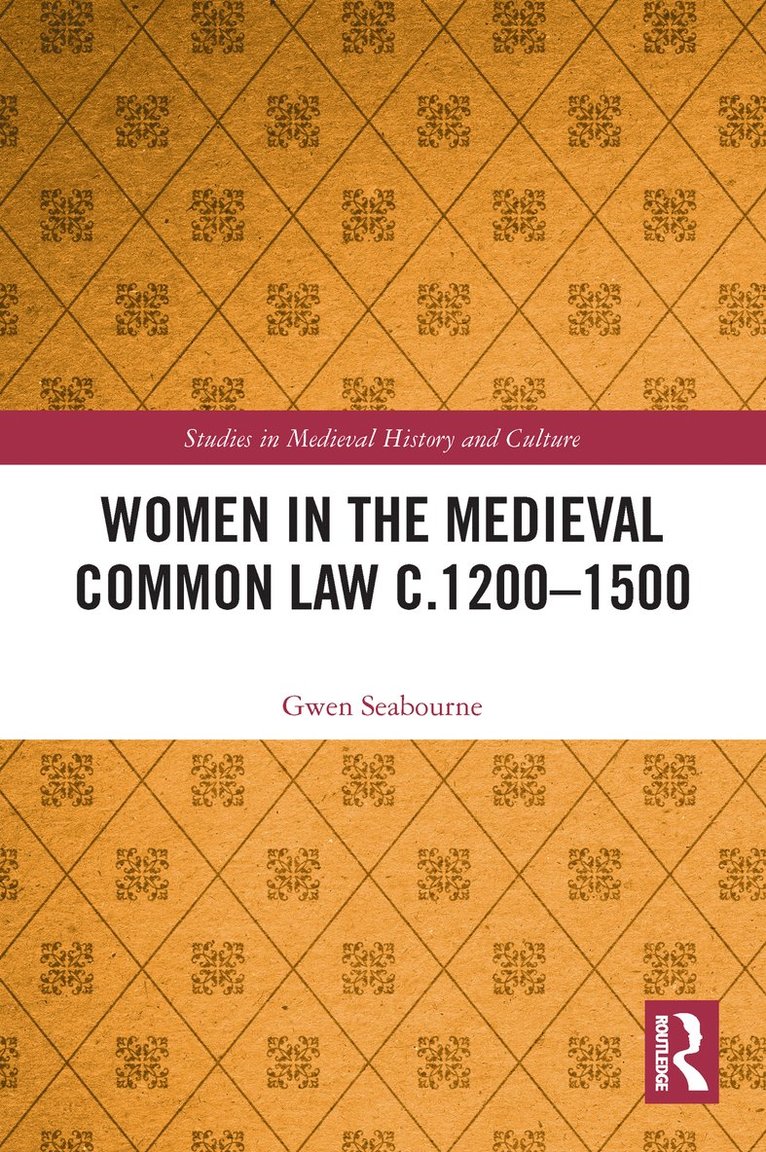








Du kanske också är intresserad av
- Nyhet
Del 3
- Nyhet
Del 11
- Nyhet
Del 4
- Nyhet
Del 6
Del 1
Del 3