
Del i serien Bloomsbury Studies in Philosophy of Religion
Well-Being and Theism
Linking Ethics to God
Inbunden, Engelska, 2012
2 589 kr
Beställningsvara. Skickas inom 10-15 vardagar. Fri frakt för medlemmar vid köp för minst 249 kr.
Finns i fler format (1)
Well-Being and Theism is divided into two distinctive parts. The first part argues that desire-fulfillment welfare theories fail to capture the 'good' part of 'good for', and that objective list welfare theories fail to capture the 'for' part of 'good for'. Then, with the aim of capturing both of these parts of 'good for', a hybrid theory-one which places both a value constraint and a desire constraint on well-being-is advanced. Lauinger then defends this proposition, which he calls the desire-perfectionism theory, against possible objections. In the second part, Lauinger explores the question of what metaphysics best supports the account of well-being defended in the first part. It is argued that there are two general metaphysical routes that might convincingly be taken here, and that each one leads us toward theism.
Produktinformation
- Utgivningsdatum2012-09-13
- Mått160 x 232 x 18 mm
- Vikt460 g
- FormatInbunden
- SpråkEngelska
- SerieBloomsbury Studies in Philosophy of Religion
- Antal sidor224
- FörlagBloomsbury Publishing Plc
- ISBN9781441100306
Tillhör följande kategorier
Hoppa över listan


Mer från samma serie
Sacred Music, Religious Desire and Knowledge of God
Julian Perlmutter, Stewart Goetz
Inbunden, 2020
2 039 kr
Spiritual Geography of Early Chinese Thought
Kelly James Clark, Justin Winslett, Stewart Goetz
Inbunden, 2023
1 669 kr
Spiritual Geography of Early Chinese Thought
Kelly James Clark, Justin Winslett, Stewart Goetz
Häftad, 2024
559 kr
Sacred Music, Religious Desire and Knowledge of God
Julian Perlmutter, Stewart Goetz
Häftad, 2021
619 kr
Hoppa över listan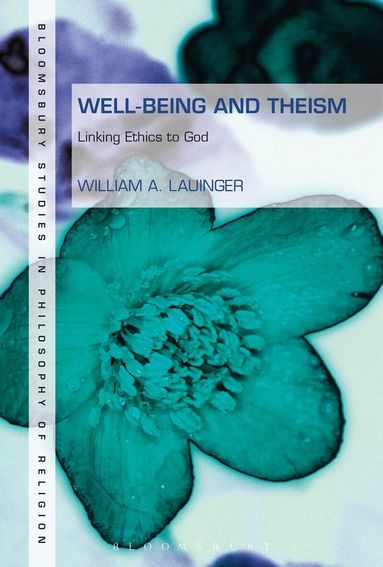







Du kanske också är intresserad av
- Nyhet
Del 7
- Nyhet
Del 6
- Nyhet
Del 4
- Nyhet
Del 3
- Nyhet
- Nyhet
Del 11
- Nyhet
Del 3