
Del i serien Social Network Mechanisms
Strong Bridges
Trust Beyond Structure
Häftad, Engelska, 2026
369 kr
Beställningsvara. Skickas inom 5-8 vardagar. Fri frakt för medlemmar vid köp för minst 249 kr.
Finns i fler format (1)
Strong Bridges is a book about a contradiction and the opportunity it offers. For decades, social network theory has drawn its maps of advantage from the idea that brokers sit astride structural holes, reaping value from weak ties that bridge disconnected worlds. But what if some of those bridges are not weak? What if the real advantage lies not just in structure, but in trust forged in interpersonal history regardless of structure? This is the puzzle Strong Bridges takes up. It begins with guanxi, the colloquial Chinese term for relationship advantage, often dismissed as cultural peculiarity or corruption. But the authors treat guanxi as a strategic research site, not a cultural relic. They view it a niche-word pointing to a broader category of human experience. Combining analytic rigor with quality network data, they pull apart the Siamese twins of tie strength and network structure, documenting the prevalence and competitive value of high-trust ties that span structural holes, i.e., strong bridges. The book offers two discovery stories; one empirical, one theoretical. The first tracks how guanxi bridges operate in the personal networks of Chinese entrepreneurs. The second reshapes core assumptions in network theory. Across industries, events, and even a pandemic, strong bridges emerge as resilient assets distinct from embedded ties, more predictive of cooperation, and more durable than theory currently expects. This is a book about the anatomy of network advantage. It reframes brokerage not as a fragile position, but as a relationship earned, remembered, and surprisingly strong.
Produktinformation
- Utgivningsdatum2026-07-10
- Mått157 x 235 x 24 mm
- Vikt440 g
- FormatHäftad
- SpråkEngelska
- SerieSocial Network Mechanisms
- Antal sidor336
- FörlagOUP USA
- ISBN9780197834268
Tillhör följande kategorier
Hoppa över listan




Mer från samma författare
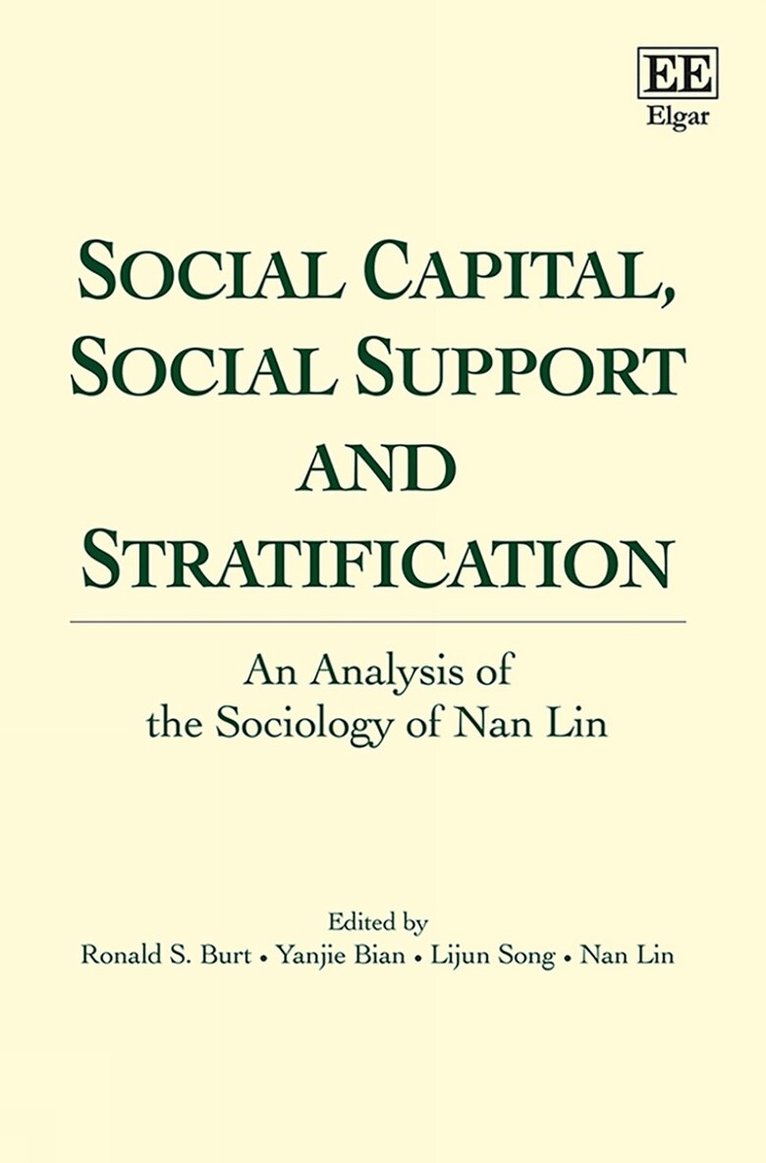
Social Capital, Social Support and Stratification
Ronald S. Burt, Yanjie Bian, Lijun Song, Nan Lin
Inbunden, 2019
2 479 kr
Hoppa över listan



Du kanske också är intresserad av
Social Capital, Social Support and Stratification
Ronald S. Burt, Yanjie Bian, Lijun Song, Nan Lin
Inbunden, 2019
2 479 kr
- Nyhet