
Del i serien Clarendon Lectures in Management Studies
Brokerage and Closure
An Introduction to Social Capital
Häftad, Engelska, 2007
989 kr
Beställningsvara. Skickas inom 5-8 vardagar. Fri frakt för medlemmar vid köp för minst 249 kr.
Finns i fler format (1)
Social Capital, the advantage created by location in social structure, is a critical element in business strategy. Who has it, how it works, and how to develop it have become key questions as markets, organizations, and careers become more and more dependent on informal, discretionary relationships. The formal organization deals with accountability; Everything else flows through the informal: advice, coordination, cooperation friendship, gossip, knowledge, trust. Informal relations have always been with us, they have always mattered. What is new is the range of activities in which they now matter, and the emerging clarity we have about how they create advantage for certain people at the expense of others. This is done by brokerage and closure. Ronald S. Burt builds upon his celebrated work in this area to explore the nature of brokerage and closure. Brokerage is the activity of people who live at the intersection of social worlds, who have a vision advantage of seeing and developing good ideas, an advantage which can be seen in their compensation, recognition, and the responsibility they're entrusted with in comparison to their peers. Closure is the tightening of coordination in a closed network of people, and people who do this do well as a complement to brokers because of the trust and alignment they create. Brokerage and Closure explores how these elements work together to define social capital, showing how in the business world reputation has come to replace authority, pursued opportunity assignment, and reward has come to be associated with achieving competitive advantage in a social order of continuous disequilibrium.
Produktinformation
- Utgivningsdatum2007-09-06
- Mått160 x 230 x 15 mm
- Vikt452 g
- FormatHäftad
- SpråkEngelska
- SerieClarendon Lectures in Management Studies
- Antal sidor296
- FörlagOUP OXFORD
- ISBN9780199249152
- UtmärkelserShortlisted for the AOM George R Terry Award 2006
Tillhör följande kategorier
Hoppa över listan



Mer från samma författare
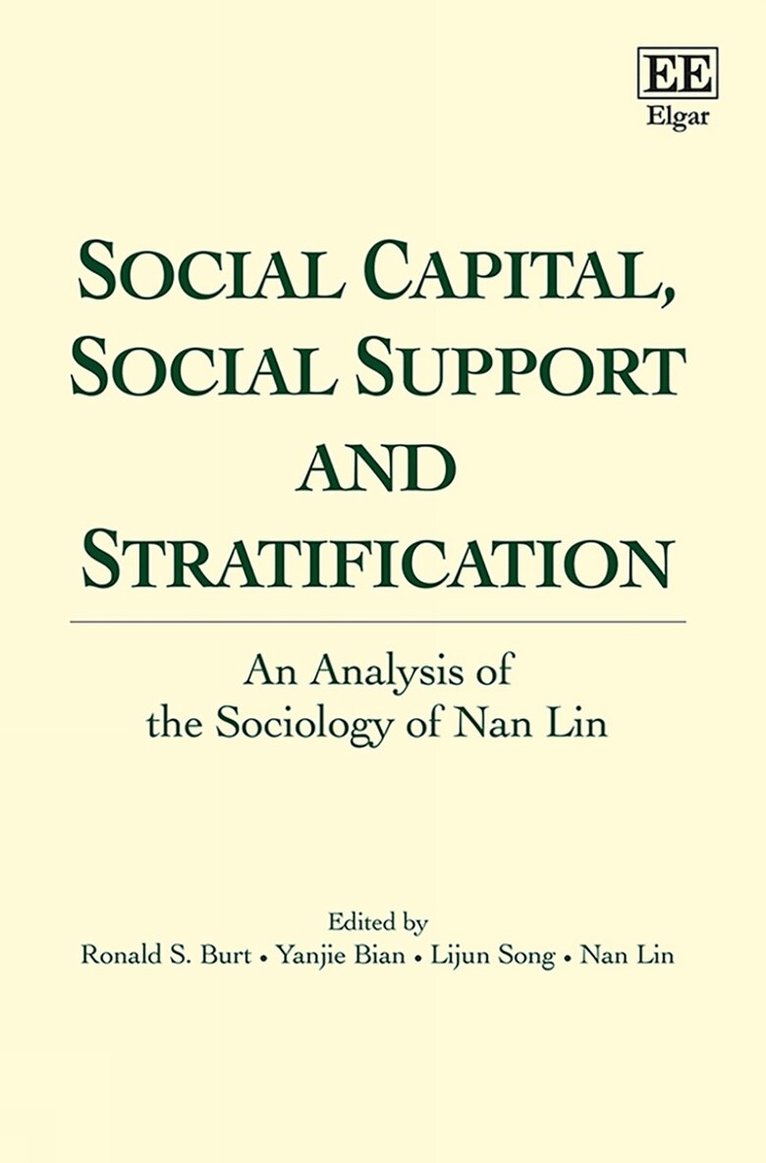
Social Capital, Social Support and Stratification
Ronald S. Burt, Yanjie Bian, Lijun Song, Nan Lin
Inbunden, 2019
2 479 kr
Hoppa över listan


Du kanske också är intresserad av
Social Capital, Social Support and Stratification
Ronald S. Burt, Yanjie Bian, Lijun Song, Nan Lin
Inbunden, 2019
2 479 kr
- Nyhet
Del 3
- Nyhet
Del 11