
Del i serien Communication, Media, and Politics
Rhetoric of Redemption
Kenneth Burke's Redemption Drama and Martin Luther King, Jr.'s 'I Have a Dream' Speech
Häftad, Engelska, 2007
799 kr
Beställningsvara. Skickas inom 10-15 vardagar. Fri frakt för medlemmar vid köp för minst 249 kr.
Finns i fler format (1)
Martin Luther King, Jr.'s "I Have a Dream" speech has become an icon of American public culture, its imagery and words profoundly influencing the civil rights debate. In The Rhetoric of Redemption Bobbitt applies Kenneth Burke's theory of guilt-purification-redemption in a close, critical analysis of the speech, developing and examining the implications of Burke's redemption drama in contemporary public discourse. He studies the impact of the speech over time, arguing that, while King's speech contains an inspirational vision of national redemption, it does so by omitting the real difficulties of overcoming America's racial divisions.
Produktinformation
- Utgivningsdatum2007-02-16
- Mått153 x 233 x 12 mm
- Vikt245 g
- FormatHäftad
- SpråkEngelska
- SerieCommunication, Media, and Politics
- Antal sidor156
- FörlagBloomsbury Publishing Plc
- ISBN9780742529281
Tillhör följande kategorier
Hoppa över listan
Mer från samma serie
Campaign 2000
William L. Benoit, John P. McHale, Glenn J. Hansen, P. M. Pier, John P. McGuire
Inbunden, 2003
1 819 kr
Campaign 2000
William L. Benoit, John P. McHale, Glenn J. Hansen, P. M. Pier, John P. McGuire
Häftad, 2003
789 kr
Hoppa över listan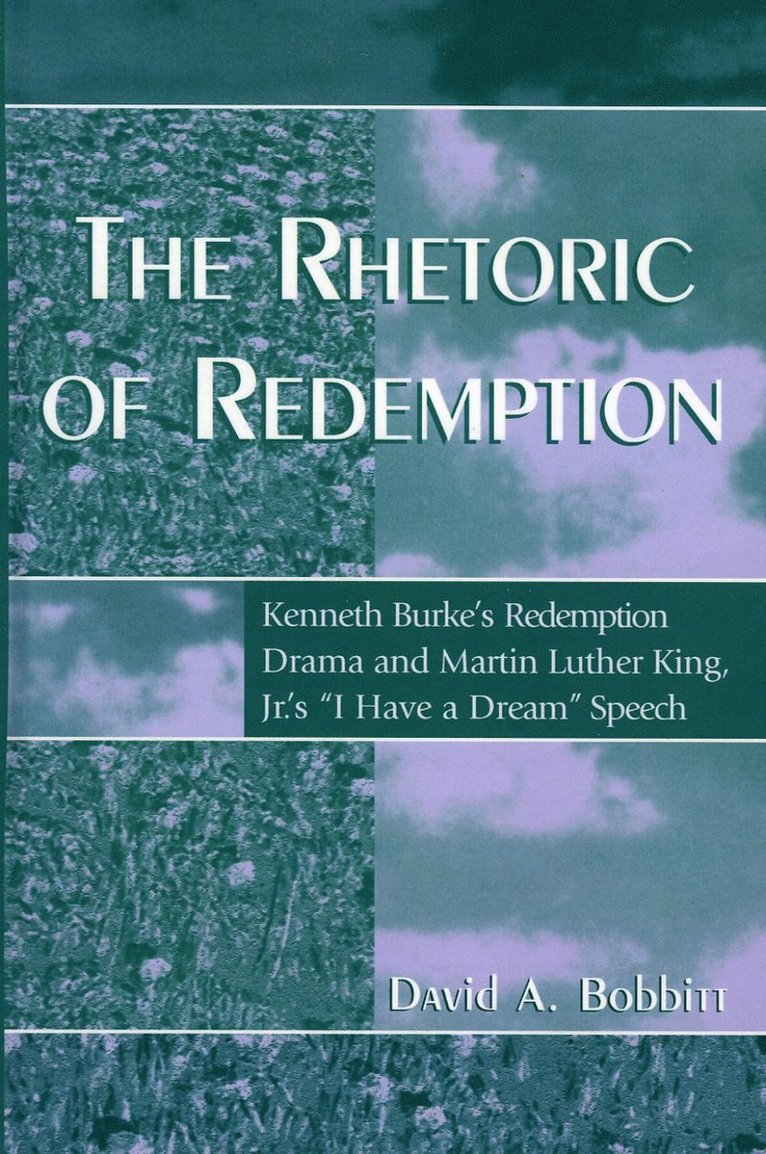

Du kanske också är intresserad av
Del 1
Campaign 2000
William L. Benoit, John P. McHale, Glenn J. Hansen, P. M. Pier, John P. McGuire
Häftad, 2003
789 kr
Political Campaign Communication
Robert E. Denton Jr., Ben Voth, Judith S. Trent, Robert V. Friedenberg
Inbunden, 2023
1 819 kr