
Del i serien Communication, Media, and Politics
Campaign 2000
A Functional Analysis of Presidential Campaign Discourse
Häftad, Engelska, 2003
789 kr
Beställningsvara. Skickas inom 10-15 vardagar. Fri frakt för medlemmar vid köp för minst 249 kr.
Finns i fler format (1)
Campaign 2000 applies the functional theory of political campaign discourse—analyzing how messages acclaim, attack, or defend—to several different forms of campaign communication in the 2000 U.S. presidential primary and general election. These forms include political advertisements on television and radio, debates, television talk show appearances, campaign web pages, and convention speeches by candidates and their spouses. The authors also look at the election outcomes and explore lessons to apply to future campaign discourse.
Produktinformation
- Utgivningsdatum2003-09-25
- Mått153 x 227 x 22 mm
- Vikt449 g
- FormatHäftad
- SpråkEngelska
- SerieCommunication, Media, and Politics
- Antal sidor304
- FörlagBloomsbury Publishing Plc
- ISBN9780742529144
Tillhör följande kategorier
Hoppa över listan





Mer från samma författare
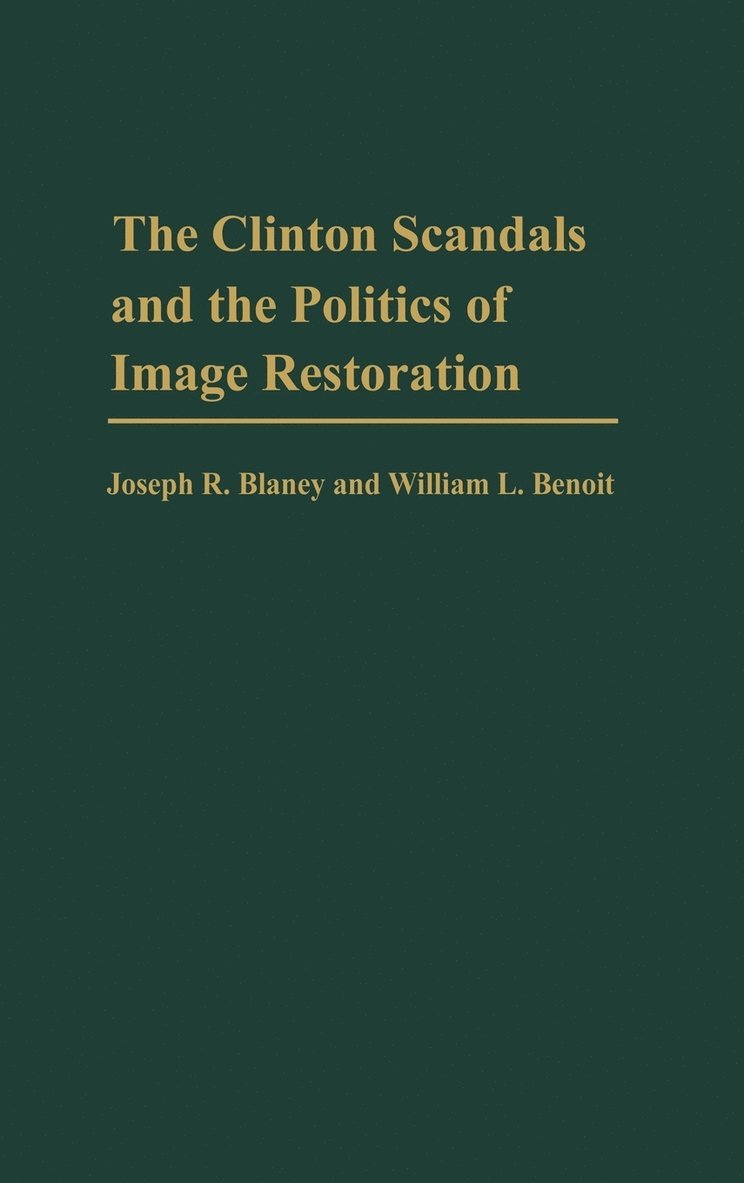
Clinton Scandals and the Politics of Image Restoration
Joseph R. Blaney Ph.D., William L. Benoit
Inbunden, 2001
1 129 kr
Del 27
Rise and Fall of Mass Communication
William L. Benoit, Andrew C. Billings, Lee B. Becker
Inbunden, 2020
1 539 kr
Presidential Campaigns in the Age of Social Media
William L. Benoit, Mark J. Glantz
Inbunden, 2019
1 409 kr
Hoppa över listan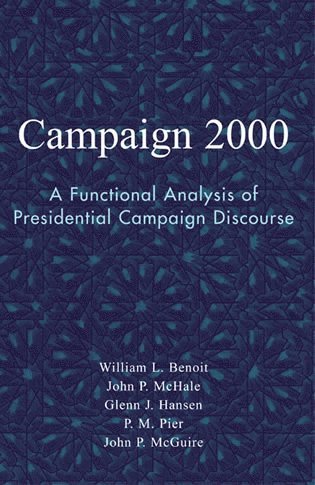

Du kanske också är intresserad av
Campaign 2000
William L. Benoit, John P. McHale, Glenn J. Hansen, P. M. Pier, John P. McGuire
Inbunden, 2003
1 809 kr
Persuasive Attacks on Donald Trump in the 2016 Presidential Primary
William L. Benoit, Mark J. Glantz
Häftad, 2018
679 kr
Crafting Messages in a Multimodal Media Environment: Readings on Convergent Writing
John P McHale
Häftad, 2021
1 779 kr
Clinton Scandals and the Politics of Image Restoration
Joseph R. Blaney Ph.D., William L. Benoit
Inbunden, 2001
1 129 kr
Crafting Messages in a Multimodal Media Environment: Readings on Convergent Writing
John P McHale
Häftad, 2013
1 869 kr
Del 27
Rise and Fall of Mass Communication
William L. Benoit, Andrew C. Billings, Lee B. Becker
Inbunden, 2020
1 539 kr