Del 15 - Wiley Series in Protein and Peptide Science
Protein Oxidation and Aging
AvTilman Grune,Betul Catalgol,Tobias Jung,Vladimir Uversky,USA) Uversky, Vladimir (Indiana University School of Medicine, Indianapolis
2 399 kr
Beställningsvara. Skickas inom 7-10 vardagar. Fri frakt för medlemmar vid köp för minst 249 kr.
Produktinformation
- Utgivningsdatum2013-02-01
- Mått163 x 241 x 31 mm
- Vikt880 g
- FormatInbunden
- SpråkEngelska
- SerieWiley Series in Protein and Peptide Science
- Antal sidor524
- FörlagJohn Wiley & Sons Inc
- ISBN9780470878286
Tillhör följande kategorier
TILMAN GRUNE, MD, is Full Professor and Director of the Institute of Nutrition at Friedrich Schiller University Jena. His research examines the biological phenomenon of oxidative stress. In particular, his research group has been investigating the oxidative stress response of cells and organisms and the protective influence of antioxidants.BETUL CATALGOL, MD, is Assistant Professor in the Faculty of Medicine and the Department of Biochemistry at Marmara University. She is coauthor of Proteasome and Neurodegenerative Diseases, Proteasome and Cancer, and Protein Carbonyl Measurement by Enzyme-Linked Immunosorbent Assay.TOBIAS JUNG, PhD, is a Research Assistant at Friedrich Schiller University Jena. He is coauthor of Structure of the Proteasome.
- Introduction to the Wiley Series on Protein and Peptide Science xiPreface xiii1 Oxidative Stress and Protein Oxidation 11.1 The Large Variety of Protein Oxidation Products, 71.1.1 Primary Protein Oxidation Products, 71.1.1.1 Carbon-Centered Radicals, 91.1.1.2 Thiyl Radicals, 131.1.1.3 Aromatic Ring-Derived Radicals, 131.1.1.4 Transfer between Sites, 161.1.2 Reactive Compounds Mediating in Protein Oxidation, 181.1.2.1 Hydroxyl Radical, 201.1.2.2 Superoxide Radicals, 211.1.2.3 Hydrogen Peroxide, 241.1.2.4 Lipid Peroxyl Radicals, 241.1.2.5 Alkoxyl Radicals, 241.1.2.6 •NO and Peroxynitrite, 251.1.2.7 Hypochlorous Acid, 301.1.3 Enzymatic Systems Playing a Role in Protein Oxidation, 311.1.3.1 NADPH Oxidase, 321.1.3.2 Lipoxygenases, 351.1.3.3 Protein Kinases, 351.1.3.4 Mixed-Function Oxidases, 361.1.3.5 Nitric Oxide Synthetase (NOS), 381.1.3.6 Myeloperoxidase, 411.1.3.7 Cyclooxygenase, 421.1.4 Protein Oxidation in Cells and Cellular Structures, 431.1.4.1 Protein Oxidation in Blood and Blood Cells, 431.1.4.2 Protein Oxidation of Glycolytic Enzymes and Mitochondria, 461.1.4.2.1 Glycolytic Enzymes, 481.1.4.2.2 Aconitase, 491.1.4.2.3 Carnitine Palmitoyltransferase-1, 491.1.4.3 Cytochrome P450 Enzymes, 491.1.4.4 Protein Oxidation in the Nucleus and Chromatin, 501.1.4.4.1 Histone Modifi cation, 501.1.4.5 Protein Oxidation in the Endoplasmic Reticulum, 521.1.4.6 Protein Oxidation in Peroxisomes, 541.2 Reversible Oxidative Modifi cations, 551.2.1 Methionine Sulfoxides and Methionine Modifi cations, 551.2.2 Cysteine Modifi cations and Disulfi de Bond Formation, 611.2.3 Surface Hydrophobicity Modifi cations, 641.3 Irreversible Oxidation Products, 641.3.1 Protein Oxidation and Enzymatic Posttranslational Modifications, 651.3.2 Deamidation and Transamination, 661.3.3 Protein Glycation and AGEs, 671.3.3.1 Receptor for Advanced Glycation End Products (RAGE), 751.3.3.2 Nε-Carboxymethyllysine and Nε-Carboxyethyllysine, 761.3.3.3 Pentosidine, 761.3.4 Racemization, 771.3.5 Nitrosylation, 771.3.6 Tyrosyl Radicals and Nitrotyrosines, 781.3.6.1 Dityrosines, 791.3.7 Protein Carbonyls, 801.3.8 Aldehyde–Protein Reactions, 811.3.8.1 MDA-Protein Adducts, 821.3.8.2 4-Hydroxy-2,3-Nonenal-Protein Adducts, 821.3.9 Cross-Linking of Proteins, 821.4 The Oxidation of Extracellular Matrix, Membrane and Cytoskeletal Proteins, 831.4.1 Collagen, 841.4.2 Elastin, 951.4.3 The Oxidation of Membrane Proteins, 971.4.4 Band 3, 971.4.5 Actin, 991.5 Mechanism and Factors Influencing the Formation of Protein Oxidation Products, 1001.5.1 Redox Status, 1011.5.2 Protein Turnover, 1061.5.3 Metal-Catalyzed Oxidation (MCO), 1071.5.4 Heat Shock Proteins, 1091.6 Protein Aggregates: Formation and Specific Metabolic Effects, 1111.6.1 Accumulation of Oxidized Proteins, 1131.6.2 Lipofuscin and Ceroid, 1151.7 Methods to Measure Protein Oxidation Products in Research Laboratories, 1191.7.1 Determination of Methionine Sulfoxide Reduction and Methionine Oxidation, 1201.7.2 Determination of Protein Glycation and Adducts, 1211.7.3 Analysis of Isoaspartate Formation, 1221.7.4 Measurement of Fragmentation, 1221.7.5 Measurement of Tyrosine Oxidation, 1231.7.6 Protein Carbonyl Measurement, 1241.7.7 Radioactive Labeling Protocols for Proteolysis and Aggregation Measurements, 1281.7.8 Standard Chromatographic Methods for the Measurement of Protein Modifi cations, 1321.7.9 Liquid Chromatography Techniques Supported by Mass Spectrometry, 1331.7.10 GC/MS, 1341.7.11 Analysis of Protein-Bound 3-Nitrotyrosine by a Competitive ELISA Method, 1341.7.12 Protein Oxidation Products as Biomarkers in Clinical Science, 135References, 1392 Removal of Oxidized Proteins 2152.1 The Limited Repair of Some Oxidized Proteins, 2162.1.1 Thiol Repair, 2162.1.2 Methionine Sulfoxide Reductases, 2192.2 Proteolysis, 2212.2.1 The Proteasomal System and Its Role in the Degradation of Oxidized Proteins, 2222.2.1.1 The Ubiquitin–Proteasome System (UPS), 2222.2.1.2 The Components of the UPS, 2222.2.1.2.1 The 20S Proteasome, 2222.2.1.2.2 The Inducible Forms of the Proteasome and Their Function, 2272.2.1.2.3 The 11S Regulator, 2312.2.1.2.4 The 19S Regulator and the UPS, 2332.2.1.2.5 The PA200 Regulator Protein, 2382.2.1.2.6 Cellular Proteasome Inhibitors, 2392.2.1.3 Low-Molecular-Weight Proteasome Inhibitors, 2392.2.1.4 Cellular Function of the UPS, 2412.2.1.5 The Degradation of Oxidized Proteins: A Function of the 20S Proteasome, 2432.2.1.5.1 Early Studies on the Turnover of Oxidized Proteins, 2442.2.1.5.2 In Vitro Studies and the Recognition of Oxidized Proteins by the Proteasome, 2442.2.1.5.3 Cellular and In Vivo Studies of the Degradation of Oxidized Proteins, 2482.2.1.5.4 The Inhibition of the Proteasome by Cross-Linked Oxidized Proteins and Proteasomal Regulation during Oxidative Stress, 2512.3 The Role of Other Proteases in the Fate of Oxidized Proteins, 2542.3.1 Lysosomal Degradation of Oxidized Proteins and the Role of Autophagy, 2542.3.2 Mitochondrial Degradation of Oxidized Proteins and the Lon Protease, 2562.3.3 The Uptake of Extracellular Oxidized Proteins and the Role of the Proteasome in Their Degradation, 2582.3.4 Calpains and the Degradation of Oxidized Proteins, 2592.4 Role of Heat Shock Proteins in Protein Degradation, 2602.5 Conclusion, 262References, 2623 Protein Oxidation and Aging: Different Model Systems and Affecting Factors 2953.1 Protein Oxidation during Aging: Lower Organisms and Cellular Model Systems, 2973.1.1 Yeast, 2973.1.1.1 Saccharomyces cerevisiae, 2973.1.1.2 Schizosaccharomyces pombe, 3013.1.2 Podospora anserina, 3013.1.3 Bacteria, 3023.1.3.1 Escherichia coli, 3023.1.4 Cell Cultures, 3043.2 Nonmammalian Model Systems and the Accumulation of Oxidized Proteins during Aging, 3083.2.1 Caenorhabditis elegans, 3083.2.2 Drosophila melanogaster, 3103.2.3 Aquatic Systems, 3133.2.4 Plants, 3153.2.5 Amphibians, 3173.3 Age-Related Protein Oxidation in Humans and Mammals, 3173.3.1 Humans, 3173.3.2 Animals, 3193.3.2.1 Rabbits, 3233.3.2.2 Mice, 3243.3.2.3 Rats, 3273.3.2.4 Gerbils, 3293.3.2.5 Primates, 3303.4 Inherited Factors Influencing Protein Oxidation during Aging, 3313.4.1 Genetic Instability, Mutations, and Polymorphism, 3313.4.2 Gender, 3333.4.3 Vitagenes, 3343.4.4 Signal Transduction and Transcription Factors, 3353.4.5 Ion Channels, 3403.5 Age-Related Protein Aggregate Formation in Model Systems, 3413.6 Environmental Factors Affecting Healthy Aging, 3423.6.1 UV-Induced Skin Photoaging and Skin Aging, 3443.6.2 Pesticides, 3483.6.3 Exercise, 3493.6.4 Dietary Factors and Prevention Strategies, 3513.6.4.1 Melatonin, 3533.6.4.2 Growth Hormone, 3543.6.4.3 Biotrace Metal Elements: Zinc, 3563.6.4.4 Ascorbic Acid, 3573.6.4.5 Vitamin E, 3603.6.4.6 Carnitine and Acetyl-L-Carnitine, 3613.6.4.7 Homocysteine, 3623.6.4.8 Ubiquinone, Coenzyme Q10, 3633.6.4.9 Carnosine, 3633.6.4.10 Lipoic Acid, 3643.6.4.11 N-Acetyl-L-Cysteine, 3653.6.5 Pharmacological Response and Biotransformation in Aging, 3653.6.5.1 Plant Extracts, 3663.6.5.2 Polyphenols and Flavonoids, 3663.6.5.3 Resveratrol, 3673.6.5.4 AGE and ALE Inhibitors, 3683.6.6 Caloric Restriction, 3693.7 Repair and Degradation of Oxidized Proteins during Aging, 370References, 3724 Protein Oxidation in Some Age-Related Diseases 4174.1 Protein Oxidation during Neurodegeneration and Neurological Diseases, 4174.1.1 Brain Aging, 4184.1.2 Alzheimer’s Disease, 4204.1.3 Parkinson’s Disease, 4244.1.4 Huntington’s Disease, 4254.1.5 Stroke, 4274.1.6 Amyotrophic Lateral Sclerosis, 4274.2 Protein Oxidation in Cardiac Diseases, 4294.2.1 Ischemia–Reperfusion, 4294.2.2 Atherosclerosis, 4304.3 Protein Oxidation in Diabetes, 4314.4 Protein Oxidation in Degenerative Arthritis, 4344.5 Protein Oxidation in Muscle Wasting and Sarcopenia, 4354.6 Protein Oxidation in Destructive Eye Diseases, 4374.6.1 Age-Related Macular Degeneration, 4374.6.2 Cataract, 4384.7 Protein Oxidation in Osteoporosis, 4404.8 Protein Oxidation in Cancer, 4414.8.1 Proteasome Inhibitors in Cancer Therapy, 4444.9 Other Diseases, 4464.9.1 Premature Aging Diseases Progeria and Werner’s Syndrome, 4464.9.2 Renal Failure and Hemodialysis in Elderly People, 4474.9.3 Obesity, 4474.9.4 Idiopathic Pulmonary Fibrosis, 4484.9.5 Presbycusis (Age-Related Hear Loss), 448References, 448List of Abbreviations 479Index 493
“With its discussion of current concepts linked to protein oxidation and its impact on aging and the pathology of certain age-related diseases, this book is an important contribution to the field. Students, researchers, scientists, and even clinicians will benefit from it.” (Doody’s, 10 January 2013)“The format and compartmentalised writing style make this an excellent compendium of knowledge for any researcher interested in assessing our state of knowledge of protein oxidation and ageing. It is easy to find out about the current state of knowledge about a specific reaction, product, method, and/or disease and follow this up by accessing the extensive list of references.” (Chemistry & Industry, 1 July 2013)
Mer från samma författare
Biofunktionalität der Lebensmittelinhaltsstoffe
Dirk Haller, Tilman Grune, Gerald Rimbach
729 kr
Mer från samma serie
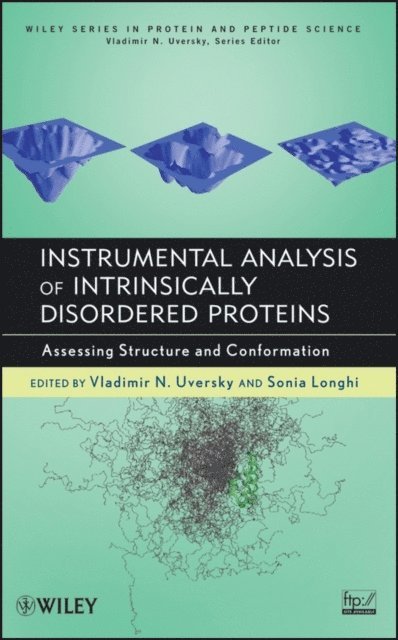
Instrumental Analysis of Intrinsically Disordered Proteins
Vladimir Uversky, Sonia Longhi, USA) Uversky, Vladimir (Indiana University School of Medicine, France) Longhi, Sonia (AFMB
2 569 kr
Guide to Zona Pellucida Domain Proteins
Eveline S. Litscher, Paul M. Wassarman, Eveline S Litscher, Paul M Wassarman
2 399 kr
Protein Chaperones and Protection from Neurodegenerative Diseases
Stephan N. Witt, Vladimir Uversky, Stephan N Witt
2 269 kr
Protein and Peptide Folding, Misfolding, and Non-Folding
Reinhard Schweitzer-Stenner, Reinhard Schweitzer-Stenner, Vladimir Uversky
2 449 kr
Protein Families
Christine A. Orengo, Christine A. Orengo, Alex Bateman, Christine A Orengo, Vladimir Uversky
2 179 kr
Protein Aggregation in Bacteria
Silvia Maria Doglia, Silvia Maria Doglia, Marina Lotti
1 889 kr
Chemistry of Metalloproteins
Joseph J. Stephanos, Anthony W. Addison, Joseph J Stephanos, Anthony W Addison
1 909 kr
Du kanske också är intresserad av
Instrumental Analysis of Intrinsically Disordered Proteins
Vladimir Uversky, Sonia Longhi, USA) Uversky, Vladimir (Indiana University School of Medicine, France) Longhi, Sonia (AFMB
2 569 kr
Protein and Peptide Folding, Misfolding, and Non-Folding
Reinhard Schweitzer-Stenner, Reinhard Schweitzer-Stenner, Vladimir Uversky
2 449 kr
Chemistry of Metalloproteins
Joseph J. Stephanos, Anthony W. Addison, Joseph J Stephanos, Anthony W Addison
1 909 kr
Protein Families
Christine A. Orengo, Christine A. Orengo, Alex Bateman, Christine A Orengo, Vladimir Uversky
2 179 kr
Protein Aggregation in Bacteria
Silvia Maria Doglia, Silvia Maria Doglia, Marina Lotti
1 889 kr
Guide to Zona Pellucida Domain Proteins
Eveline S. Litscher, Paul M. Wassarman, Eveline S Litscher, Paul M Wassarman
2 399 kr