
Del i serien World Cinema
Pablo Trapero and the Politics of Violence
Inbunden, Engelska, 2022
1 829 kr
Beställningsvara. Skickas inom 10-15 vardagar. Fri frakt för medlemmar vid köp för minst 249 kr.
Finns i fler format (1)
This innovative study finds that, through his unique representation of violence, Argentine director Pablo Trapero has established himself as one of the 21st century’s distinctly political filmmakers. By examining the broad concept of violence and how it is represented on-screen, Douglas Mulliken identifies and analyzes the ways in which Trapero utilizes violence, particularly Žižek’s concept of objective violence, as a means through which to mediate the politicalThrough a focus on several previously under-studied elements of Trapero’s films, Mulliken highlights the ways in which the director’s work represents present-day concerns about social inequalities and injustice in neoliberal Argentina on-screen. Finally, he examines how Trapero combines aspects of Argentina’s long tradition of political film with elements of Nuevo Cine Argentino to create a unique political voice.
Produktinformation
- Utgivningsdatum2022-02-10
- Mått156 x 236 x 20 mm
- Vikt1 080 g
- FormatInbunden
- SpråkEngelska
- SerieWorld Cinema
- Antal sidor264
- FörlagBloomsbury Publishing PLC
- ISBN9781350163386
Hoppa över listan






Mer från samma serie
Ethics and Aesthetics in Contemporary African Cinema
James S. Williams, Lúcia Nagib
Häftad, 2020
619 kr
Hoppa över listan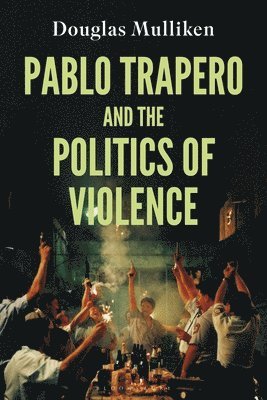




Du kanske också är intresserad av
- Nyhet
Del 3
- Nyhet
Del 11
- Nyhet
Del 4
- Nyhet
- Nyhet
Del 6
- Nyhet
- Nyhet
Del 1
- Nyhet